

********
What follows in this blog is an outline of commercial consultancy undertaken for the Ashton family at Soulton Hall by BYRGA GENIHT Ltd.
The content below references the intellectual property of James D. Wenn.
********
What is a 9 Grid?
A 9 grid is a square that is divided into three rows and three columns of smaller squares.
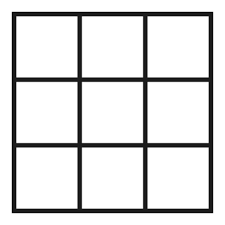
A nine grid
This creates a total of nine smaller squares within the larger square.
It is what you play noughts and crosses within.
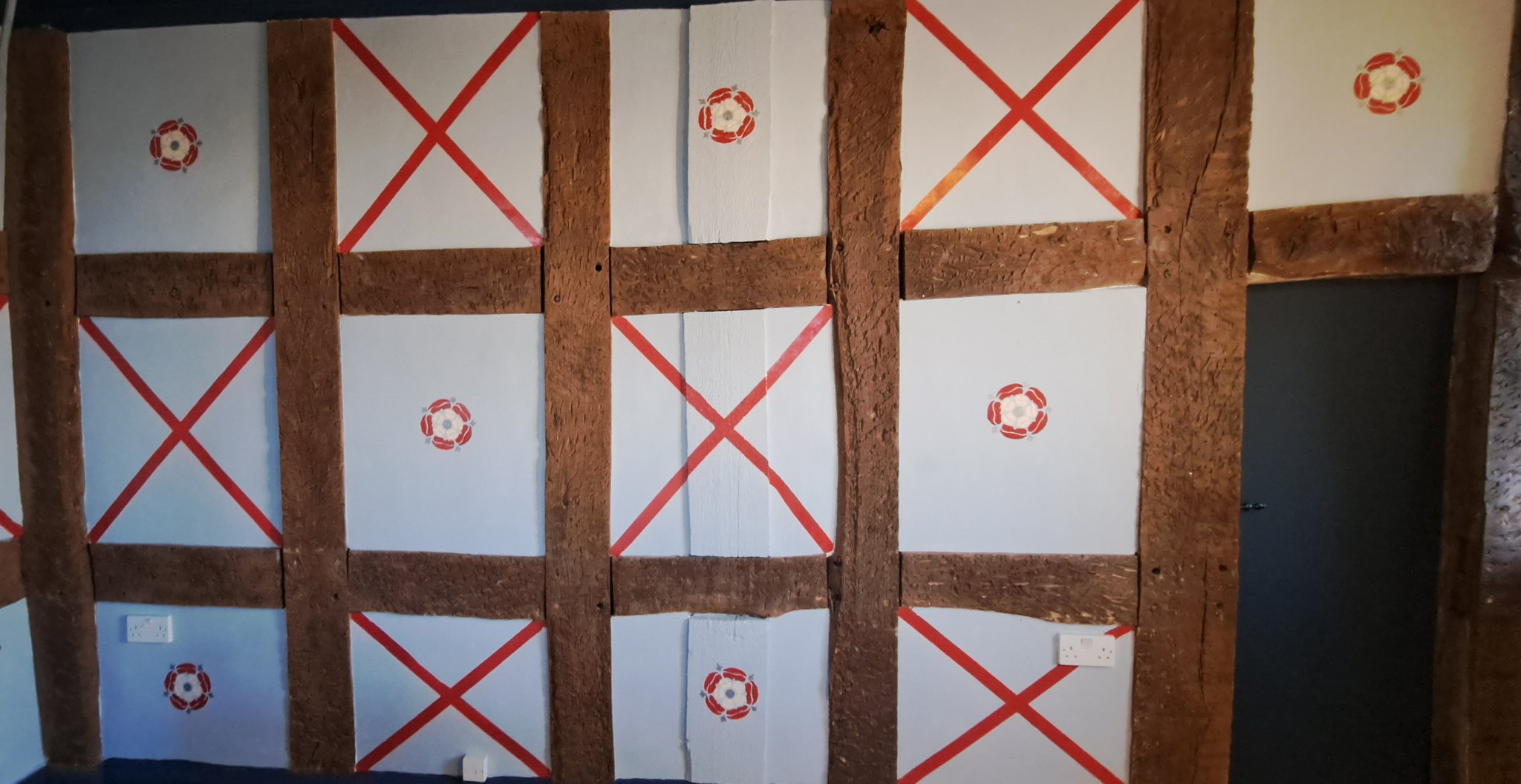
The 9 Grid at Soulton Hall: A Ubiquitous Pattern
The 9 grid motif is a recurring theme throughout the architecture and design of Soulton Hall. This geometric pattern can be observed at both macro and micro levels: from the grand scale of the building’s layout to the intricate details of its decorative elements.
Here are some examples:
Lamp Finials: The lamp finials on the post 1668 the roof line of Soulton Hall feature a 9 grid design, which you can see in the edge where there is an egg-and-dart pattern.
One of the oil lamp finials on the four corners of the cube of Soulton Hall
East and West Faces of the Cube of the current hall: The cube-shaped structure of Soulton Hall shows the 9 grid pattern on its east (most important) and west faces. This creates a visually striking and symmetrical effect.
The East front of Soulton Hall, the senior and only truly symetrical, face of the hall. Notice it is a square divided into a 3×3 grid of nine ‘squares’.
Dance Pavement: The dance pavement within the hall’s grounds incorporates the 9 grid pattern into its design.
An embroidered chshion showing the pattern of The Dance Pavement at Soulton Hall.
Division of the Precincts: When viewed from above, the layout of the Soulton Hall Precinct reveals a 9 grid pattern in the division of its various courts. This is explained in the Lecture The Art of the Ever True, Revisited | Remembering Erkenwald at Soulton, at 1hr 10 mins.
Screen shot of a lecture The Art of the Ever True, Revisited | Remembering Erkenwald at Soulton


There is an obvious and deliberate and planned and repeated approach to the overall design, with this division of both squares and cubes.
It is holding a significant meaning or symbolism.
What is that? Well, to unock it we will nee to know some of what Plato says.
Plato’s ‘Timaeus’
********
Your attention is called to the Lecture The Art of the Ever True, Revisited | Remembering Erkenwald at Soulton to see this set out in proper detail.
********
Plato’s Timaeus is a philosophical dialogue that explores the nature of the universe and its creation.

Plato
In the dialogue, Plato proposes a theory of the elements, which he associates with the five Platonic solids; he suggests that:
- the tetrahedron represents fire,
- the cube represents earth,
- the octahedron represents air,
- the icosahedron represents water,
- and the dodecahedron represents the cosmos itself.
