

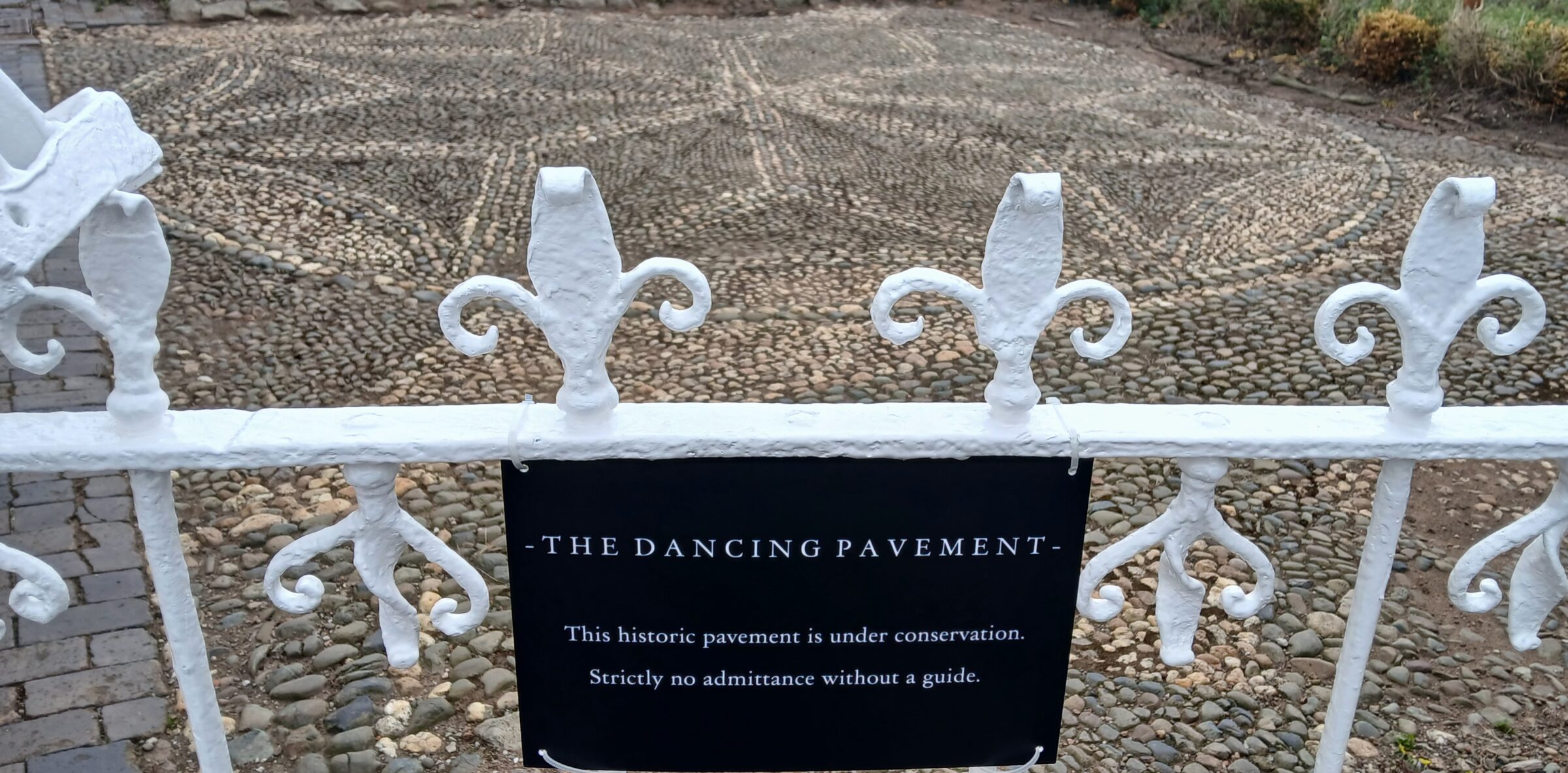
Soulton holds a unique treasure – the Soulton Dancing Pavement, a pebble mosaic instructed for in 1847 by Hannah Deakin (5x/6x great grandmother to the current generations).
This pavement offers a captivating glimpse into the past, preserving the choreography of a lost Shakespearean dance.
Scholars have drawn a compelling link between the dance depicted on the pavement and the Dance of Harmony that concludes Shakespeare’s beloved comedy, As You Like It. The circular formation of eight figures in the mosaic aligns with descriptions of the play’s final dance.
Prior to Deakin’s intervention, this elite dance adorned Sir Rowland Hill’s 16th-century residence at Soulton Hall. Plasterwork ceilings, commissioned by Hill, are believed to have included the dance motif. Unfortunately, these ceilings were destroyed during the English Civil War, threatening the complete loss of this valuable cultural record.
Recognizing the historical and artistic significance of the dance, Hannah Deakin undertook the meticulous task of recreating it in a more durable form. Utilizing a pebble mosaic technique, she ensured the dance’s choreography would be preserved for posterity.
********
This article aims to contribute to the ongoing scholarly exploration of the Soulton Dancing Pavement.
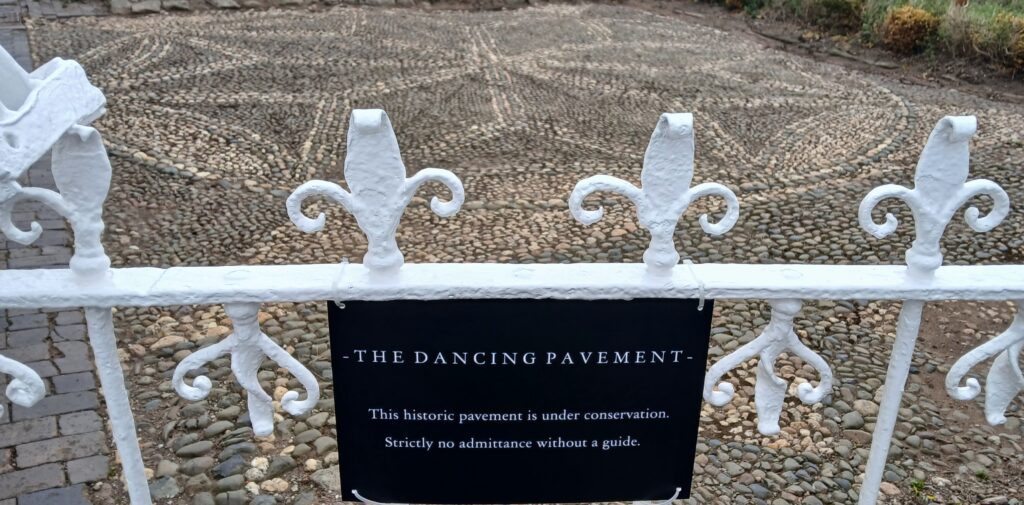
Gate to Dance Court, Soulton Hall , showing the pavement beyond
We present excerpts from Deakin’s 1840s papers, offering researchers the opportunity to delve deeper into the dance’s notation and potential connection to Shakespeare.

The famous Soulton Dancing Pavement
For academics seeking to analyze the original papers or explore the broader history of Soulton Hall, we encourage contacting us directly. Unlike the C116th and earlier Soulton Rental that shows the As You Like It source book like (currently on perminant loan the Shropshire Archives), these items are still at Soulton.
********
Soulton Hall’s 1830s Account Book, reused to design the pavement

Soulton Hall’s 1830s account book, open at the pages the Dancing Pavement was desigened at (the design used was cut out, and given to the masons, as seen)

Inside cover of the 1830s Soulton Hall Accounts books – showing Stephenson’s ‘Rocket’ train graffiti. That then new invention is from the same time as the account book was in use.

The Front cover of the 1830s Soulton Hall accounts book

An example page of the 1830s account book in use for book keeping

Some early Victorian graffiti in the 1830s Soulton Hall accounts books, some from children at the time the pavements was put in. Note in particular the figures doing The Dance.
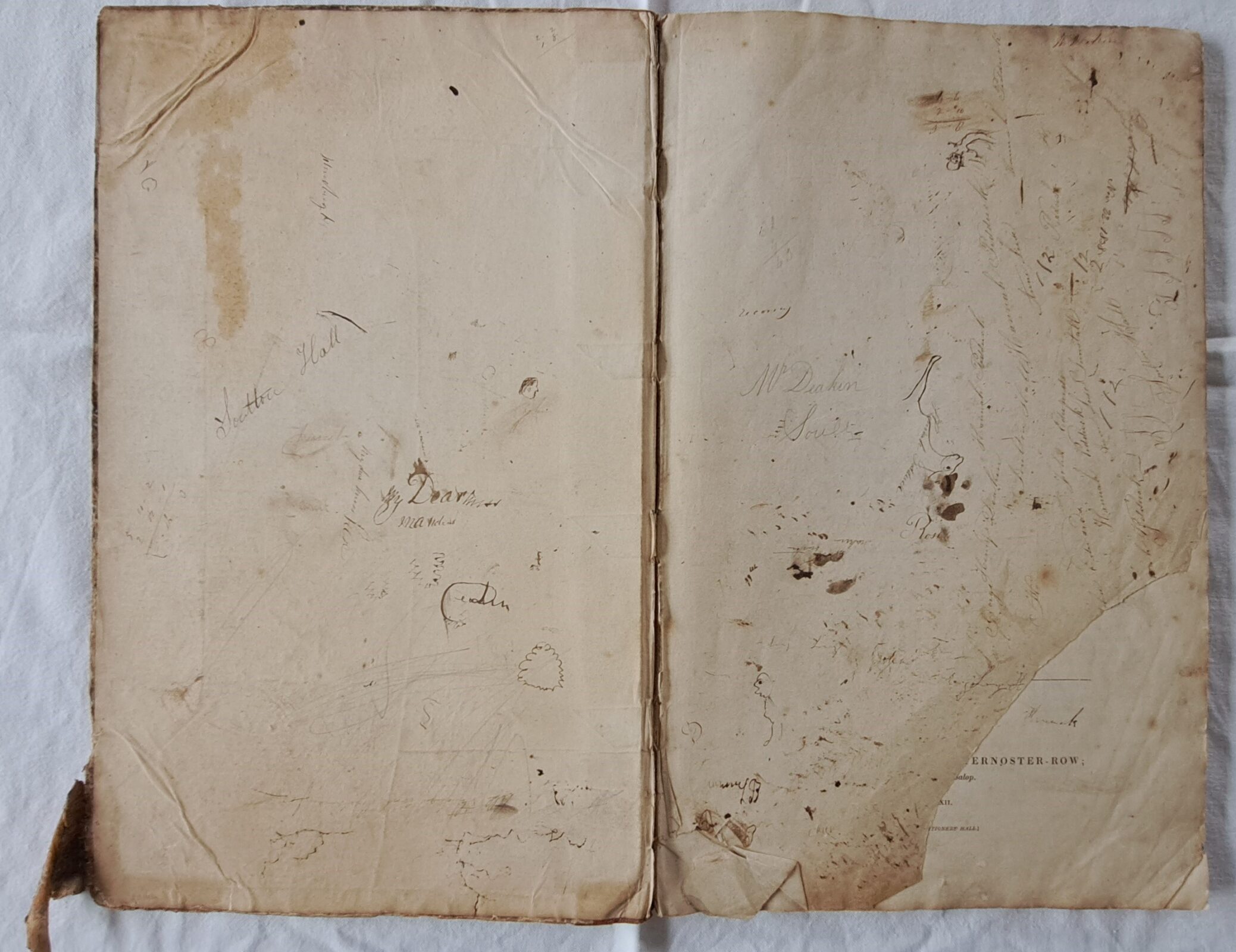
Fly leaves of the 1830s Soulton Hall accounts books, showing more early Victorian graffiti
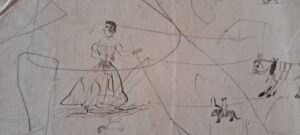
Close up of a daning figure
Soulton Hall’s 1830s Account Book, showing payments for the masons who installed the pavement
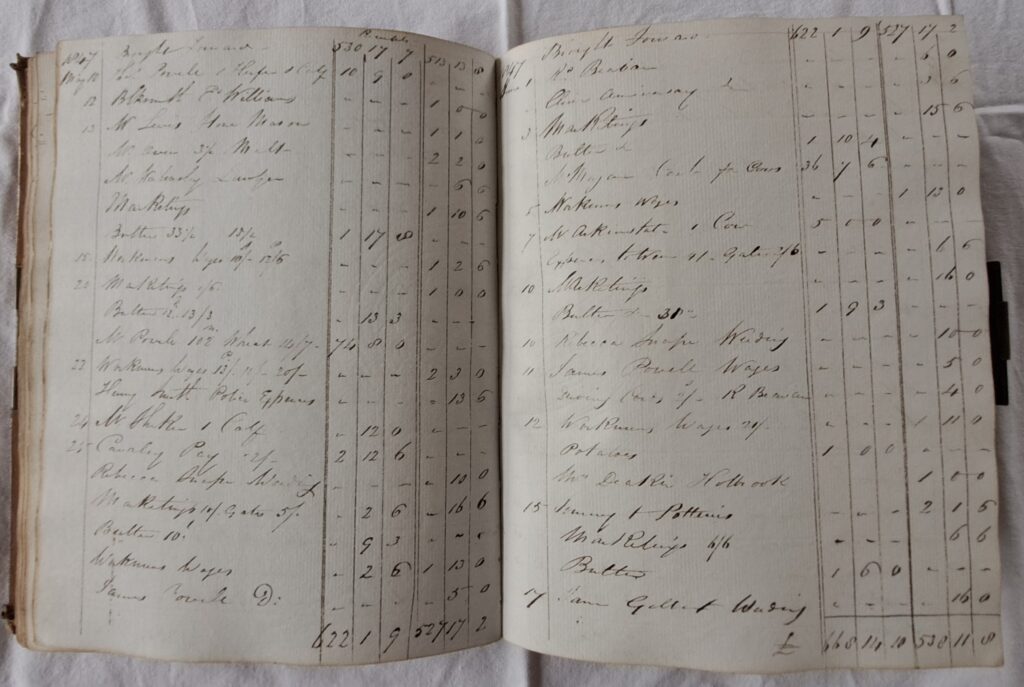
Soulton Hall Accounts Book, open at 13th May 1847 showing payments to Mr Lewis and others for installing the Dancing Pavement

Binding of the Soulton Hall Accounts book of the 1840s
These books were loaned to an exhibition in the Weaver Festival of Dance in Shrewsbury.
********
We share alongside these images the a picture of the illistration of the James D. Wenn/Byrga Geniht lecture at Soulton on 19 April 2023 and invite you to consider how The Dance the design of Soulton Hall, the Shakespare connections and the work of Old Sir Rowland Hill and this geometry are linked.
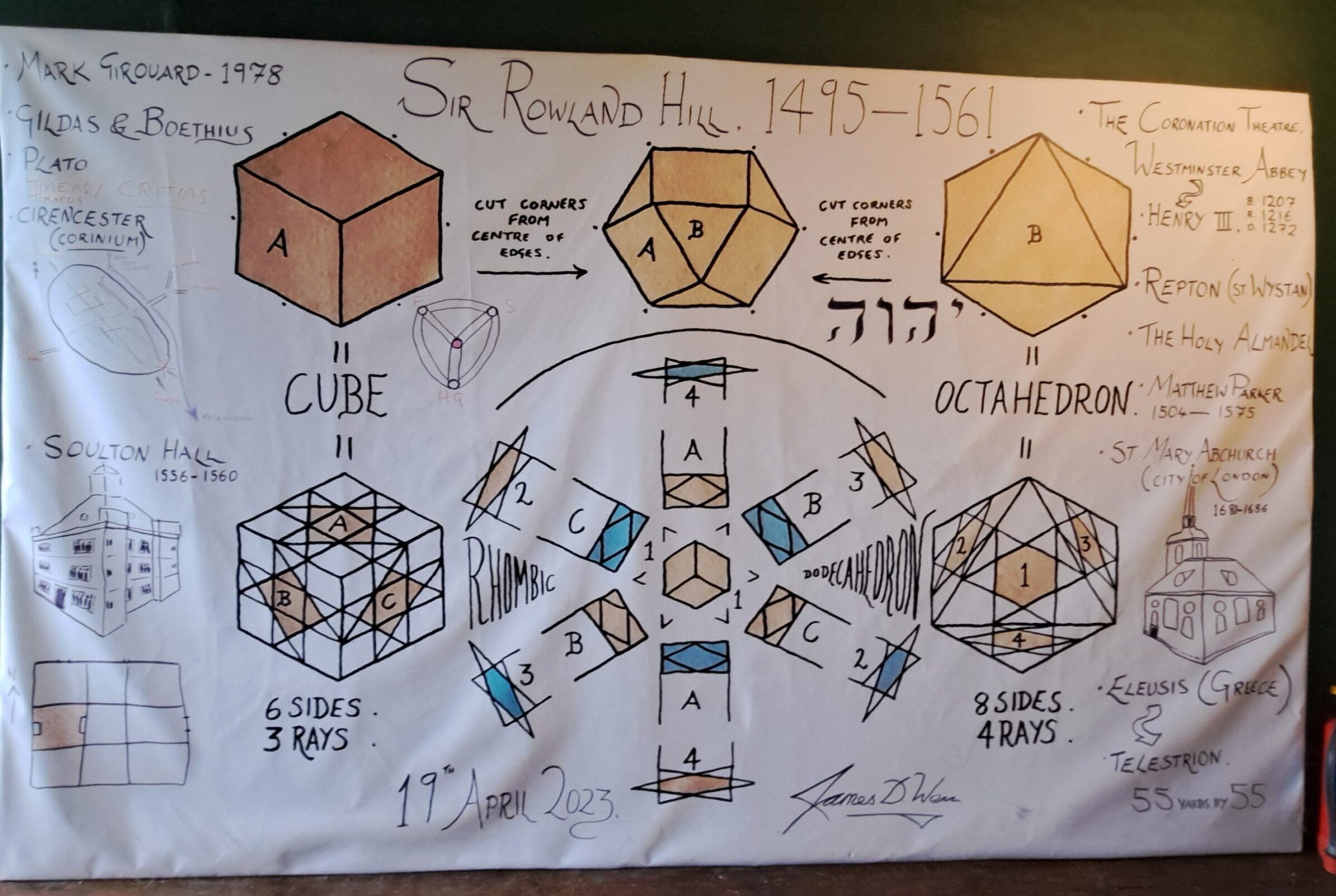
Giant lecture illistration from the James D. Wenn/Byrga Geniht Ltd Lecture on 19 April 2023
