

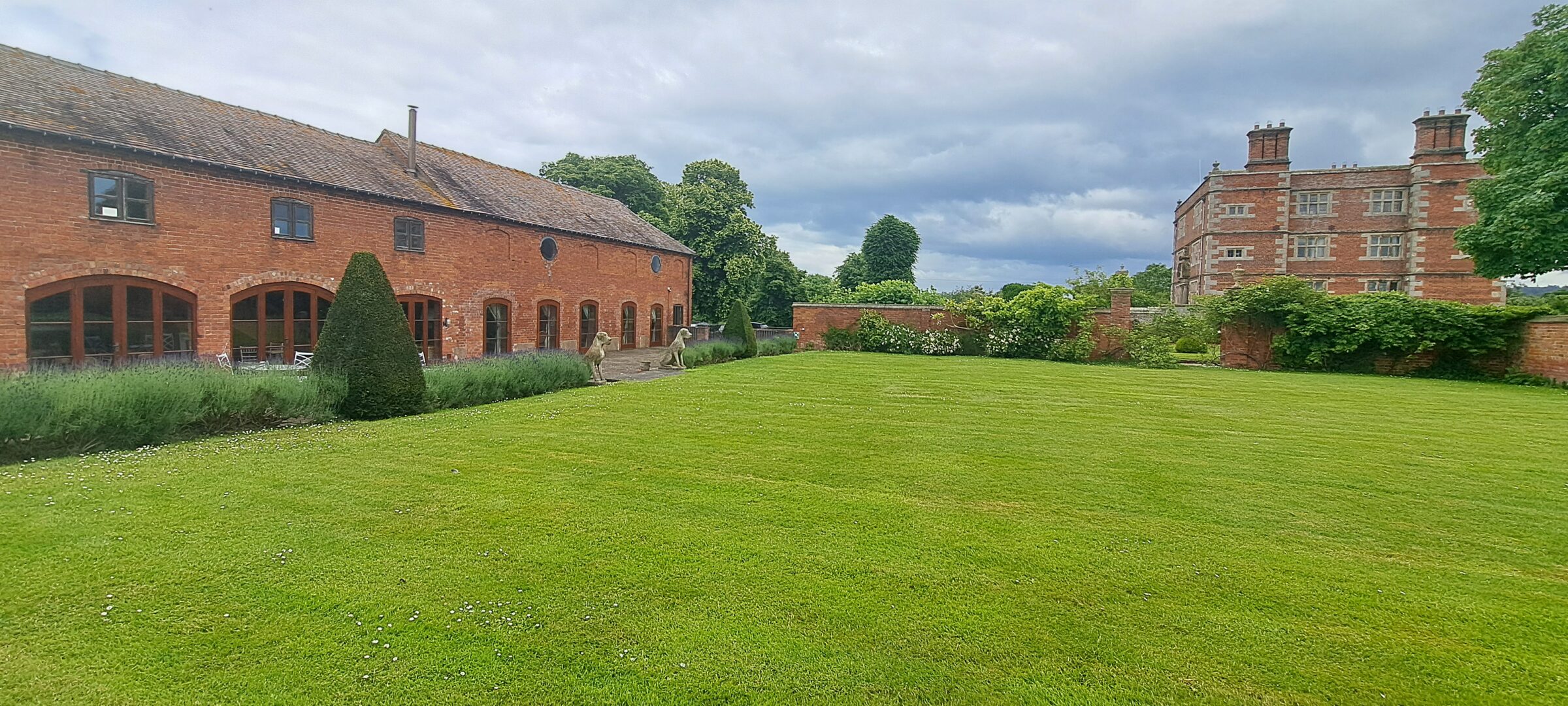
West of Soulton Hall lies a complex of buildings often dismissed as ‘mere’ barns. But beneath their often misread exteriors lies far richer more intriguing story: in fact, several.
These structures are on the footprint of the Medieval manor, where the senior buildings of the manor were from the abandonment of the Soulton Mound site which archeology has shown was abandonded in around 1420.
Archaeology in 2024 is revealing evidence of intensive occupation on the ‘new’ (current) site beginning in the early 1400s.
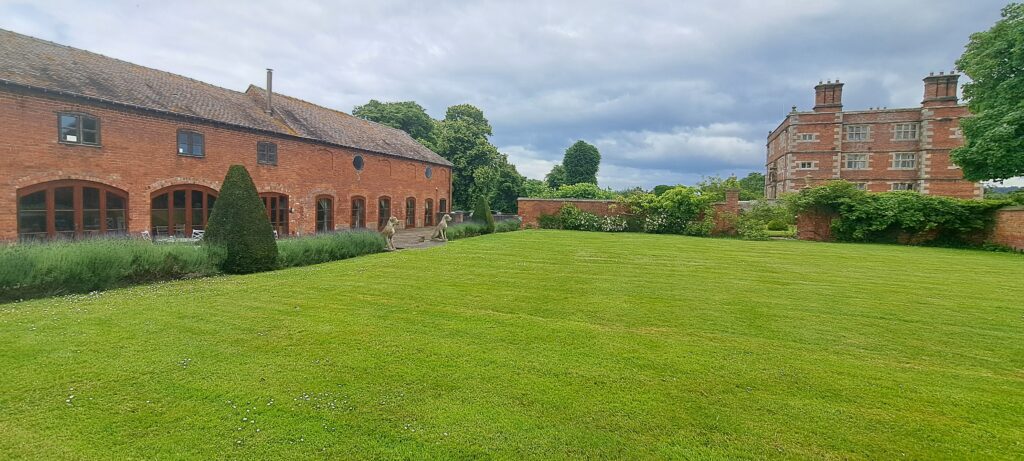
Soulton Court, Base Court (the garden), and the building now called Soulton Hall built by Old Sir Rolwand as a corps de logis beyond.
Now known as Soulton Court, this U-shaped arrangement faces east towards Soulton Hall and centers around a garden – the Base Court. Manors built around open base courts like this are quite common. A nearby example is Coughton Court.

The Moot Hall (or Justice Room) in Soulton Court – note this room only has two windows, which are round… that was done to talk about Harmony and Justice: ‘Thy will be done; on earth as it is in heaven’
Our great hall was originally part of this complex. Later, it was reconfigured into the Moot Hall, incorporating the ancient timbers. This arrangement, with the great hall within the court complex, predates Sir Rowland Hill’s time and reflects the layout used by the Lodge family.
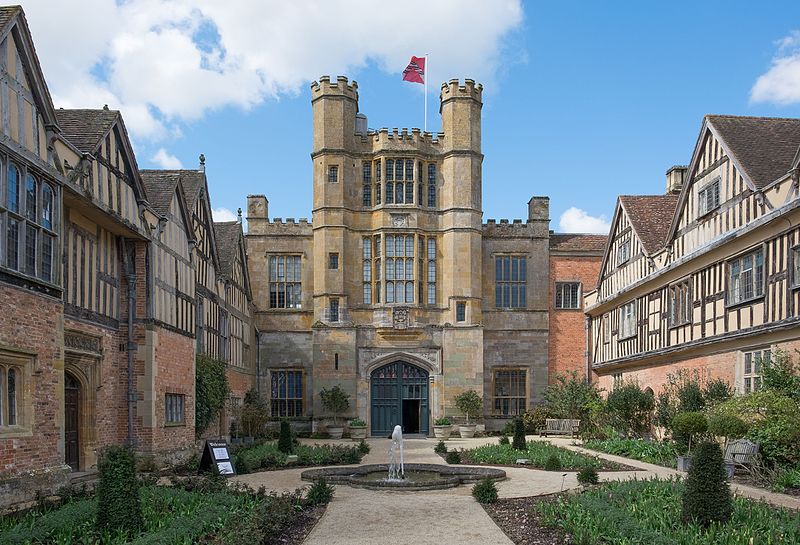
Coughton Court
You can see this tradition in Pitchford Hall.
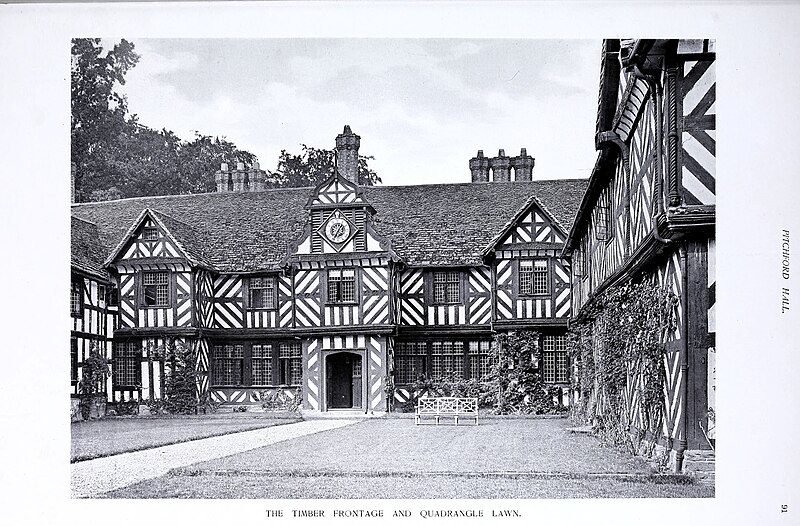
Pitchford Hall Quadrangle
Tretower Court is another example, which is in a useful state of preservation for the points being made here.

Tretower Court and Castle (Cadw) – Castle in Crickhowell, Crickhowell
It is also a common thing for base courts to become farms in later centuries.
******
The building we call Soulton Hall was constructed by Sir Rowland Hill in the 1550s and was an addition to this configuation. It made a palace complex.
It’s important to avoid viewing Soulton as a complex through a lens of much later country houses like those evoked in Downton Abbey or Bridgerton. This perspective doesn’t reflect the realities of the Tudor period, where these estates functioned quite differently.
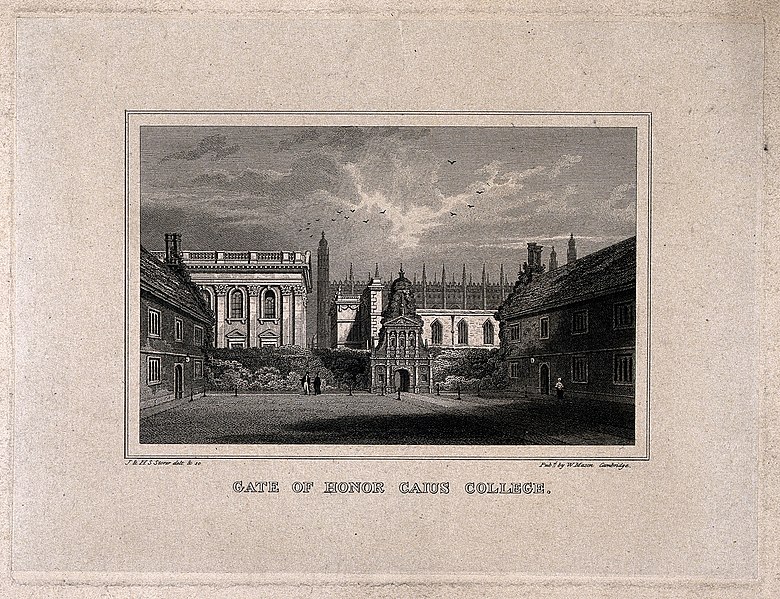
Gonville and Caius College, Cambridge: Caius Court towards the Gate of Honour. Line engraving by J. & H.S. Storer after themselves
It maybe useful to include the examples of Oxbridge Colleges and Ams houses (such as Berwick nearby, and linked by the same masons in the 1660s/70s) which also did this.
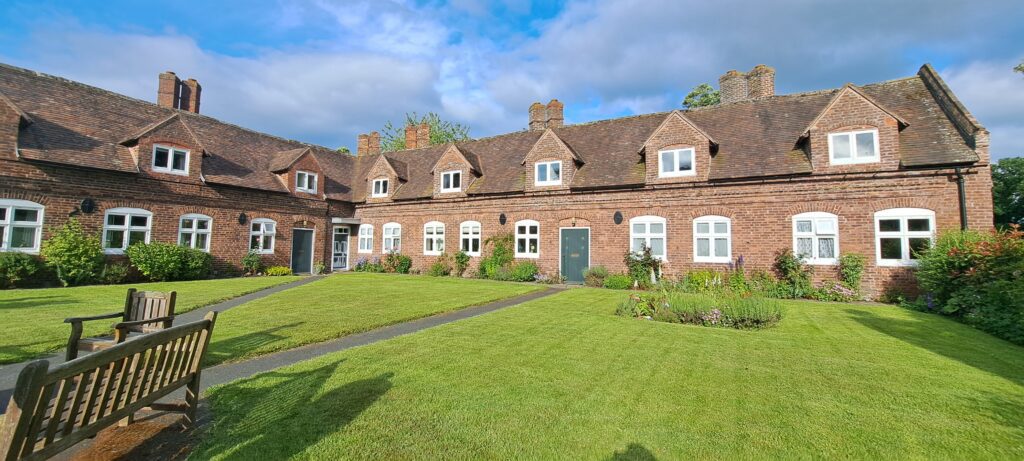
The 1670s Berwick Alms Houses
********
A number of people’s current perception of Soulton Court buildings is often skewed towards the 18th or even 19th centuries, with a purely agricultural function. This misinterprets their rich history. In reality, these buildings were far more versatile and played a significant civic role in the late 17th century, even housing a courtroom.
Soulton Court and Base Court, therefore, its much more than its fairly brief and much later purely agricultural identity — it’s a tangible reminder of the rich tapestry woven by powerful families who shaped the landscape of Soulton even before Sir Rowland Hill arrived.
********
- Our understanding was confirmed and deepened by archaeological excavations conducted with Dig Ventures in 2024, and this post was updated to reflect that.
- This post incorporates consultancy outputs from James Wenn of BYRGA GENIHT, the country house consultancy firm.
