

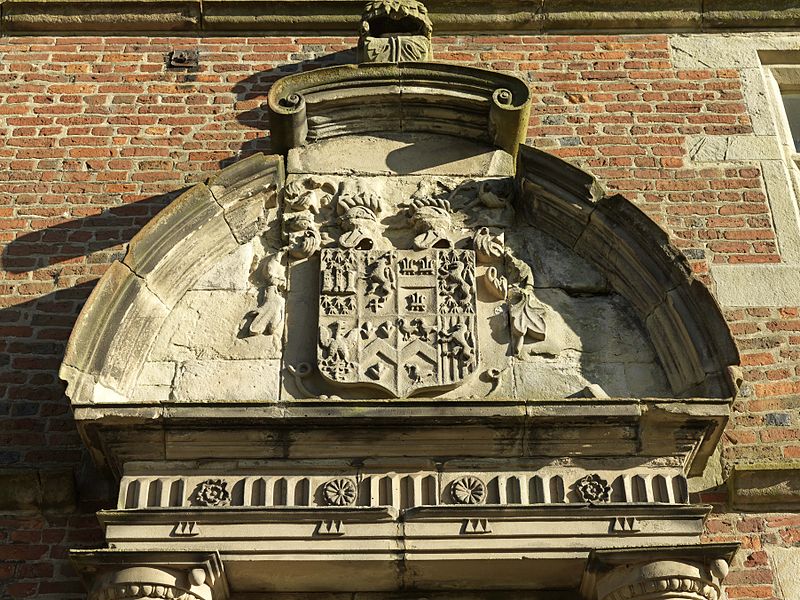
The entire semi-basement floor of Soulton Hall is built on four courses of double cube-fronted grinstone blocks, which then transition to brick. This has led some to speculate about a possible reference to the Evangelists: “On these rocks we will found a church.” Whatever is being said, it is certainly intentional.
********
There is one place where this four courses of stone has been interfeared with, and while more work needs to be done, it appears to be a C17th interfereance.
Here are some pictures:
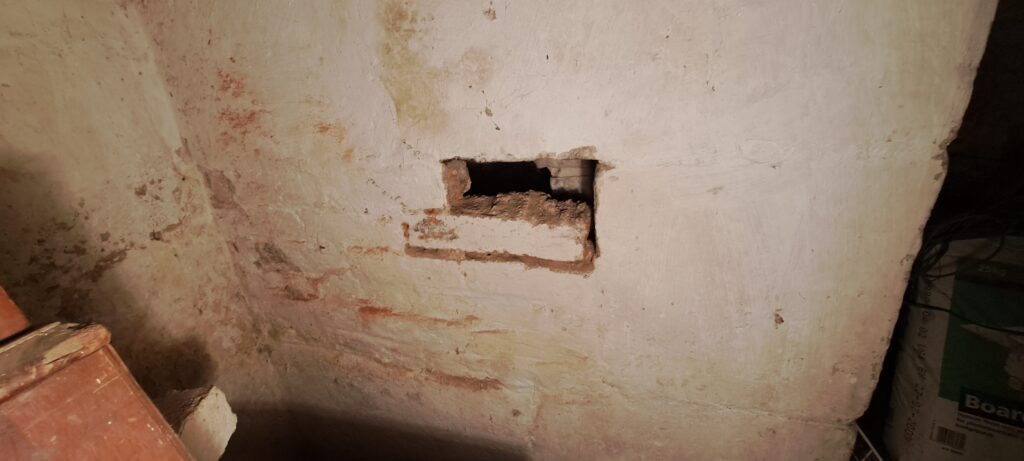
The curious, large, compartment incerted into the Rithmomachia, likely in the C17th – a fume cupbard in a very early laboratory?
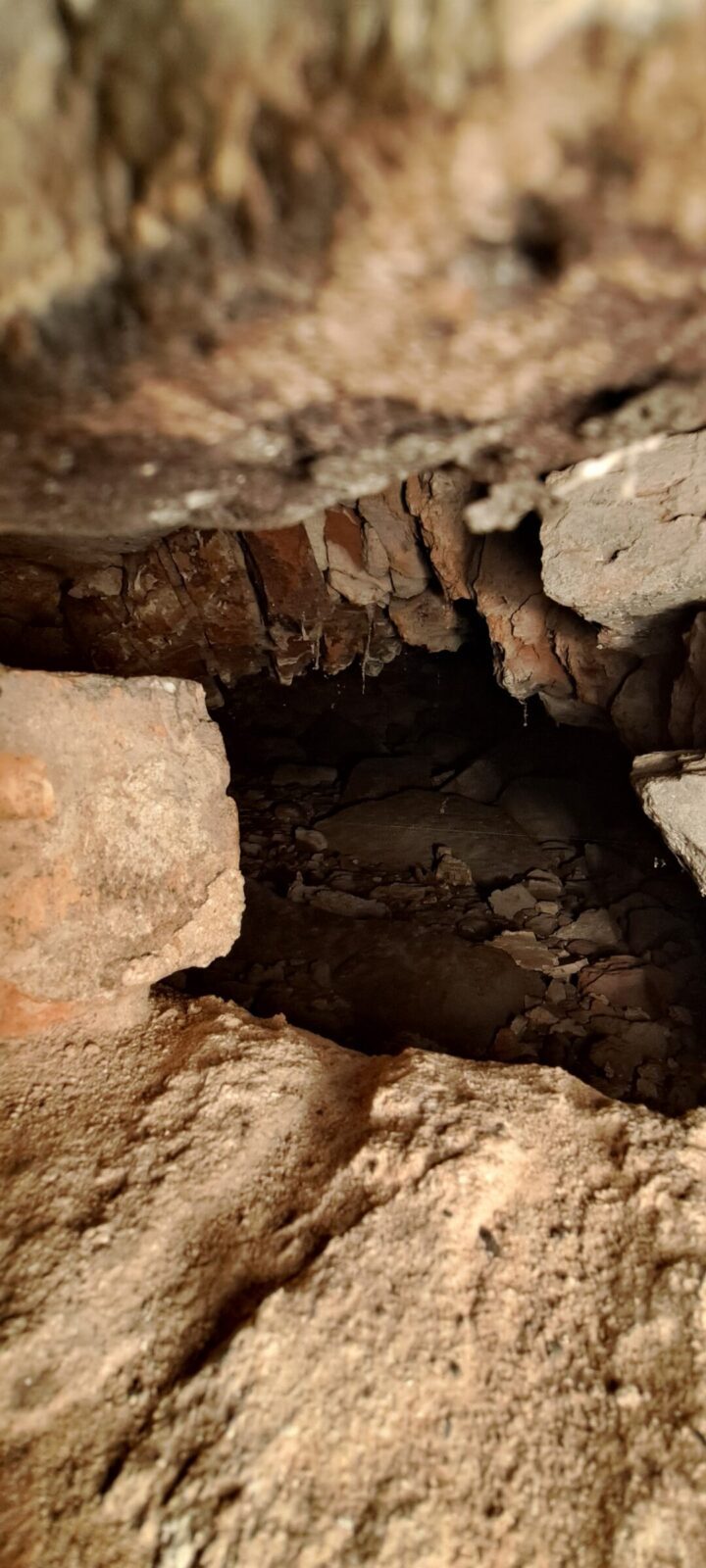
This image reveals a curious void inserted into the structure of the house. Intriguingly, it a has a flue that connects to the chimney of the Blue Room fireplace. It is over a meter square inside.This curious detail is a hidden void within the structure, it was inserted afterh the C16th, and seems to have been covered over in the late C18th.
This cavity measures over a square meter internally and possesses a fascinating connection – a flue that leads directly to the chimney of the Blue Room fireplace. It might be more than just an empty space, and was a lot of work.
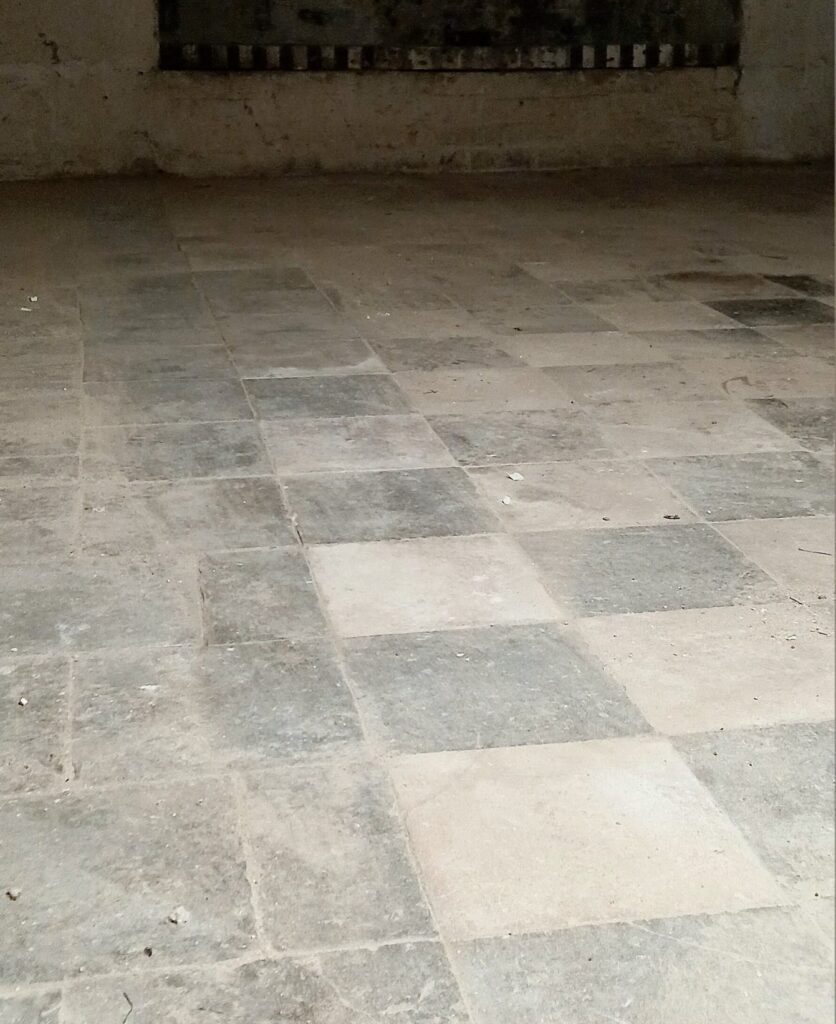
The Rithmomachia Pavement in the Prayer Room of Soulton Hall – 2022, awaiting conservation.
Its location within the Rithmomachia room, coupled with the flue connection, has sparked speculation about a possible scientific application. A member of the Hill family was a founder of the Royal Society and we know of links to Bacon, Boyle, etc.
Could this be evidence of a very early laboratory setting, perhaps dating back to the 17th century, and might this void have functioned as a fume cupboard?
Further investigation is required to determine the true purpose of this intriguing feature.
********
Credit for consultancy: https://byrga.co.uk/
