

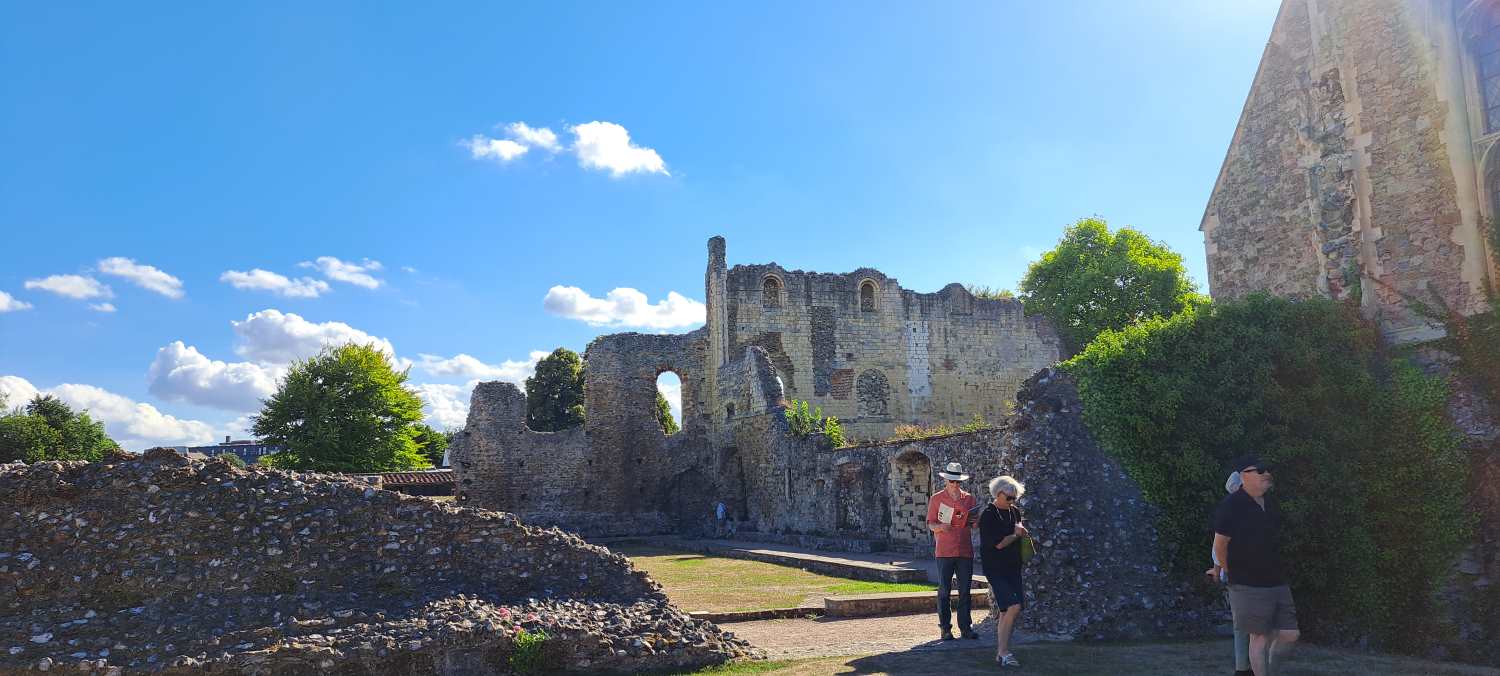
Anguished Witness to Destruction and Lost Legacy: St. Augustine’s Abbey and Sir Rolwand Hill
On July 30, 1538, the King’s Commissioners arrived at St. Augustine’s Abbey, marking the abrupt end of its nearly millennium-old monastic and scholarly presence.
This blog post reflects on a visit to the abbey’s ruins, informed by an understanding of Sir Rowland Hill’s work and the possibility of more nuanced forces operating secretly during the Reformation, including Rowland himself.
********
St. Augustine’s Abbey, along with its lands, buildings, and possessions, became the property of the Crown, as was part of King Henry VIII’s broader reforms, which sought to break the power of the Catholic Church and establish the Church of England.
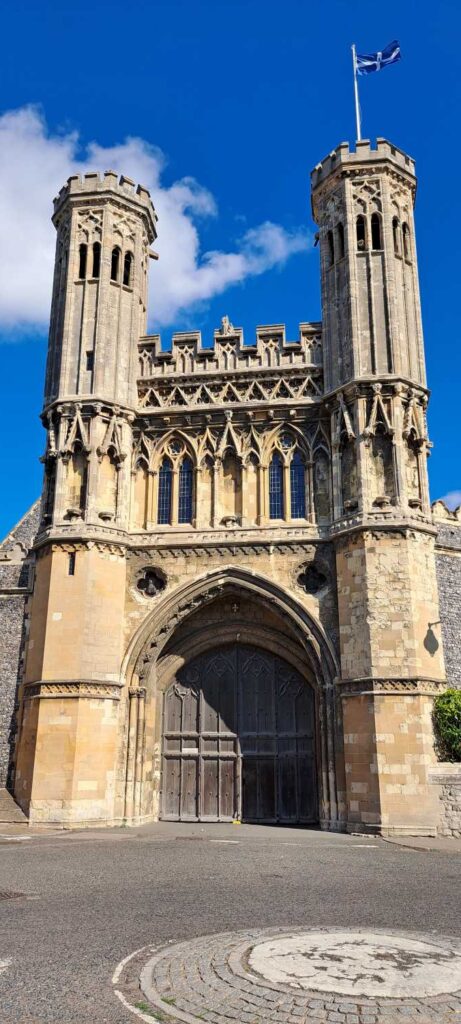
Fyndon Gate is the original gatehouse to St Augustine’s Abbey. It was rebuilt from 1301-1309 by Abbot Fyndon.
The importance of this site to the pre-Reformation Church settlement in England can be seen in this list of Saints understood to have been buried at St. Augustine’s Abbey.
- St. Augustine (597-605): The founding father of the English Church
- St. Laurence (605-619): Augustine’s successor
- St. Mellitus (619-624): Bishop of London
- St. Justus (624-627): Bishop of Rochester
- St. Honorius (627-653): Archbishop of Canterbury
- St. Deusdedit (655-664): Archbishop of Canterbury
- St. Theodore (668-690): Archbishop of Canterbury
- St. Berhtwald (693-731): Archbishop of Canterbury
- St. Tatwin (731-734): Archbishop of Canterbury
- St. Nothelm (735-739): Archbishop of Canterbury
- St. Jambert (765-792): Archbishop of Canterbury
- St. Ethelbert, King of Kent (d. 616): Patron saint of Kent
- St. Bertha, Queen of Kent (d. c. 603): Wife of King Ethelbert and patroness of the English Church
- St. Liudhard, St. Bertha’s chaplain (d. 603): A missionary and saint
- St. Mildred, Abbess of Minster (d. c. 700): A prominent abbess and saint
- St. Mildgyth, sister of St. Mildred (d. 676): A saint and abbess
- St. Adrian of Canterbury, abbot here (d. 710): A respected abbot and saint
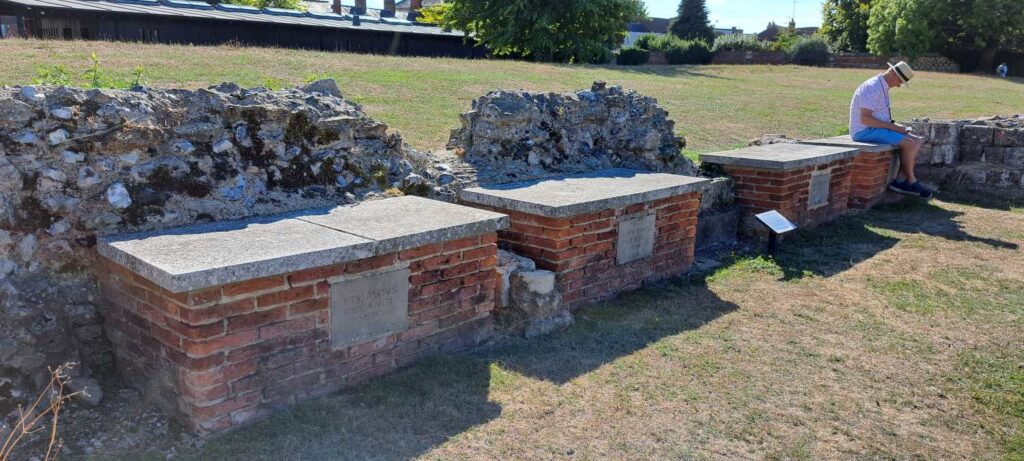
Partly restated tombs of some of the Royal Saints at Ruins of St Augustine’s Abbey
The Abbey’s Vanished Books: A Cultural Tragedy
While some buildings were converted into a royal residence, others were dismantled, and their materials sold.
Significantly, some of the stone from the abbey was repurposed for the fortifications of the Pale of Calais.
Such a large-scale operation which needed shipping could only have been entrusted to a select few individuals with the capability to transport stone over long distances. Sir Rowland Hill must be at the top of that very short list, although further research is needed to confirm this.
Given Sir Rowland Hill’s scholarly pursuits and sensitive nature, it is highly probable that he would have found the manner of the destruction of St. Augustine’s Abbey deeply upsetting. Such an act of cultural vandalism would have conflicted with his values and beliefs, regardless of his Protestant identity.

The impact on Sir Rowland Hill of the destruction of St Augustine’s Abbey, and in particular its library, is hard to inhabit. It was surely traumatic.
This becomes even more apparent when considering the tragic fate of the abbey’s extensive library.
As a scholar, Hill would have undoubtedly recognized the immense value of the library’s collection.
The King’s Commissioners, upon taking control of the abbey, ordered the dissolution of the library.
The books and manuscripts went away or were simply discarded, their contents lost to history. Some of the more valuable items may have been plundered by individuals seeking to profit from the abbey’s dissolution.
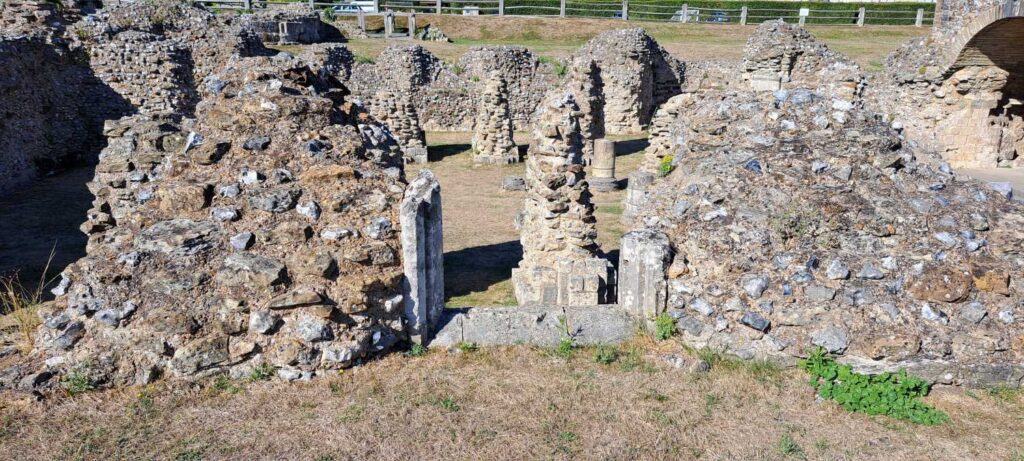
Ruins of St Augustine’s Abbey
The destruction of such a treasure trove of knowledge and culture would have been a significant loss for Hill personally, as well as for civilisation.
Many of the books and manuscripts contained unique and valuable information, including works of theology, philosophy, history, and literature.
The loss of these texts has had a lasting impact on the study of medieval and early modern England. Indeed, today, scholars continue to search for fragments of the St. Augustine’s Abbey library, hoping to recover some of the lost treasures and piece together the history of this once-great institution.
On a cultural level, the dissolution of St. Augustine’s Abbey marked the end of a significant chapter in English history as well as the loss of a lot of knowlege from calssical as well and Christian sources.
A 1,500-Year-Old Treasure: The St Augustine Gospels
The St Augustine Gospels are a beautifully illuminated manuscript. They offer a unique window into the early days of Christianity in England, and are believed to have been brought to the country by St. Augustine himself. This sacred text has witnessed centuries of history and remains a cherished artifact.

St Augustine Gospels
St Augustine Gospels – Folio 125r contains 12 scenes from the Passion
The manuscript is thought to have originated in Italy during the 6th century, likely in Rome or Monte Cassino.
It was written in an Italian uncial hand and later arrived in England, where corrections and additions were made to the text in an insular hand.
The Augustine Gospels were undoubtedly housed at St. Augustine’s Abbey in Canterbury during the 10th century. In the late Middle Ages, they held a prominent position within the abbey and cathedral, serving as a ceremonial item rather than simply a library book.
What was the journey of The Augustine Gospels in the 1540s and 1550s?
In 1557, we can see the The Augustine Gospels entrusted to the safekeeping of the Parker Library at Corpus Christi College, Cambridge by Elizabeth I’s first Archbishop of Canterbury. From then on, its journey through time has been relatively straightforward. Indeed, the Gospels have played a prominent role in various historical events:
- they have been used in the enthronement ceremonies of new Archbishops of Canterbury;
- they have accompanied the Archbishop of Canterbury at the Cathedral for special occasions, including papal visits; and
- most notably, the manuscript was used at the coronation of King Charles III and Queen Camilla in 2023, possibly a historic first.
However, a question remains about how the manuscript safely navigated the period between 1538 and 1575. This was a turbulent time, and it’s unclear how the manuscript avoided destruction or loss during this period. It would likely have been a problematic text for both Edward VI, Mary I and seemingly Henry VIII.
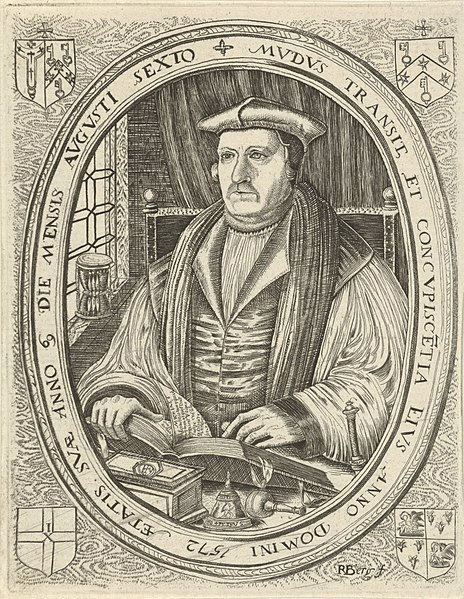
Matthew Parker (1504-1575), Archbishop of Canterbury
How did the The Augustine Gospels get safely into the hands of Archbishp Parker?
Sir Rowland Hill was a complex figure who navigated the tumultuous religious and political landscape of the English Reformation like no other.
While traditionally viewed as a staunch Protestant, his actions and beliefs suggest a more nuanced understanding.
Here are some key points to consider:
- Contradictory Roles: Hill served as a Commissioner Against Heretics under Mary I and later as a key figure in the Protestant regime under Elizabeth I on the Commission for Ecclesiastical Causes, alongside Matthew Parker, even before Parker was appointed Archbishop of Canterbury.
- Unclear sympathies: Evidence suggests Hill protected artifacts like the Mercers’ Christ, and perhaps more besides.
- Champion of cultural preservation: Hill’s actions in preserving the Mercers’ Christ and it appears texts which entered the Parker Library demonstrate his commitment to protecting cultural heritage, regardless of religious affiliation.
- A third force for harmony: Hill may have sought a middle ground between Protestant and Catholic extremes, aiming for religious pluralism and tolerance.
- Legacy of complexity: Hill’s legacy is complex and multifaceted, reflecting the contradictions and challenges of the Reformation era.
Given these circumstances, and considering the possibility that Parker himself may have been sheltered at Soulton Hall along with his books, it’s worth exploring whether Hill, as one of the few individuals with the legal authority to possess such a text, might have played a role in its preservation in the 1540s and 1550s.
He would undoubtedly have witnessed the destruction of this UNESCO site even if he was not directly involved, and it doesn’t take much imagination to conceive of his feelings of anguish and pity toward what was happening. Indeed, he expressed these emotions, by utterig the De Profundis for all to see and hear in 1549 at a Mayor making ritual at the ransacked St. Paul’s Cathedral, either at the shrine of St. Erkenwald or the tomb of Bishop William.
********
With this knowledge, a visit to St. Augustine’s Abbey resonates particularly deeply with those familiar with Soulton Hall: the historical understanding adds a whistful layer of poignancy and reflection to the experience.
