

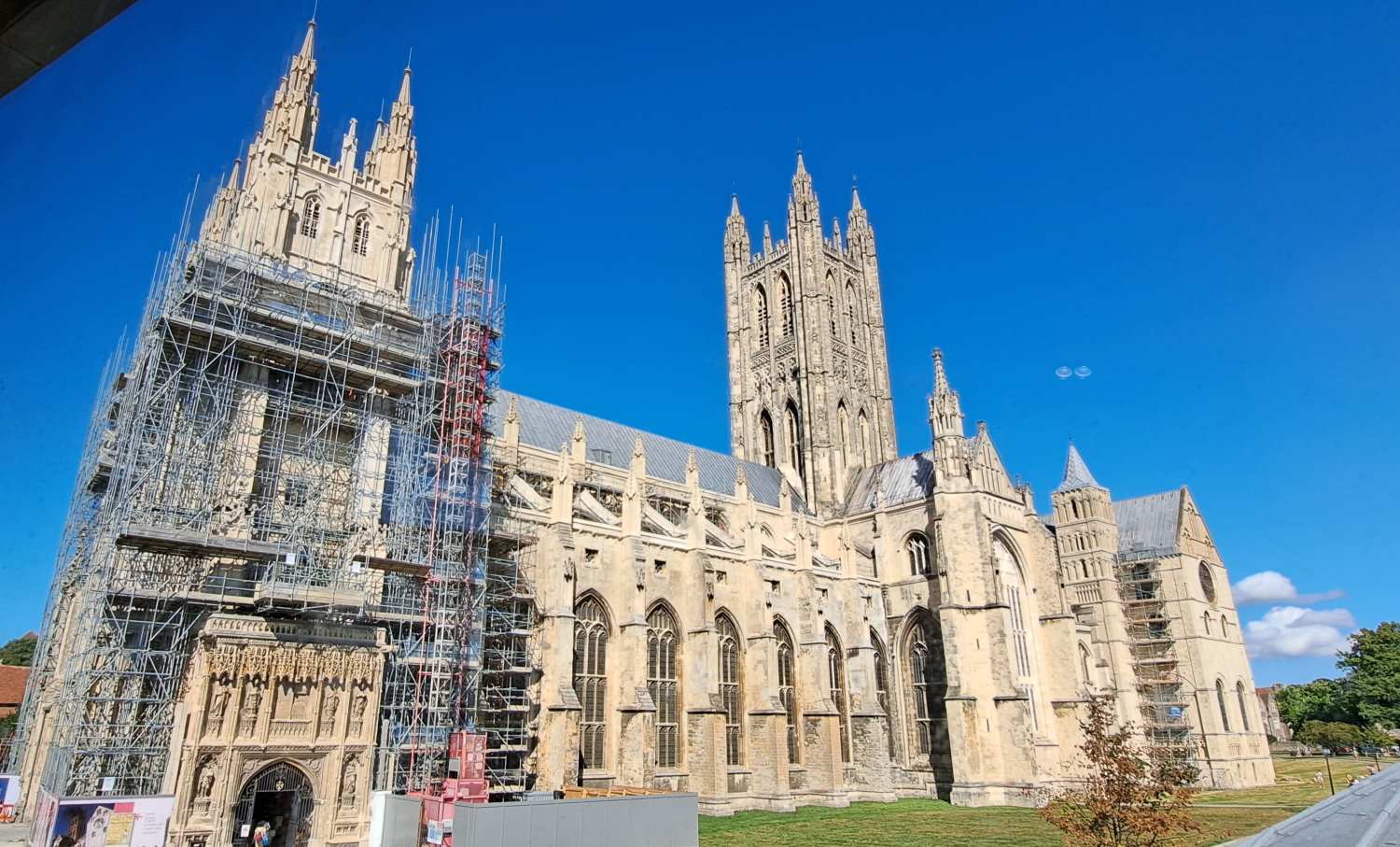
In the Footsteps of Matthew Parker: A Visit to Canterbury Cathedral
Matthew Parker, Archbishop of Canterbury, had a significant relationship with Queen Elizabeth I.

Matthew Parker, with Queen Anne Boleyn and child Elizabeth Tudor
He served as chaplain to her mother, Anne Boleyn, and that queen asked him to be Elizabeth’s godfather when she learned of her impending execution.
This intimate role cemented their bond and solidified Parker’s position as a trusted advisor. Parker’s influence on Elizabeth was substantial, and he played a pivotal role in shaping her religious policies.

‘Old Sir Rowland’: inspiration for ‘Old Sir Rowland in AS YOU LIKE IT
Parker was also a friend and colleague of Sir Rowland Hill, a prominent figure in the English Reformation. Hill served on the Ecclesiastical Causes Commission established by Elizabeth I, and his work closely aligned with Parker’s efforts to consolidate the new more stable religious settelement of the early Elizabethan Age.
Parker and Hill shared a commitment to a harmonious settlement and an end to the religious extremes that had characterized the 1540s and 1550s.
Moreover, it is believed that Parker was sheltered at Soulton Hall, along with important texts, while he was in hiding during the reign of Mary I.
Parker was a renowned scholar and theologian, and his contributions to the Reformation were significant.
He played a key role in the revision of the Book of Common Prayer, the official liturgical book of the Church of England. Parker also supported and developed Corpus Christi College, Cambridge, including giving it the Parker Library in 1575 – how he came to old these books is something of a mystery which seems to involve Sir Rowland Hill.
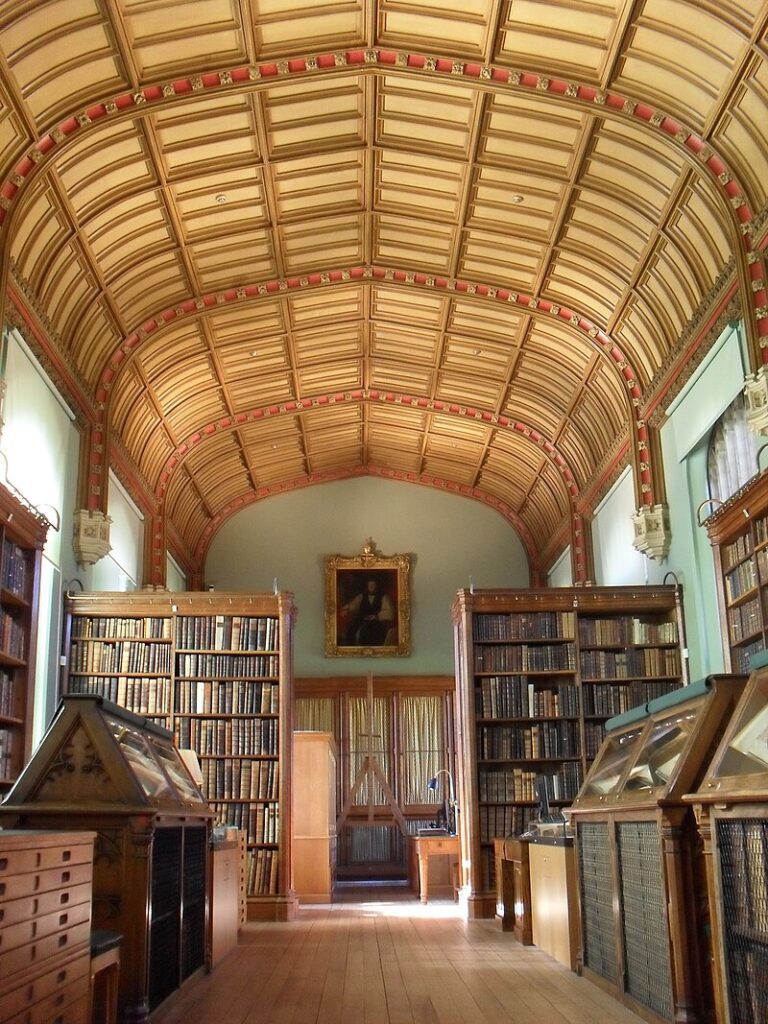
Wilkins Room in the Parker Library, Corpus Christi College Cambridge
In addition to his religious and political activities, Parker was a patron of the arts. He commissioned numerous works of art and literature, including the Parker Psalter, a beautifully illuminated manuscript.
Parker’s patronage helped to foster a vibrant cultural scene in Elizabethan England.
Parker as Archbishop of Canterbury
Matthew Parker was initially reluctant to accept the position of Archbishop of Canterbury. He had several reservations about the challenges and responsibilities associated with this high-ranking role.
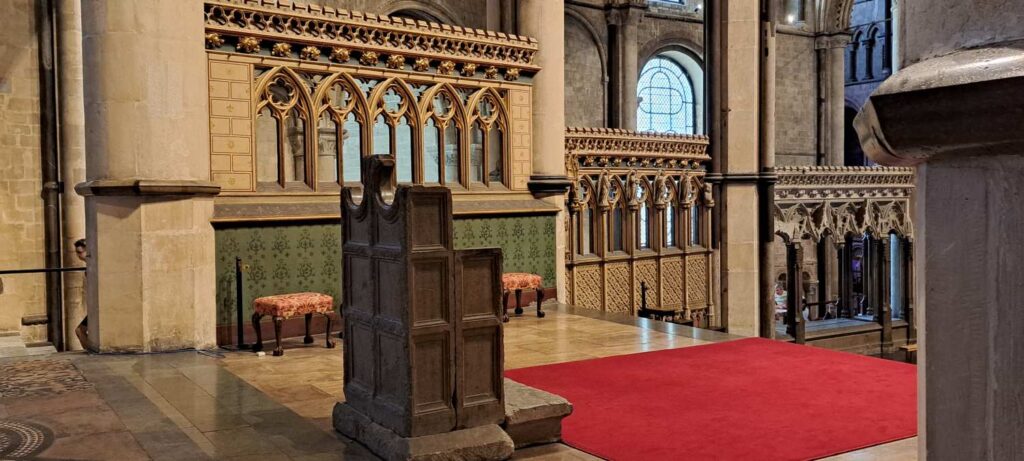
The throne of St. Augustine’s Abbey, where Matthew Parker was reluctantly dragged to become Archbishop of Canterbury. Despite his initial hesitation, Parker played a crucial role in shaping the English Reformation.
It was only after much persuasion from Elizabeth I and other influential figures, including William Cecil, 1st Baron Burghley, that Parker finally agreed to take on the role.
In fact, he was virtually dragged to the throne of St. Augustine’s, such was his reluctance to accept the position.
His initial hesitation underscores the weight and significance of the role of Archbishop of Canterbury in Tudor England.

The gates to Old Palace at Canterbury
This trip to Canterbury holds significant meaning for us at Soulton Hall due to Canterbury’s deep connection to Matthew Parker, a prominent figure in the English Reformation and a friend of Sir Rowland Hill.
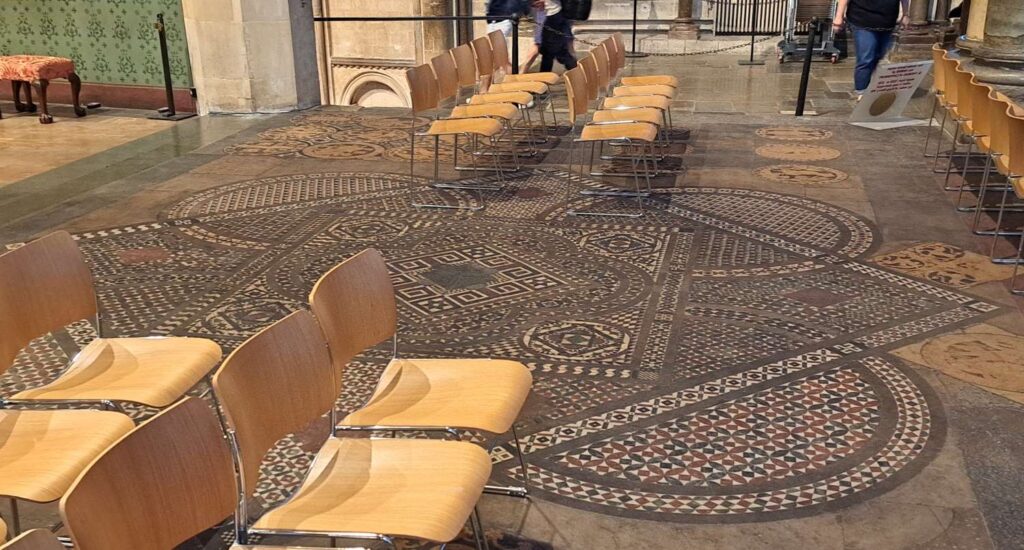
Cosmatesque pavement at Canterbury
Parker’s association with Canterbury Cathedral as Archbishop of Canterbury made it a place of great importance for Hill and hence for us.
The visit included a reflection on the dangers faced by all those who seek to protect ideas, faith, and lives during the turbulent times: the destruction of St. Augustine’s Abbey could so easily have gone even further, and it must have been considred by Hill and Parker that that was possible.
By visiting Canterbury, we were honoring the legacy of Matthew Parker and reflecting on the importance of preserving historical sites and cultural heritage.
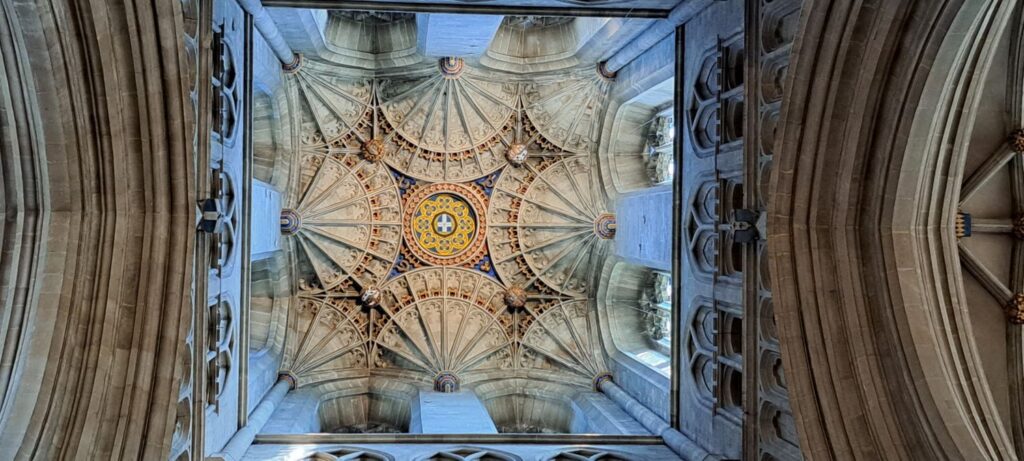
8 fold rose in the lantern of Canterbury Cathedral
The trip was also a reminder of the need for harmony, tolerance, and respect for others, lessons that can be learned from the tumultuous events of the Reformation.
