

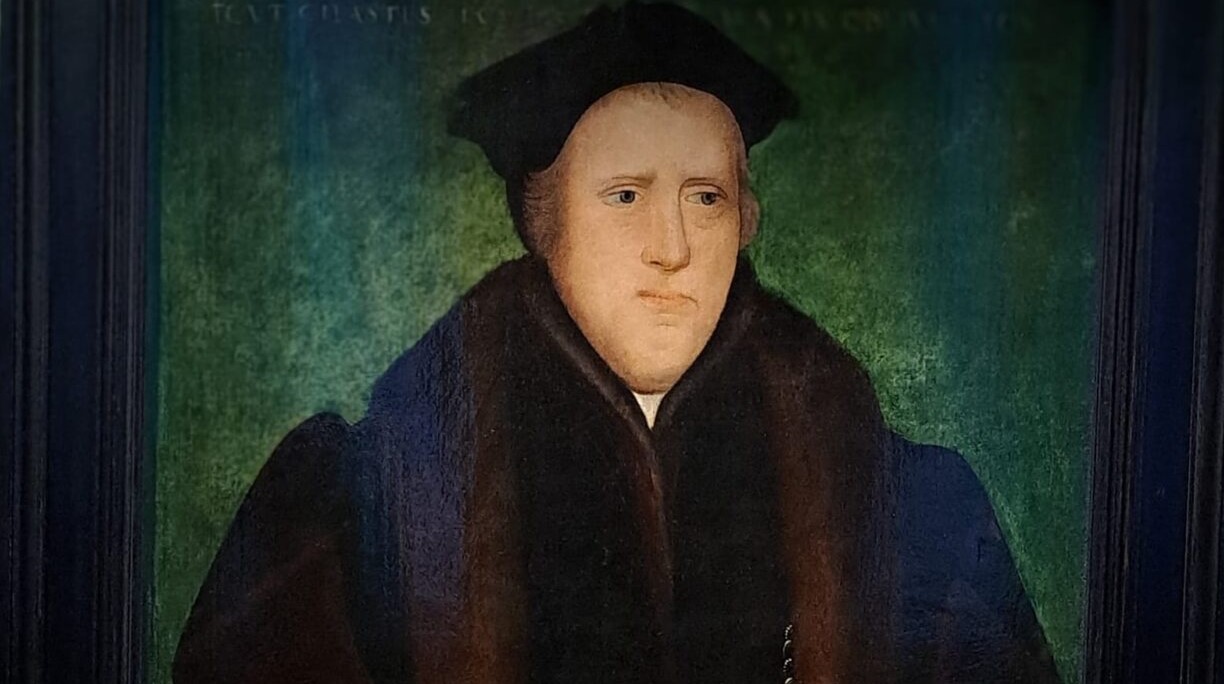
Crafting a Complex Character: Sir Rowland Hill and the English Reformation
Sir Rowland Hill navigated a treacherous landscape of shifting religious beliefs and political intrigue.

“I am more proud to be Sir Rowland’s son,
His youngest son- and would not change that calling
To be adopted heir to Frederick.” – Shakespeare, As You Like It
His ability to ascend to the highest offices, wield influence over doctrine, and take up space in commissions charged with the punishment of dissenters makes him a fascinating yet enigmatic character.
Was he a cunning politician driven by survival instincts, or a cultural champion seeking to protect and advance harmony?
Did his actions reflect a desire to preserve valuable items from destruction, or a more transactional and opportunistic motive?
Was he a crypto-Catholic?
Was he a Protestant sleeper agent?
Was he leading a third force on the board seeking harmony and pluralism?
What use was his European netwrok put to? and by whom?
This blog looks at the complexities of Hill’s character and explores the conflicting perspectives surrounding his legacy, and conveniently places on the table what we may say we know from the record.
Hill’s career trajectory and his ability to adapt to changing political climates might reveal the influence of personal ambition and the need to survive in a volatile environment.
However, his involvement in efforts to promote religious tolerance and preserve cultural heritage suggest a more nuanced understanding of his motivations. The specific actions and policies that made him a controversial figure, such as the punishment of dissenters and the regulation of religious materials, highlight the challenges of balancing political expediency with moral convictions.
What we can see of Hill’s personal religious beliefs and how they may have influenced his actions provide another layer of complexity. The tension between his own faith and the demands of his political role may have shaped his decisions and contributed to the uncertainty surrounding his legacy. His historical significance in the Tudor period is beyond question.
These things being said, let us look at the sources.
********
Traditionally, Hill is regarded as “The First Protestant Lord Mayor of London” in terms of being most senior, not in time. His impressive 110-foot monument, erected by his family in his honor, states:
Having embraced the principles of the Reformation, he zealously exerted himself in behalf of the Protestant cause.
And historical records confirm his role in overseeing some of the critical shifts towards godly Protestantism, including the removal of altars.
There are aspects of his life and actions that challenge this traditional view. Let us therefore begin by examining the evidence that suggests a more Catholic-leaning perspective.
An Ardent Catholic, or a Crypto-Catholic…?
…Catholic Commissioner Against Heretics
In 1557, after a short period of disfavor due to his Protestantism under Mary I, Sir Rowland Hill was appointed a Commissioner Against Heretics.
(It emerged latter that he was working on the Geneva Bible during this time; which we will come to).

“Old” Sir Rowland recovered from a period of disfavor enough to sit as a judge in treason proceedings… but all the while, he was working on publishing that would have horrified Mary I.
The establishment of this commission was described by Protestant English historian John Foxe in his Actes and Monuments (full title: Actes and Monuments of these Latter and Perillous Days, Touching Matters of the Church), popularly known as Foxe’s Book of Martyrs, as follows:
A BLOODY COMMISSION GIVEN FORTH BY KING PHILIP AND QUEEN MARY, TO PERSECUTE THE POOR MEMBERS OF CHRIST.
The commision was savagely harsh. The text of the commission is worth setting out (you can find it within Foxe’s Book of Martyrs, and it is on-line via this link):
“Philip and Mary, by the grace of God king and queen of England, &c.: to [various other Commisioners] Rowland Hill, knight; [various other Commisioners] greeting.
“Forasmuch as divers devilish and slanderous persons have… sown divers heresies and heretical opinions, and set forth divers seditious books, within this our realm of England, meaning thereby to stir up division, strife, contention, and sedition, not only amongst our loving subjects, but also betwixt us and our said subjects, with divers other outrageous misdemeanours, enormities, contempts, and offences, daily committed and done, to the disquieting of us and our people, we minding the due punishment of such offenders, and the repressing of such-like offences, enormities, and misbehaviours from henceforth, having special trust and confidence in your fidelities, wisdoms, and discretions, have authorized, appointed, and assigned you to be our commissioners; and by these presents do give full power and authority unto you, and three of you, to inquire as well by the oaths of twelve good and lawful men, as by witnesses and all other means and politic ways you can devise, of all and singular heretical opinions, lollardies, heretical and seditious books, concealments, contempts, conspiracies, and all false rumours, tales, seditious and slanderous words or sayings, raised, published, bruited, invented, or set forth against us, or either of us, or against the quiet governance and rule of our people and subjects, by books, lies, tales, or otherwise, in any county, key, bowing, or other place or places, within this our realm of England or elsewhere, in any place or places beyond the seas, and of the bringers-in, utterers, buyers, sellers, readers, keepers, or conveyers of any such letter, book, rumour, and tale, and of all and every their coadjutors, counsellors, comforters, procurers, abettors, and maintainers, giving unto you, and three of you, full power and authority, by virtue hereof, to search out and take into your hands and possessions, all manner of heretical and seditious books, letters, and writings, wheresoever they or any of them shall be found, as well in printers’ houses and shops, as elsewhere, willing you and every of you to search for the same in all places, according to your discretions. And also to inquire, hear, and determine all and singular enormities, disturbances, misbehaviours, and negligences committed in any church, chapel, or other hallowed place, within this realm; and also for and concerning the taking away or withholding any lands, tenements, goods, ornaments, stocks of money or other things, belonging to every of the same churches and chapels, and all accounts and reckonings concerning the same. And also to inquire and search out all such persons as obstinately do refuse to receive the blessed sacrament of the altar, to hear mass, or to come to their parish churches or other convenient places appointed for divine service; and all such as refuse to go on procession, to take holy bread or holy water, or otherwise do misuse themselves in any church or other hallowed place, wheresoever any of the same offences have been, or hereafter shall be, committed within this our said realm.
“Nevertheless, our will and pleasure is, that when and as often as any person or persons, hereafter being called or convented before you, do obstinately persist or stand in any manner of heresy, or heretical opinion, that then ye, or three of you, do immediately take order, that the same person or persons, so standing or persisting, be delivered and committed to his ordinary, thereto be used according to the spiritual and ecclesiastical laws… And further to search out all wastes, decays, and ruins of churches, chancels, chapels, parsonages, and vicarages in the diocese of the same, being within this realm; giving you and every of you full power and authority by virtue hereof to hear and determine the same, and all other offences and matters above specified and rehearsed, according to your wisdoms, consciences, and discretions, willing and commanding you, or three of you, from time to time, to use and devise all such politic ways and means for the trial and searching out of the premises, as by you, or three of you, shall be thought most expedient and necessary: and upon inquiry and due proof had, known, perceived, and tried out, by the confession of the parties, or by sufficient witnesses before you, or three of you, concerning the premises, or any part thereof, or by any other ways or means requisite, to give and award such punishment to the offenders, by fine, imprisonment, or otherwise, and to take such order for redress and reformation of the premises, as to your wisdoms, or three of you, shall be thought meet and convenient.
“Further, willing and commanding you, and every three of you, in case you shall find any person or persons obstinate or disobedient, either in their appearance before you, or three of you, at your calling or assignment, or else in not accomplishing, or not obeying, your decrees, orders, and commandments, in any thing or things touching the premises or any part thereof, to commit the same person or persons so offending to ward, there to remain, till by you, or three of you, he be discharged or delivered…
“And furthermore we give to you, and three of you, full power and authority by these presents, not only to call before you all and every offender and offenders, aand all and every suspected person and persons, in any of the premises, but also all such and so many witnesses as ye shall think meet to be called; and them, and every of them, to examine, and compel to answer and swear upon the holy evangelists to declare the truth, of all such things whereof they or any of them shall be examined, for the better trial, opening, and declaration of the premises, or of any part thereof.
“…
“And moreover, we will and command all and singular justices of peace, mayors, sheriffs, bailiffs, constables, and all other our officers, ministers, and faithful subjects, to be aiding, helping, and assisting you at your commandment, in due execution hereof; as they may tender our pleasure, and will answer to the contrary at their uttermost perils. And we will and grant, that these our letters patent shall be sufficient warrant and discharge for you, and every of you, against us, our heirs and successors; and all and every other person and persons, whatsoever they be, of, for, and concerning, the premises or any parcel thereof, or for the execution of this our commission or any part thereof. In witness whereof, we have caused these our letters patent to be made, and to continue and endure for one whole year next coming after the date hereof.
“Witness ourselves at Westminster, the eighth of February, the third and fourth year of our reigns.”
The number of people executed for their faith during the persecutions is estimated to be at least 287, including 56 women. Thirty others died in prison.
Participation in this judicial persecution of Protestants is not consistent with being a Protestant, unless one is able to examine beyond the superficial, which might be possible once all the evidence is on the table.
…The Mercers Christ
The Mercers’ Christ is a remarkable limestone sculpture depicting a life-sized, recumbent figure of Jesus Christ. Discovered in 1954 beneath the floor of the Mercers’ Chapel in Cheapside, London, the statue dates back to the late medieval period and was concealed to protect it from destruction during the Reformation.Missing its crown of thorns, arms, and lower legs, the Mercers’ Christ nonetheless captures the emotional intensity of the crucifixion. Its haunting realism and historical significance make it a powerful and poignant reminder of the enduring human need for spiritual connection and the saving of art in the face of adversity.
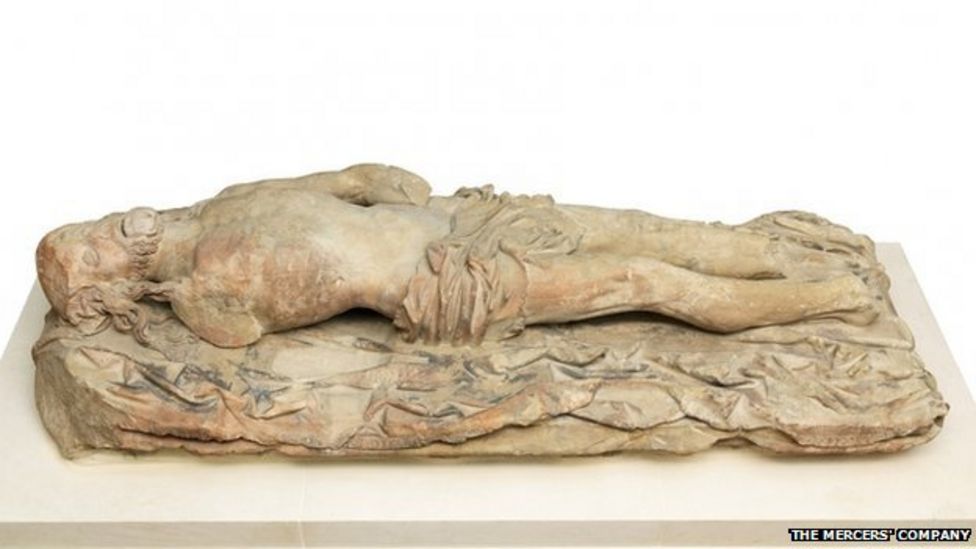
The Statue of the Dead Christ was discovered in 1954 (c) The Mercers Company
Sir Rowland Hill’s close connection to the Mercers’ Chapel provides compelling evidence of his involvement in the protection of the Mercers’ Christ. His London mansion, physically interconnected with the chapel. This proximity would have afforded him easy access to the chapel and its contents, making it highly likely that he was aware of the statue’s existence… and how it was saved and that it had been. Furthermore, Hill’s role as Master of the Mercers’ Company for a record number of terms underscores his deep connection to the organization and its property.
t is inconceivable that Hill was not involved in the preservation of the Mercers’ Christ. Such an act would have been grossly dangerous and provocative to Edward VI and his Privy Council, who were staunch Protestants.
…so Sir Rowland Hill formally presnets as a Roman Catholic in a High Offices as well privately advances its causes, at personal danger?
The evidence presented thus far suggests that Sir Rowland Hill may have secretly adhered to Catholicism in his inner religious mind: via the preservation of religious artifacts, such as the Mercers’ Christ. Moreover, in his outward conformity with a Catholic regime, it was impossible to be more blatant and assertive than to be placed within the office of Commissioner Against Heretics, a position that involved the violent persecution of Protestants. (Unless you did so to be close to power, or to keep that place from another with sterner instincts? Or to save things?)
But we simply cannot hold him to be a straightforwardly and conventionally Catholic person. To do so would ignore huge immovable objects. His being a serious and highly active (to the point of being dangerously exposed) Protestant is too compelling in the contemporary record, as well as being totally at odds with his hugely forceful reputation and centuries of historiography as the publisher of the Geneva Bible (1560) and A Treatise on Relics by John Calvin (1561), among other things.
So he is a staunch Protestant…?
There are certainly reasons to place Hill firmly in the category of Protestant.
These will now be set out:
…Commissioner for Ecclesiastical Cases in 1559
The Ecclesiastical Commission of 1599 was established by Elizabeth I to oversee the Church of England following the extremes of both the Marian persecutions under Mary I and the Calvinist influence under Edward VI. Its primary tasks were to investigate heresy, enforce ecclesiastical laws, and resolve disputes. By addressing these challenges, the commission played a crucial role in shaping the religious landscape of Elizabethan England and consolidating a more moderate Protestant authority.
This body is the polar opposite of the Commission Against Heretics under Mary. While the latter was designed to persecute Protestants, the Ecclesiastical Commission aimed to establish a moderate and inclusive Protestant Church, and ultimately to punish Catholicism.
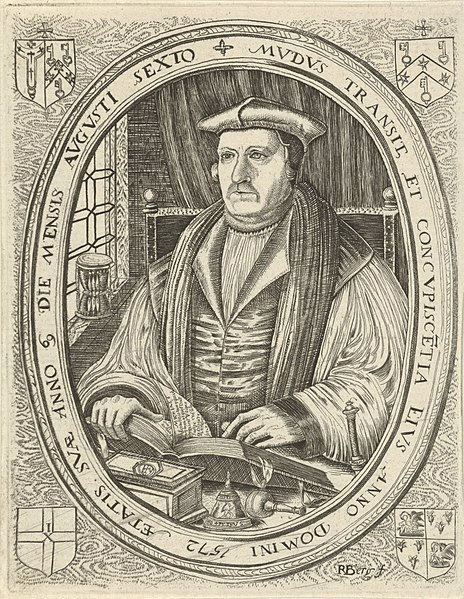
Matthew Parker (1504-1575), Archbishop of Canterbury
Matthew Parker, the prominent Protestant scholar and theologian, was placed on the Ecclesiastical Commission of 1599. This appointment came before he was made Archbishop of Canterbury, a position he initially hesitated to accept due to concerns about its challenges and responsibilities. He eventually agreed to take on the role, recognizing its importance in leading the Church of England during a time of religious upheaval. Parker had close connections to Elizabeth I, serving as her mother’s chaplain and a kind of godfather.
Significantly, Rowland Hill was also immediately appointed to this commission. This appointment raises questions about Hill’s true religious beliefs and motivations, particularly given his previous association with the Marian regime.
What is going on?
Something about Rowland Hill is so significant that any potential associations with the ferocious Catholic persecution are immediately dismissed.
He was immedately and deeply trusted and respected by the new Protestant regime, despite his past connections to Catholic Mary…
It is worth setting out the text of this commision also (you can find it on-line by following this link to a page reproducing in on the Constitution Society website):
COMMISSION FOR ECCLESIASTICAL CAUSES (1559)
Elizabeth, by the grace of God, etc., to the reverend father in God, Mathew Parker, nominated bishop of Canterbury; and… Rowland Hill… greeting.
Where, at our parliament holden at Westminster the 25th day of January…. was two acts and statutes made and established …; and where divers seditious and slanderous persons do not cease daily to invent and set forth false rumours, tales, and seditious slanders, not only against us and the said good laws and statutes, but also have set forth divers seditious books within this our realm of England, meaning thereby to move and procure strife, division, and dissension amongst our loving and obedient subjects, much to the disquieting of us and our people: wherefore we, earnestly minding to have the same acts before mentioned to be duly put in execution, and such persons as shall hereafter offend in anything contrary to the tenor and effect of the said several statutes to be condignly punished, and having especial trust and confidence in your wisdoms and discretions, have authorized, assigned, and appointed you to be our commissioners; and by these presents do give our full power and authority to you, or six of you … , from time to time hereafter during our pleasure to inquire, as well by the oaths of twelve good and lawful men as also by witnesses and all other ways and means ye can devise, for all offences, misdoers, and misdemeanours done and committed and hereafter to be committed or done contrary to the tenor and effect of the said several acts and statutes and either of them, and also of all and singular heretical opinions, seditious books, contempts, conspiracies, false rumours, tales, seditions, misbehaviours, slanderous words or showings, published, invented or set forth … by any person or persons against us or contrary or against any the laws or statutes of this our realm, or against the quiet governance and rule of our people and subjects in any … place or places within this our realm of England, and of all and every of the coadjutors, counsellors, comforters, procurers, and abettors of every such offender.
And further, we do give power and authority to you, or six of you … , from time to time hereafter during our pleasure, as well to hear and determine all the premises as also to inquire, hear, and determine all and singular enormities, disturbances, and misbehaviours done and committed … in any church or chapel, or against any divine service, or the minister or ministers of the same, contrary to the laws and statutes of this realm; and also to inquire of, search out, and to order, correct, and reform all such persons as hereafter shall or will obstinately absent themselves from church and such divine service as by the laws and statutes of this realm is appointed to be had and used.
And also we do give and grant full power and authority unto you, and six of you … , from time to time and at all times during our pleasure to visit, reform, redress, order, correct, and amend in all places within this our realm of England all such errors, heresies, crimes, abuses, offences, contempts, and enormities spiritual and ecclesiastical wheresoever, which by any spiritual or ecclesiastical power, authority, or jurisdiction can or may lawfully be reformed, ordered, redressed, corrected, restrained, or amended, to the pleasure of Almighty God, the increase of virtue, and the conservation of the peace and unity of this our realm, and according to the authority and power limited, given, and appointed by any laws or statutes of this realm.
….
And also we give full power and authority unto you, and six of you … , summarily to hear and finally determine, according to your discretions and by the laws of this realm, all causes and complaints of all them, which in respect of religion, or for lawful matrimony contracted and allowed by the same, were injuriously deprived, de frauded, or spoiled of their lands, goods, possessions, rights, dignities, livings, offices, spiritual or temporal; and them so deprived, as before, to restore into their said livings and to put them in possession, amoving the usurpers in convenient speed, as it shall seem to your discretions good….
And further we do give power and authority unto you, and six of you … , not only to hear and determine the same and all other offences and matters before mentioned and rehearsed, but also all other notorious and manifest adulteries, fornications, and ecclesiastical crimes and offences within this our realm, according to your wisdoms, consciences, and discretions; willing and commanding you, or six of you … , to use and devise all such politic ways and means for the trial and searching out of all the premises as … shall be thought most expedient and necessary. And upon due proof had, and the offence or offences before specified, or any of them, sufficiently proved against any person or persons by confession of the party, or by lawful witnesses, or by any due mean … , then you or six of you, as aforesaid, shall have full power and authority to award such punishment to every offender by fine, imprisonment, or otherwise, by all or any of the ways aforesaid, and to take such order for the redress of the same, as to your wisdoms and discretions [shall be thought meet and convenient].
[And further we do give full power and authority unto you,] or six of you … , to call before you … all and every offender or offenders, and such as [to] you … shall seem to be suspect persons in any of the premises; and also all such witnesses as you … shall think [meet] to be called before you or six of you as aforesaid and them and every of them to examine upon their corporal oath for the better trial and opening of the premises or any part thereof.
And if you or six of you, as aforesaid, shall find any person or persons obstinate or disobedient either in their [appearance] before you … at your calling or commandment, or else not accomplishing or not obeying your order, decrees, and commandments in anything touching the premises or any part thereof … , then you … shall have full power and authority to commit the same person or persons so offending to ward, there to remain until he or they shall be by you … enlarged and delivered….
And more, we will and command all and singular justices of the peace, mayors, sheriffs, bailiffs, constables, and other our officers, ministers, and faithful subjects, to be aiding, helping, and assisting and at your commandment in the due execution hereof, as they tender our pleasure, and will answer to the contrary at their utmost perils….
…immediate recovery of favour in the new Protestant dispensation under Elizabeth I
More generally, given Hill’s role in the Marian regime, one might have expected him to be regarded as toxic and dangerous under Elizabeth I.
Not a bit of it! He immediately established himself as a trusted advisor to the new Protestant queen, suggesting a pre-existing relationship that may have developed during Elizabeth’s time as a princess. This relationship could be attributed to their shared humanist circles and the similar educational influences they both experienced, which included connections to some of the same individuals and institutions.
Sir Rowland Hill continued to serve as a Privy Councillor during the early years of Elizabeth I’s reign. This influential position gave him a significant voice in shaping the government’s policies and decisions.
Hill played a crucial role in implementing the Act of Supremacy and the Act of Uniformity, two key pieces of legislation that established the Protestant Church of England. The Act of Supremacy declared Elizabeth the Supreme Governor of the Church of England, while the Act of Uniformity mandated the use of the Book of Common Prayer and the rejection of Catholic practices.
Hill’s involvement in these Acts demonstrates his commitment to the Protestant Reformation and his support for Elizabeth’s policies. His position as a Privy Councillor allowed him to exert significant influence over the implementation of these laws and to help shape the religious landscape of Elizabethan England.
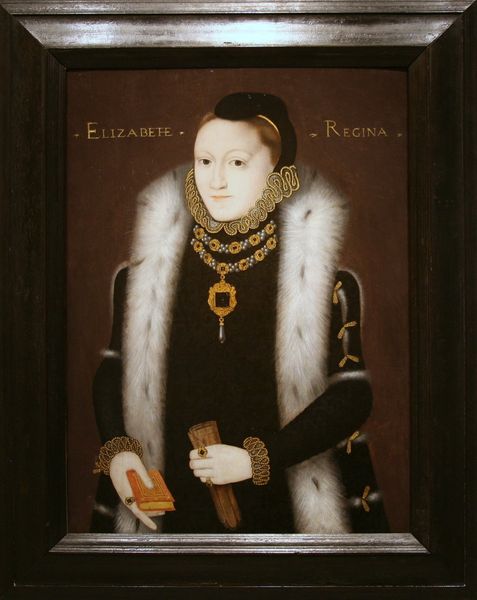
Clopton portrait of Elizabeth I, 1558 — dawn of her reign, guided by Parker with Rowland Hill on her Privy Council working on pluralism
…The Geneva Bible and other publishing
Sir Rowland Hill’s publication of the Geneva Bible in 1560 is a stark and undeniable indicator of his Protestant sympathies. The Geneva Bible was a highly influential English translation of the Bible produced by Protestant exiles in Geneva, Switzerland. Renowned for its strong Calvinist leanings and extensive marginal notes, the Geneva Bible significantly shaped Protestant theology in England.
Hill’s involvement in the publication of this influential text demonstrates his unwavering commitment to the Protestant cause and his desire to promote a more radical form of Christianity. By aligning himself with Protestant exiles actively working to undermine the Catholic Church, Hill clearly expressed his Protestant beliefs and willingness to take risks for the Reformation.
It is startling that Hill undertook this work while still serving on Mary’s Commission Against Heretics—and sitting as a judge in proceedings for treason against Mary. This extraordinary—now blatant and outrageous—situation highlights the complexities of Hill’s character and the remarkable space he was prepared to exist inside.

The frontispiece of the 1560 Geneva Bible at Lambeth – showing Rouland Hall (Rowland Hill) as publisher. The Hall/Hill pun is considered a Renaissance pun and a tribute to the shared effort of the project.
Sir Rowland Hill’s press published alsoseveral significant religious texts that reflect his Protestant convictions and his role in the Elizabethan religious settlement.
- Godly Meditations, a devotional guide, published in 1562, offers spiritual reflections, prayers, and a defense of predestination.
- Boke of Psalmes, a work that includes in its decications insights into the spiritual guidance, political advice, and historical context of the Elizabethan Golden Age. It dedicates itself to Queen Elizabeth I, affirming her divine right to rule and drawing parallels between her experiences and those of King David.
- A Treatise on Relics, a text, published in 1561, challenges the Catholic practice of venerating relics, aligning with Calvin’s critique of such practices.
These texts demonstrate someone’s commitment to Protestant principles involvement in shaping the religious landscape of Elizabethan England.
They were chosen by someone, reflecting certain beliefs and interests. And they are connected to Hill in a curated and conscious way.
…Marian Priest Hide
Constructed in a single phase during the Marian Persecutions, this Soulton Hall served as Sir Rowland Hill’s rural headquarters.The architectural design (specifcally the new in 1560 corps de logis), reveals a clear purpose expressed in the way the builsing is put together: to provide shelter and refuge.
The implications of this are profound. Given the time period and Sir Hill’s official role, it’s evident that Soulton Hall was a sanctuary for individuals whose Protestant faith was threatened.
These individuals, likely scholars with valuable materials, found safety within Hill’s protection.
While Sir Hill’s public duties on Mary’s Commission against Heresy may seem contradictory, the reality is that he was secretly safeguarding those he was ostensibly tasked with persecuting. This hidden act of defiance speaks volumes about his true loyalties and commitment to the Protestant cause.
It is thought that the people recieving protection included Archbishop Mathew Parker and Reverand Thomas Ashton.
This evidence would seem to present compelling and intimate picture of Sir Rowland Hill as a covert champion of the Protestant cause during the Marian Persecutions…
A third way… the ‘Via media’…?
Sir Rowland Hill’s actions during the 1550s and into the first years of Elizabeth I’s reign reveal a complex operator, whose motivations are opaque to the conventional binary dichotomy of Protestants vs. Catholics. While his Protestant identity is well-documented, his involvement in other religious and political activities provides a more nuanced understanding of his role in the era.
Hill’s publication of a Protestant Bible and other texts is a clear indication of his support for the Reformation and his commitment to spreading Protestant ideas. This activity aligns with his protection of Protestant individuals and demonstrates his dedication to the Protestant cause.
However, his efforts to hide Catholic art from Calvinists demonstrate a commitment to preserving religious heritage, even if he disagreed with the Catholic faith. This action suggests a nuanced understanding of religious diversity and a desire to protect cultural artifacts, regardless of their religious affiliation.
His service on the Commission against Heresy and then the Commission for Ecclesiastical Causes highlights the tension between his personal convictions and his public duties. Notably, he was the only person to serve on both commissions.
While his extraordinary participation in these bodies may have been motivated by a desire to protect his own interests or influence public policy, it is also possible that he used his position to secretly pursue his own agenda, which was not dogmatically tied to either Protestant or Catholic constituencies.
Put differently, Sir Rowland Hill and the wider circle of which he was a part wished to stop genocide, promote pluralism and tolerance, and find a kind of harmony: to discharge the duties of Plato’s guardians.
This is the view which is to be prefered. And there is ample evidence for it.
…the Concealed Chapel
Within Soulton Hall lies a concealed chapel, meticulously aligned with the Easter morning sunrise. This space is interconnected with an adjacent prayer room, creating a dedicated set of rooms for contemplation and reflection within the house.

The chapel in Soulton Hall has an aligment to the dawn sun on Easter morning
Designed to be conciliatory and consoling, the chapel’s configuration would resonate with Catholic and Orthodox individuals, evoking feelings of respect, gentleness, and comfort. Most particularly for those familiar with the historical context, the chapel’s design would offer a sense of solace and understanding.
Protestants engaging with this space might find it contemplative and abstract, appreciating its serene atmosphere and architectural elements.
For those with exposure to Renaissance humanism, the chapel would offer allusions to Plato and the wisdom of pagan philosophers. This subtle nod to classical thought speaks to the concept of harmony and the value of drawing nourishment from other cultures and perspectives, even when differing viewpoints exist.
Taken together, the chapel’s design reflects a desire for inclusivity, respect for diverse religious traditions, and a commitment to finding common ground. It is a testament to the broader cultural and philosophical influences that shaped the creation of Soulton Hall.
…Classical scholarship embeded into Soulton hall
One of the texts published by Rowland Hill’s press was Leonardo Bruni’s “On the War in Italy Against the Goths.” To Renaissance individuals, the implications of this work being foregrounded in publishing linked to English statecraft and the Reformation would have been obvious. The book, a warning and encouragement, demonstrates how classical wisdom can be overpowered but also how civilization can be recovered. It invites people to honor knowledge and sustain it in times of danger.

This image depicts a scholarly reconstruction of Soulton Hall, highlighting its architectural elements inspired by the ancient theater of Epidaurus. The yellow lines trace these features, revealing the Rowland Hill’s homage to the renowned Greek structure.
In a similar way, we can see a broad celebration of culture in the building of the Renaissance Soulton Hall, drenched as it is in codes, references to scripture and classical sites of contemplation and renewal, ranging from Solomon’s Temple to Epidaurus via Eleusis, the Well of Catharsis, the Holy Sepulchre, chivalry, Euclid, and Ezekiel.
Sir Rowland Hill’s strategic use of theater and cultural activities at Soulton Hall served as a clever means of attracting visitors from London and beyond.
These events also provided plausible deniability for his political work, allowing him to gather statesmen together without arousing suspicion: hosting such gatherings under the guise of cultural pursuits.
Moreover, Hill was able to engage in discreet comment on political matters, expressing his views in an oblique manner, via art, that avoided direct confrontation or accusations of treason:
They say he is already in the Forest of Arden, and a many
merry men with him; and there they live like the old Robin Hood
of England. They say many young gentlemen flock to him every day,
and fleet the time carelessly, as they did in the golden world.– William Shakespeare, As You Like It
…saved cultural treasure
At this point, the sheltering of Matthew Parker becomes relevant again. When he was on the run within England, he is known to have been sheltered along with his family. Parker, a renowned scholar with a vast collection of books, was well looked after. He enjoyed the powerful protection of someone who was neither Nicholas Bacon nor William Cecil.
The books he was hiding with are now the renowned Parker Library at Corpus Christi College, Cambridge, famous for its Anglo-Saxon texts. Such texts were subject to severe persecution during the time of the Commission against Heresy because they represented for some the ancientness of an English church independent of Rome.
We may now see a broader picture beyond the priest’s refuge. Hill, often depicted in posthumous statues holding Magna Carta, was a protector of culture, irrespective of sides. He not only sheltered individuals but also preserved invaluable historical texts.
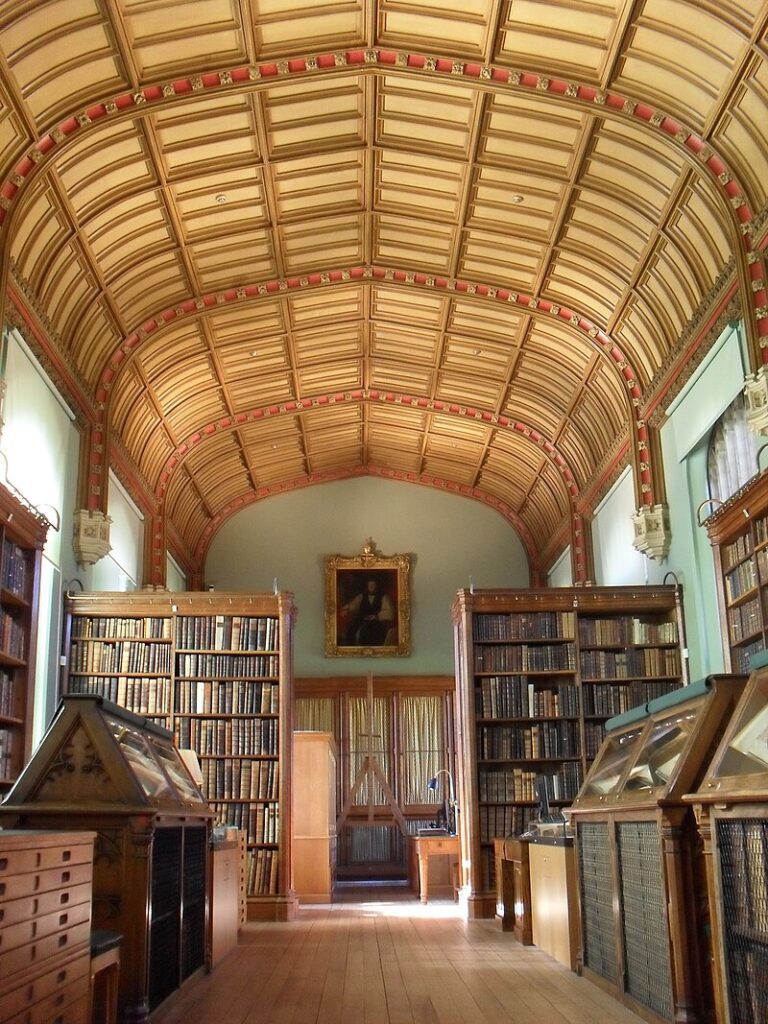
Wilkins Room in the Parker Library, Corpus Christi College Cambridge
The Recovery of Harmony: the third force in the Reformation
ORLANDO
Orlando, my liege; the youngest son of Sir Rowland de Boys.DUKE FREDERICK
I would thou hadst been son to some man else:
The world esteem’d thy father honourable,
But I did find him still mine enemy:
Thou shouldst have better pleased me with this deed,
Hadst thou descended from another house.
But fare thee well; thou art a gallant youth:
I would thou hadst told me of another father.– William Shakespeare, As You Like It
The association of Soulton and Sir Rowland Hill with As You Like It is well-known. The play’s lines make clear the kind of icon Sir Rowland Hill was to the Tudors, with the usurping, abusive Duke Frederick expressing his contempt for the virtuous old Sir Rowland, but being unable to deny the predominant view of his virtue. As Rosalind puts it more simply in thenext lines:
My father loved Sir Rowland as his soul,
And all the world was of my father’s mind– William Shakespeare, As You Like It
********
Shakespeare’s As You Like It concludes with a celebratory dance commanded by Hymen, marking the restoration of harmony and order in the forest. This climactic scene serves as a poignant reminder of the quest for harmony that has been a central theme throughout the play.
Now, my co-mates and brothers in exile,
Hath not old custom made this life more sweet
Than that of painted pomp? Are not these woods
More free from peril than the envious court?
…
Sweet are the uses of adversity,
…
And this our life, exempt from public haunt,
Finds tongues in trees, books in the running brooks,
Sermons in stones, and good in everything.
I would not change it.– William Shakespeare, As You Like It
Notably, Shakespeare has made a deliberate choice to repeatedly associate this quest and its ultimate achievement with the estates of old Sir Rowland Hill.

The Soulton Dancing Pavement, showing The Dance, which features in AS YOU LIKE IT
The choreography for that ancient dance has never been forgotten at Soulton Hall and remains etched in the pavement as a physical expression of the true motivations of the enigmatic old Sir Rowland:
A friend to virtue, a lover of learning,
A foe to vice and vehement corrector,
A prudent person, all truth supporting,
A citizen sage, and worthy counsellor,
A love of wisdom, of justice a furtherer,
…Sir Rowland Hill by name,
Of London late Lord Mayor and Alderman of same.

Rowland Hill Monument, Hawkstone Park
