

Sir Rowland Hill and the Fall of Protector Somerset
Lord Protector Somerset, Edward Seymour (uncle to Edward VI, brother to Jane Seymour), had been appointed as Regent of England during the minority of King Edward VI, was overthrown in late 1549 and ultimately executed in January 1552.
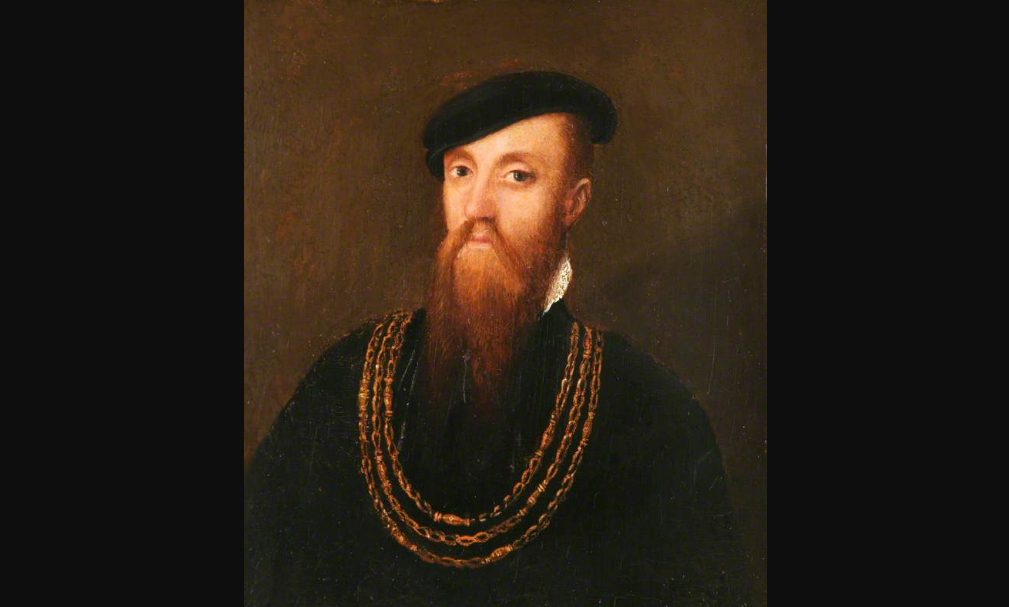
Edward Seymour (1506–1552), 1st Duke of Somerset, ‘Protector Somerset’
The fall of the Protector Somerset was a profound event, and it reveals subtle valencies beyond aristocratic squabbling and court intrigue, if we look a bit closer.
His downfall was a result of a combination of factors, including:
- Economic mismanagement: Somerset’s costly foreign policies and economic reforms led to financial difficulties for the Crown.
- Political ineptitude: Somerset’s arrogant and aloof manner alienated many in the Privy Council, and he struggled to maintain a united government.
- Failure to address rebellions: Somerset’s inability to effectively deal with the Kett’s Rebellion in 1549 further undermined his authority.
- Intrigue and rivalry: John Dudley, Earl of Warwick, and other members of the Privy Council were jealous of Somerset’s power and sought to undermine him.
- His discreditable brother:Somerset’s brother, Thomas, was a controversial figure who contributed off-key mood music as a background to Edward’a downfall. This is of particular interest when considering Sir Rowland Hill’s close relationship with Matthew Parker, to whom Hill provided shelter during the Marian persecutions. Parker a godfather/guardian to Elizabeth, swon to such by Anne Boleyn before her execution by.Hill and Parker moved (and perhaps controled) in the same Protestant/humanist circles as those educating the young Princes Elizabeth. Thomas Seymour’s scandalous and smutty behavior around the young Elizabeth would have undoubtedly alarmed and concerned them, especially given Elizabeth’s status as the Protestant hope should the sickly boy-king die.
Somerset’s fall from power demonstrated the fragility of political power in the 16th century and the dangers of factionalism and intrigue.
A Pivotal Role in the Coup d’État
While Sir Rowland Hill’s direct involvement in the coup d’état against Protector Somerset may not have been as foregrounded by modern historians as that of other key figures, his actions and decisions during this tumultuous period were pivatol.
Refusing to Aid Somerset
Somerset’s position became increasingly precarious in October 1549. In a desperate bid for survival, used the young King Edward VI as a human shield, retreating to the fortified walls of Windsor Castle.
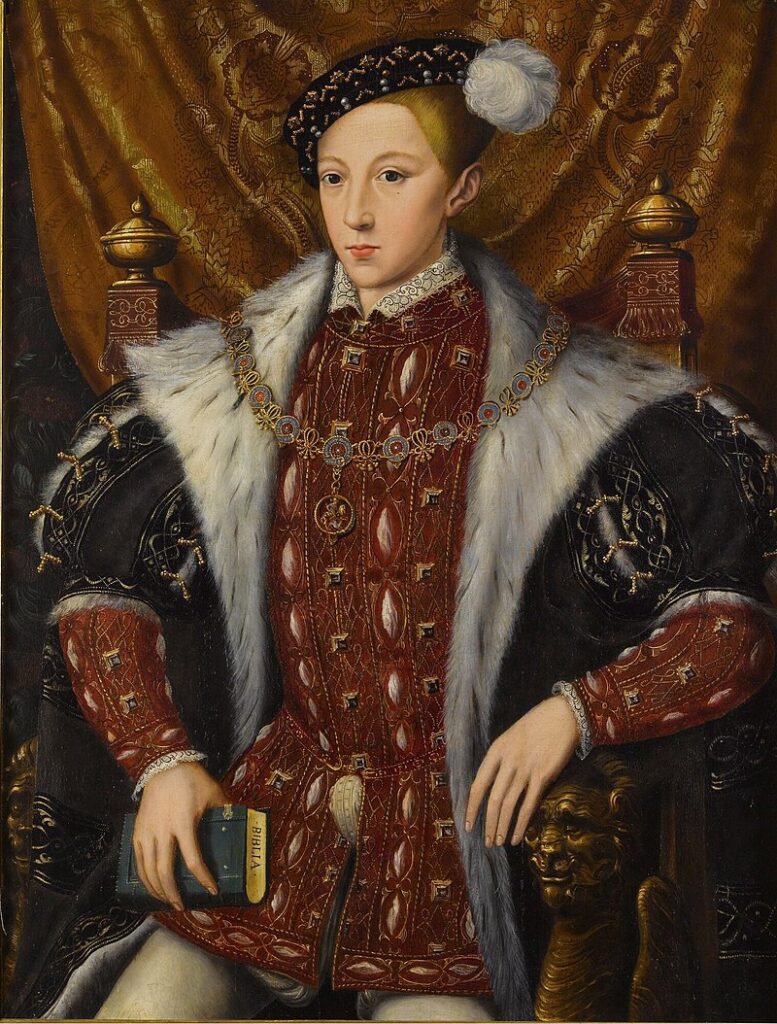
Some on Edward VI’s council would have been outraged by Hill’s likely involvement in saving the statue known as The Mercer’s Christ (only rediscovered in 1954).
This retreat to Windsor was a chaotic and desperate move.
Somerset turned to Hill, a fellow member of the Privy Council and Lord Mayor of London, begging for military support: London being the only place the force needed could be raised from.
However, Hill declined to send the requested 1,000 troops, fataly undermining Somerset’s authority.

Portrait of Sir Rowland Hill, Mercer’s Copy
Allying with John Dudley
Hill’s decision not to assist Somerset aligned with the growing opposition to the Protector’s rule.
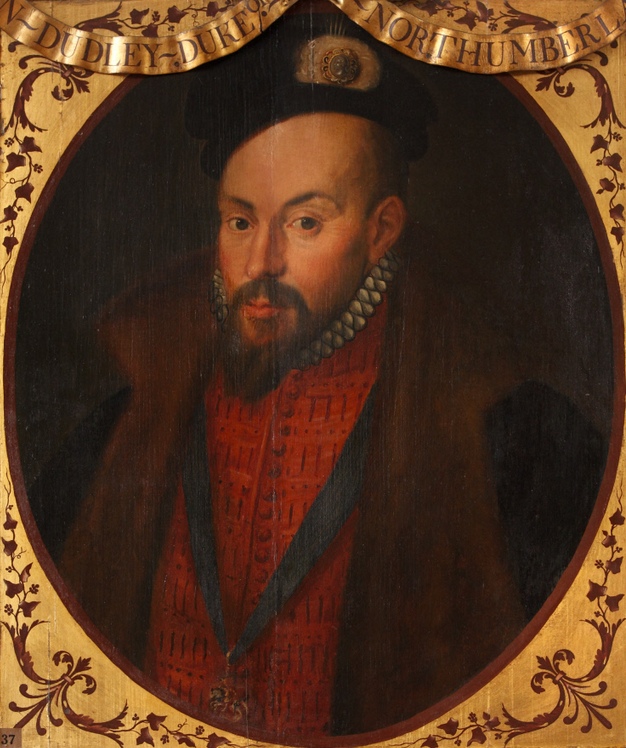
Portrait of John Dudley, Duke of Northumberland.
The city, of which Hill was father, was decisive in cutting Somerset off. Hill participated in a meeting with John Dudley, Earl of Warwick, and other London representatives at Ely Palace, where they confirmed Somerset’s downfall.
Hill supported the Privy Council’s decision to remove Somerset from power and bring him to justice. He joined the Council in publishing details of Somerset’s mismanagement of government and in accusing him of treason.
********
Somerset’s Vulgar Ways: The Tacky Protector and his Tasteless Display
There is another reason why Hill might not have assisted Somerset: Somerset’s vulgar and grasping nature, combined with his abuse of charitable gifts bestowed upon Londoners and English people for personal gain and self-aggrandizement, would have been contemptible to Hill.
Here is a source which helps us to explore this:
In the following year (1548) the chapel of St. Paul’s charnel house was pulled down and the bones removed into the country and reburied… [and then there was] the destruction of the cloister in Pardon churchyard (April, 1549), with its famous picture of the Dance of Death, painted at the expense of John Carpenter, the town clerk of the city, of whom mention has already been made. The fact was that the Protector Somerset required material for building his new palace in the Strand to enlarge which he had already pulled down Strand Church, dedicated to Saint Mary and the Holy Innocents. The destruction of the cloister necessitated a new order of procession on the next Lord Mayor’s Day (24 Oct.), when Sir Rowland Hill paid the customary visit to St. Paul’s, made a circuit of the interior of the cathedral, and said a De profundis at the bishop’s tomb.
– Sharpe, Reginald R. A History—Derived Mainly from the Archives at Guildhall in the Custody of the Corporation of the City of London. Vol. 1. London: Longmans, Green & Co., 1894. Availabe on-line on the Project Gutenberg website at this link.
It may help to set out what we are looking at here, and its implications. (Before we do so it is an interesting asside that the Reformation treatment of bones in the above source is seen to be conspiciously respectful at St Paul’s in contrast to other places in England).
De Profundis is a Latin phrase that translates to “Out of the Depths.” It’s a cry of anguish or despair, particularly in religious contexts. The phrase is taken from Psalm 130 of the Bible, which expresses deep sorrow and a plea for divine mercy:
Out of the deepe places haue I called vnto thee, O Lord.
Lord, heare my voyce: let thine eares attend to the voyce of my prayers.
If thou, O Lord, straightly markest iniquities, O Lord, who shall stand?
– Psalm 130:1-3, Geneva Bible, 1560
In the context of this moment in Sir Rowland Hill’s life, uttering “de profundis” during his mayoral inauguration is immensely striking. More than a personal expression, it serves as a scathing commentary on the desolation surrounding him and the deplorable national condition. The ruined St. Paul’s Cathedral, scavenged and pillaged, stands as a stark metaphor for the ravaged commonwealth: the closed hospitals, schools, the persecution, the international isolation, and the destruction of art—all gifts of previous generations, including his own forebear, Sir Thomas Hill, who was Lord Mayor in 1484—squandered and embezzled.
The “de profundis” can be interpreted as a prayer for deliverance or salvation.
It conveys a sense of profound humility and a recognition of one’s own shortcomings.
By uttering these words, Hill may either have been expressing his hope for divine intervention and redemption, or, alternatively, standing before the divine, as the formal and new-minted representative of London’d civic identity and people, expressing his humility, regret and horror on their behalf.
Hill’s utterance of “de profundis” could also be seen as a critique of this phase of the Reformation, which for some had become merely a means to plunder the treasury.
His words serve as a poignant reminder of the destruction and loss that accompanied these tumultuous times, and give a view into his owne inner religious mind.

Old St Pauls
While Hill’s actions and beliefs align more closely with Protestantism, the choice to utter “de profundis” at the tomb of a revered Catholic bishop, either St. Erkenwald or (more likely) Bishop Williams, suggests a lingering Catholic sympathy or concern about the direction some Protestants have taken.
More specifically, Bishop William and St. Erkenwald are both revered as intercessors for London.
That a concept of intercession is more commonly associated with Catholicism, and is problematic to reformers.
Hill’s invocation of these figures, particularly St. Erkenwald, who was known as “the most holy figure of London” and “the light of London,” is provocative:
- St. Erkenwald is linked to an early Anglo-Saxon phase of building at St. Paul’s Cathedral, and William Dugdale credits him with initiating the construction. In the Pearl Poet’s poem that bears his name his tears and prayers take a pagan to heven: which is an act of intercession.
- Bishop William, on the other hand, successfully pleaded with William the Conqueror to preserve Londoners’ ancient privileges as a near-city republic in 1066: which is an act of intercession.
A Lord Mayor as representive of the city’s people is conceptually adjacent to that sort of activity.
That poit might be explored via the example of another Lord Mayor of London: Sir William Walworth, a Lord Mayor of London who quelled the Peasants’ Revolt of 1381, by killing ts leader, Wat Tyler, an also led city’s resistance John of Gaunt, dominating Richard’s government, while frequently making large loans to the crown: these actions highlight the dual role of Lord Mayors as both civic leaders and intermediaries between the Crown and the people.
Sir Rowland Hill’s explicit inhabiting of the old ways at his mayor making could be explained as a savvy political and businessman eager to perform the old theater to ensure he had gone through the traditional modalities of affirming civic roles and validly holding his office. Especially during this emergency that could lead to civil war and did lead to a coup d’état.
But it feels like a broader commentary.
Whatever the truth of it, Hill would have found both of the Seymours seriously distasteful.
Conclusion
While Hill’s role in the coup d’état may not have been as overt as that of some of his colleagues, his refusal to support Somerset and his participation in the meetings that led to his downfall were significant. Hill’s actions demonstrated his alignment with the forces that sought to remove Somerset from power and restore stability to the kingdom.
