

A Glimpse into 850 year-old history
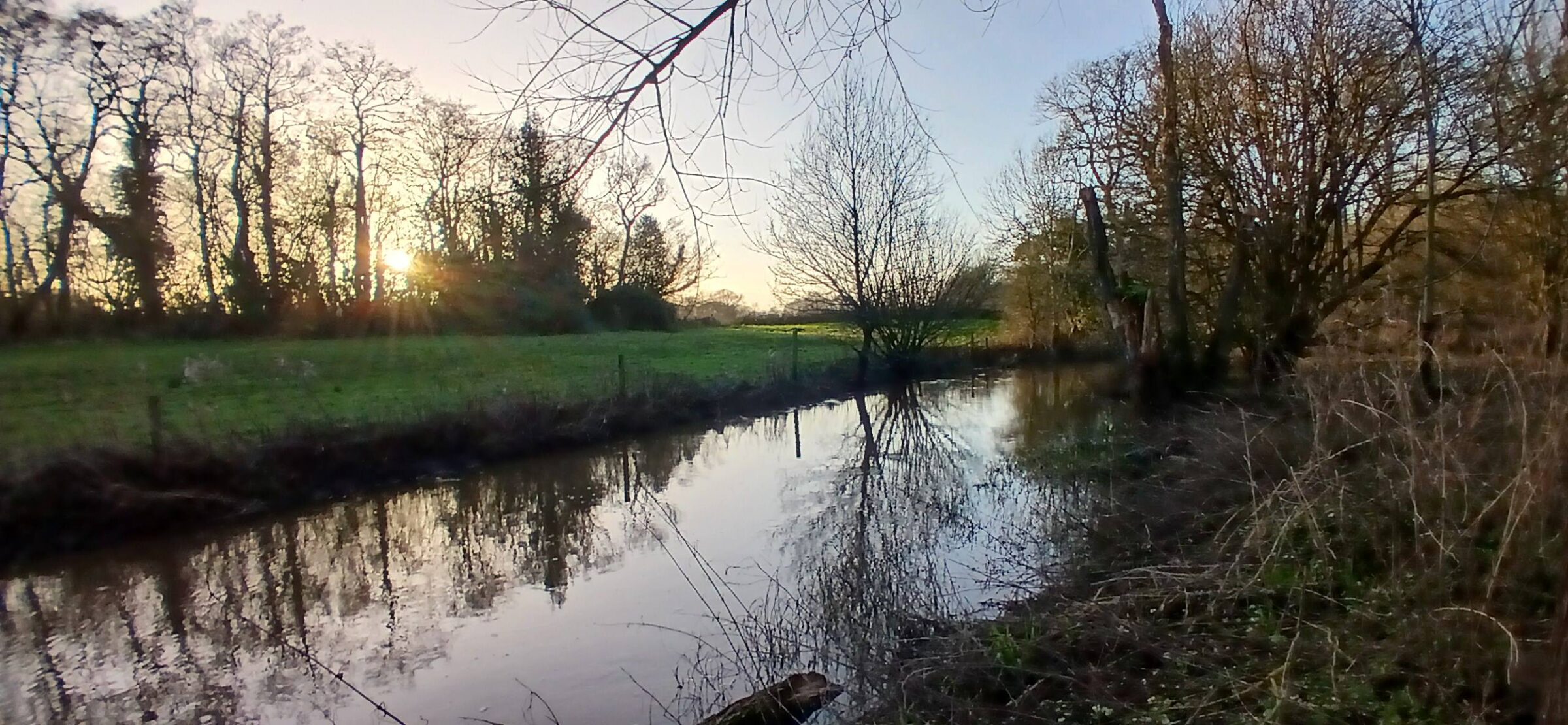
The recent persistent wet weather has brought a remarkable sight to Soulton Hall, Shropshire: the medieval watermill complex, known to exist from historical records, has been revealed. The leat channels, running for over half a mile, and the pools, now filled with water, offer a unique insight into the region’s industrial heritage of 900 years ago and the ingenuity of our ancestors. The leats were fed by a headwater formed by damming Soulton Brook, with the causeway upon which Soulton Road (B5065) is carried forming a dam.
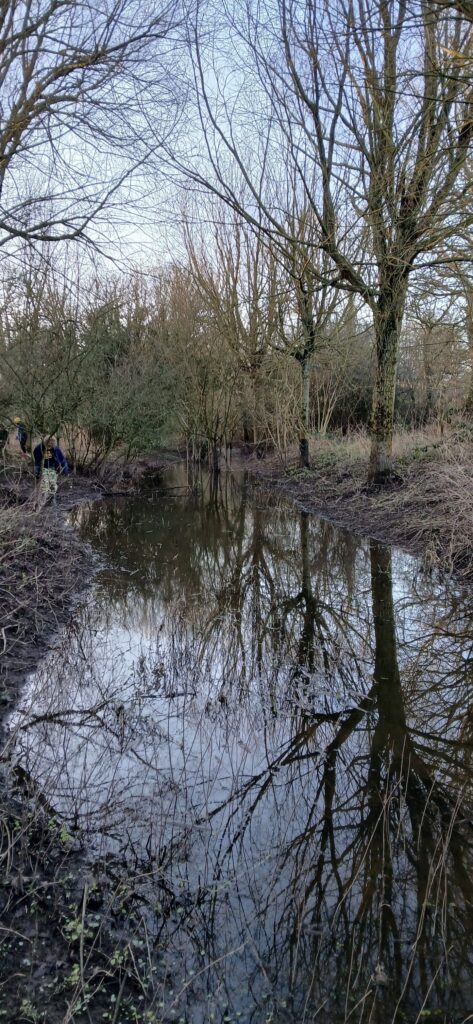
Centuries Old Mill Race, flowing again , the feature cannot work as designed due to modern drainage, but is perfectly intact
This impressive system powered at least three water mills, showing the scale and sophistication of medieval engineering. The deeds for the leasing of these items survive from the 1400s.
Soulton Hall, with its rich history spanning centuries, has long been a site of archaeological interest.
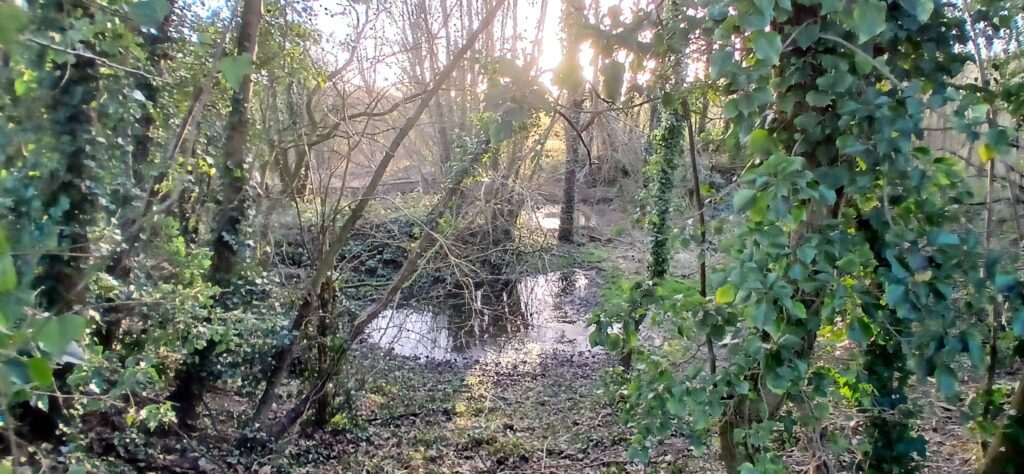
Mill Pools from the medieval Soulton Water Mills Complex, surviving as archaeology but not in use since the later 1800s
However, the recent heavy rainfall has exposed previously hidden features, revealing the extent of this lost watermill complex.
These watermills played a crucial role in the local economy, harnessing the power of the nearby streams to grind grain, process wool, and drive other essential industries. The complex would have been a hive of activity, supporting the community and shaping the landscape for centuries.
The sight of the water flowing through the leats and pools of Soulton Hall provides a tangible link to the past, allowing us to imagine the lives of those who worked and depended on them. The site’s significance lies not only in its age but also in its representation of a way of life that persisted for centuries, from the medieval period through to the Industrial Revolution.
As archaeologists continue to explore the site, we can expect to uncover more secrets about this lost industrial complex.
********
Considering the presence of willow ranks near the cottage in the woods at Soulton Hall, one might find a curious echo in Shakespeare’s As You Like It:
OLIVER
Good morrow, fair ones; pray you, if you know,
Where in the purlieus of this forest stands
A sheep-cote fenc’d about with olive trees?CELIA
West of this place, down in the neighbour bottom.
The rank of osiers by the murmuring stream
Left on your right hand brings you to the place.
But at this hour the house doth keep itself;
There’s none within.
it prompts a moment of reflection: osiers are a type of willow, the imagery does seem to resonate with the natural features found in this particular setting.
Whether this is a mere coincidence or a subtle connection to this place is a matter of speculation. However, it does invite us to ponder the potential influence of such landscapes on Shakespeare’s work, and how the familiar sights of rural England might have found their way into his plays.
