

Unlocking a New English Renaissance Through the Mathematical Choreography of a Forgotten Pavement
Through the work of Byrgah Geniht, we have been exploring the coded meanings hidden within Soulton Hall. These codes center on a fascinating shape called the rhombic dodecahedron.

A portrait photograph marking a significant moment: the cleaning of the Soulton dancing pavement. This act heralds the beginning of a project to conserve this historic pavement, the books in which Hannah Deakin designed it, and her own portrait, preserving a key piece of our heritage.
In the classical and medieval periods, this shape was not just an abstract idea. It was found in the natural world in the form of the mineral garnet. When it comes out of the ground, a garnet crystal naturally has the shape of a rhombic dodecahedron.
Research by James Wenn shows how the natural properties of this stone soon took on a powerful meaning as a “social instruction.” Because the rhombic dodecahedron is a space-filling polyhedron that can fill 3D space with no gaps, it was seen as a perfect allegory for social harmony.
In other words, in the minds of Christians and other thinkers who believed that mathematics was the source code for creation, the closer someone was to the rhombic dodecahedron, the closer they were to a quality of the divine. This proximity to a geometrically perfect, harmonious shape was a path to virtue.
In the classical world, the concept of a harmonious universe was central to philosophy. Plato, in his book Timaeus, wrote about the perfection of mathematics and suggested that the universe itself was shaped like a dodecahedron. In his book The Laws, he also argued that a harmonious civilization could not exist without dancing.
This idea was deeply rooted in Greek culture. It was believed that a ritual dance performed in a circle protected the infant Zeus, imbuing him with divinity and leading him to become the head of the gods. Evidence of such rhythmic circle dances can be seen in the pavement designs of ancient Greek theaters, households, and on painted pottery.
According to research by James Wenn, the number of dancers—which usually appears to be eight—was mimetic in nature. This means the dance was not just a series of steps; it was a representation of something else. James Wenn believes the dance represented a series of slices through a rhombic dodecahedron, which would alternate between a square, an octagon, and a “poised square.”
This ancient dance made its way through the Middle Ages as a simple circle dance called the carole. But as the Renaissance bloomed, so too did the complexity of the dance and the mathematics behind it.
While the dance may have started as a circular motion representing the harmonious shapes of the rhombic dodecahedron, a new observation began to change the focus during the Renaissance.
Scholars began to analyse the mathematical properties of the octogram formed of lozenges commonly found in classical dancing pavements, which can be thought of a star made up of eight diamond shapes.
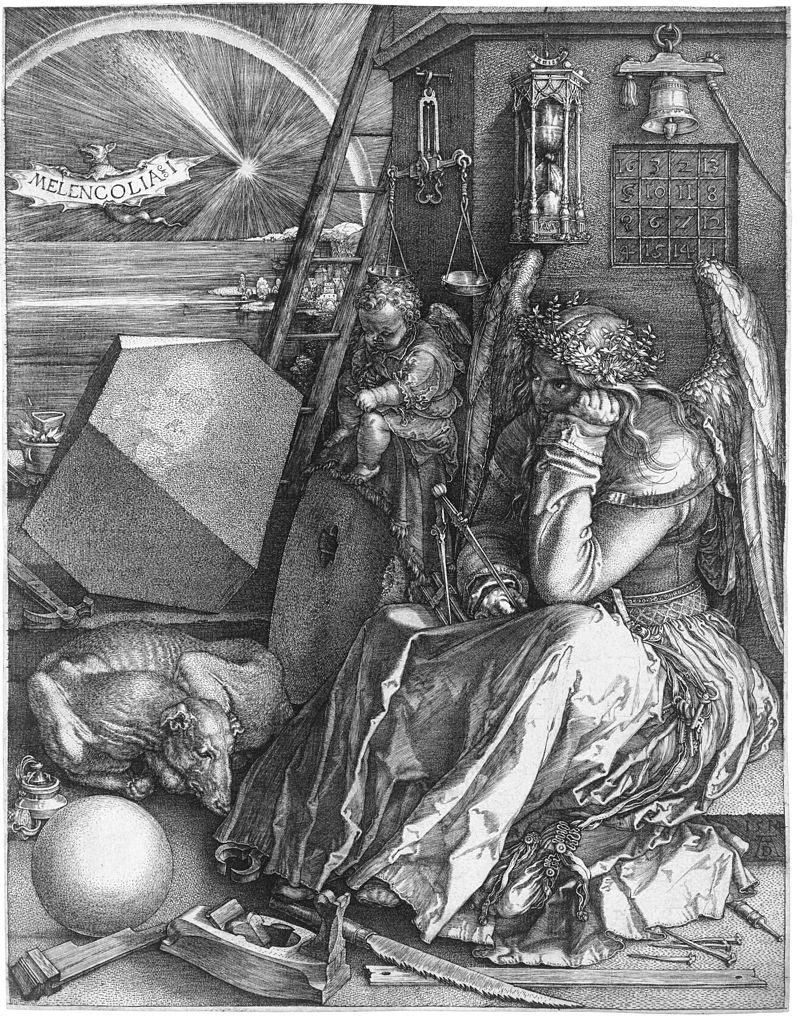
Dürer’s “Melencolia I” features a 4×4 Magic Square with a Sum of 34. And perhaps a ‘wrong’ platonic solid.
By tracing the lines of the octogram with a single path, one can produce a sequence of numbers that corresponds with an intriguing piece of mathematics: the magic square. A magic square is a grid of numbers where every row, column, and diagonal adds up to the same constant.
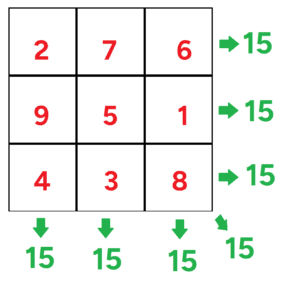
The Unique 3×3 Magic Square
The discovery that the shape created by tracing the counting numbers on the 3×3 magic square, when flipped, gives a sequence of numbers produced by tracing the lines of the octogram with a single line, likely shifted the choreography’s focus.
The dance was no longer just about the placement of the dancers; it became a representation of the lines of motion itself.
In this way, while the choreography may have changed through the centuries, the underlying passion for mathematics remained a constant feature.
This entire complicated story of the dance’s transition will be told in detail in the upcoming exhibition at The Minories:
Dates: 20-24 and 27-31 August
Time:10am – 4pm
Address: 74 High Street, Colchester, CO1 1UEEvent page link: THE MINORIES: Exhibition Number in Time and Space: Exploring Plato’s Fifth Element
********
This story of a dance passed down through the ages finds its most remarkable chapter at Soulton Hall.
In 1847, Hannah Deakin (5x and 6x great grandmother to the current generation of the family) made a deliberate attempt to preserve this centuries-old choreography.

Marginalia in by Hannah Deakin in the 1830s Soulton Day Book; in the 1840s this was book used to design the Soulton Dancing Pavement.
What makes the Soulton pavement special is the addition of loops, showing exactly where dancers would pass each other on their journey around the outside of the octogram. Furthermore, in the account books where Hannah Deakin designed and paid the mason for the pavement, there is a drawing of a dancing woman. This drawing serves as a clear confirmation that the pavement was created specifically for a dance.

Hannah Deakin who preserved The Dance in the Soulton Pavement.
Hannah Deakin is, in essence, a missing link in this history of ideas—a remarkably proficient mathematician and a cultural hero who safeguarded the choreographic notation for a dance witnessed by Shakespeare. It was a high form of artistic and cultural expression that, though dating back to classical antiquity, was also preserved at Soulton by Old Sir Rowland Hill nearly 300 years before Hannah made the pavement.
The links between this specific dance and the works of Shakespeare are well understood and have been covered in numerous articles.
It is particularly significant that two of his plays, A Midsummer Night’s Dream and As You Like It, feature a dance for eight in their scripts. The latter play is intimately tied to Soulton Hall. In both instances, the dance is a moment of cultural importance, symbolizing the restoration of harmony and bestowing good wishes upon the honourable and virtuous characters. This connection places Soulton Hall at the very heart of the English Renaissance.

Portrait of Sir Rowland Hill, Mercer’s Copy
Working toward a new English renaissance, Soulton Hall is actively reactivating the cultural legacy left by Hannah Deakin and Old Sir Rowland Hill. On August 3rd, the Epidaurus Court was used for a performance of A Midsummer Night’s Dream—the first performance there since at least 1783. This heralded work to bring As You Like It “home” in the coming years.

Theatre in Epidaurus Court, Soulton Hall
The court was originally designed for dramatic performances in the 1550s and was in use during the early flowerings of the English Renaissance.
We are pleased to announce the next step in this revival.
Following a dedicated program of cleaning, we have captured drone images and a 3D scan of the Hannah Deakin dancing pavement.
A special photographic portrait of this pavement will be a centrepiece of the upcoming “Number in Time” exhibition.

“Number in Time and Space” a BYRGA GENIHT Ltd. show
After the exhibition, this portrait will be made available for public purchase. This will allow you to own a piece of this remarkable heritage and share in the rediscovery of a lost cultural legacy.
