


Magic Squares in the Renaissance: A Study in Recreational Mathematics
The magic square, a grid filled with distinct numbers where each row, column, and diagonal sums to the same constant, has intrigued mathematicians and enthusiasts for centuries.
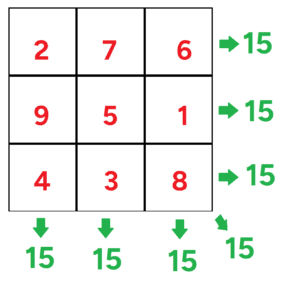
The Unique 3×3 Magic Square
While its origins may be trace back to ancient China, it was during the European Renaissance that the magic square experienced a renewed surge in popularity, becoming a prominent feature in the intellectual and artistic circles of the time.
A familiar linked concept in our own time is Sudoku, a logic-based puzzle, shares a common foundation with magic squares: the strategic placement of numbers within a grid.
Both require logical deduction and systematic elimination of possibilities, demonstrating the interconnected nature of mathematical concepts.
As previously explained, Soulton Hall is very interested in the 9 grid, for other reasons beyond the magic square, but this other concept is also in play in the design here.
The Renaissance was a period of intellectual and cultural revival saw a blossoming of interest in mathematics. Scholars and artists, driven by curiosity and a desire to understand the underlying order of the universe, delved into various mathematical disciplines. Among these, the magic square, with its elegant simplicity and inherent order, captivated the minds of many.
The magic square’s appeal transcended purely mathematical interests. It became interwoven with philosophical and intellectual thought. Some saw it as a symbol of divine order and harmony.
This allure contributed to its widespread fascination and incorporation into various forms of artistic expression.
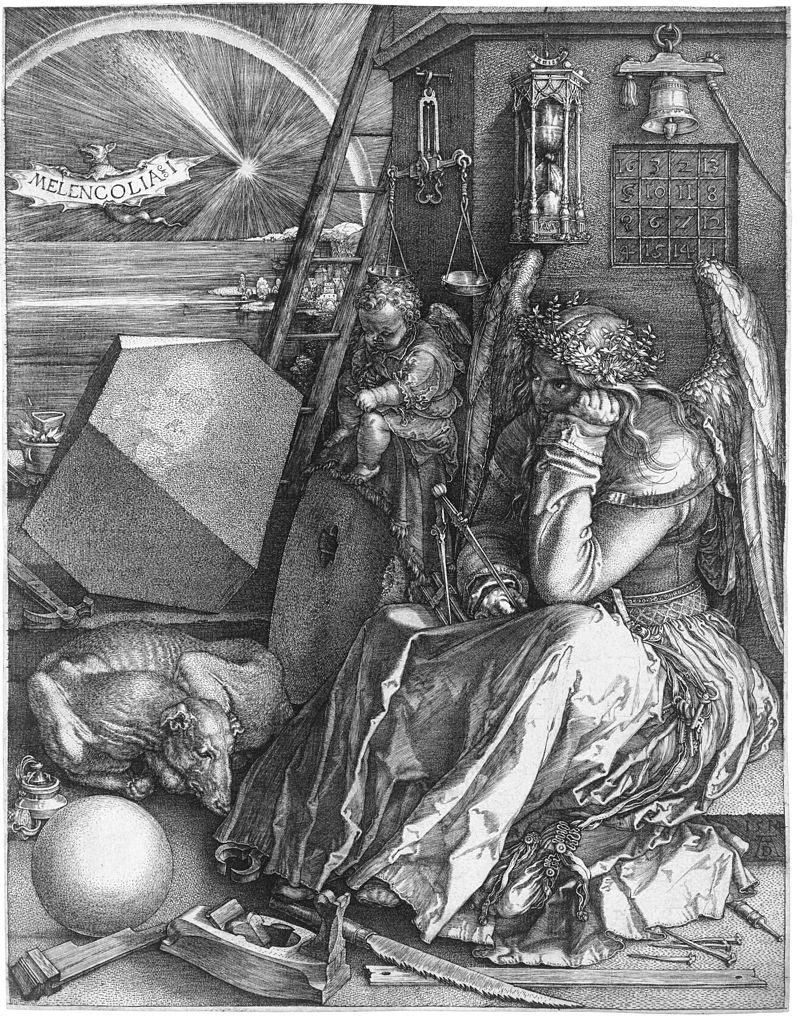
Dürer’s “Melencolia I” features a 4×4 Magic Square with a Sum of 34. And oerhaps a ‘wrong’ platonic solid.
Perhaps the most famous example of the magic square’s appearance in Renaissance art is Albrecht Dürer’s engraving, “Melencolia I.” This iconic artwork, a masterpiece of Northern Renaissance art, features a 4×4 magic square prominently displayed on a shelf. This particular magic square is unique in that the two center cells of the bottom row display the year of the engraving’s creation: 1514.

Magic Square in Dürer’s “Melencolia I”
Dürer’s inclusion of the magic square within his artwork highlights its significance as more than just a mathematical curiosity. It served as a symbol of intellectual pursuit, a testament to the artist’s own fascination with the intricacies of mathematics and the underlying order of the universe.
The Renaissance rediscovery of the magic square exemplifies the spirit of intellectual exploration that characterized this era. It served as a point of intersection between mathematics, art, and philosophy, reflecting the interconnected nature of knowledge during this period of profound cultural and intellectual transformation.

Portrait of Sir Rowland Hill, Mercer’s Copy
Sir Rowland Hill, a Renaissance polymath, possessed a profound fascination with mathematics, particularly the intricacies of codes and games. This intellectual curiosity is undeniably reflected in Soulton Hall, his architectural masterpiece.
Old Sir Rowland deliberately incorporated mathematical puzzles and cryptic messages into the building. The hall itself becomes a kind of intellectual puzzle, inviting inhabitants and visitors to decipher the mathematical riddles embedded within its design.
