

The New Year: A Renaissance Reflection
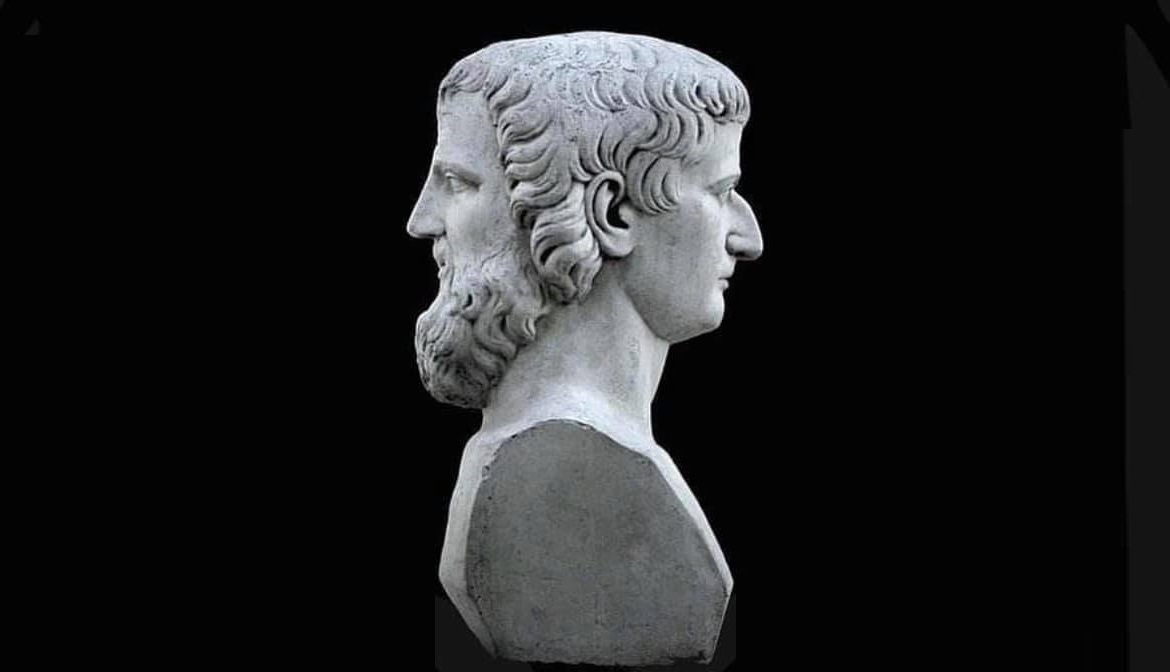
Janus, the ancient Roman god of beginnings and endings, is a natural deity to contemplate as we usher in a new year, especially in Soulton where, thanks to Sir Rowland Hill’s clever design, the classical world is ever-present.
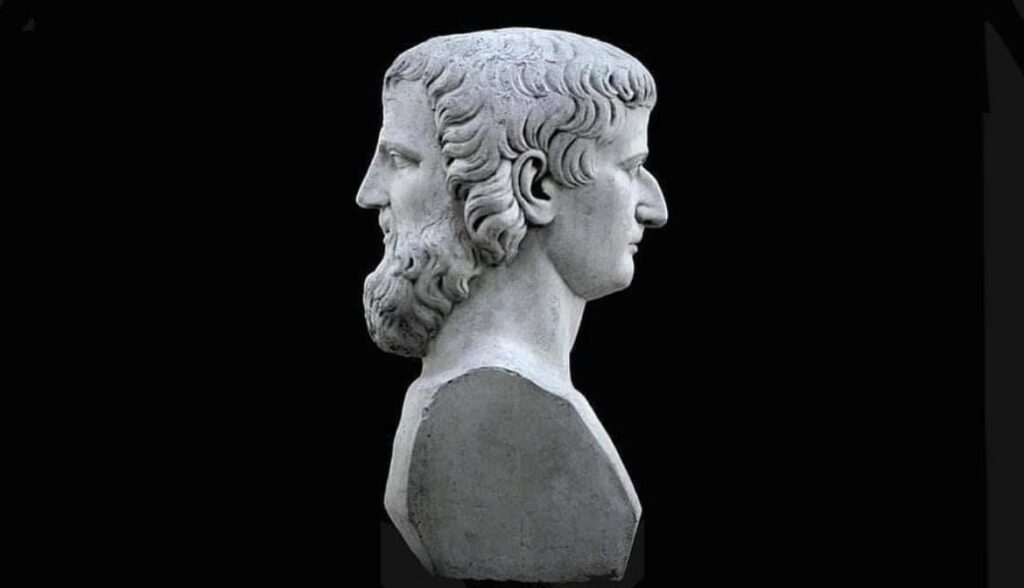
Janus the classical Roman god
Janus, the ancient Roman god of beginnings and endings, embodies the three-fold nature of time as humans experience it:
- the echoes of the past,
- the immediacy of the present, and
- the promise of the future.
He is depicted with two faces, one looking back at the past and the other forward to the future.
He presides over doorways, gates, and passages – symbolic of the transitions we experience as we move from one year to the next, or, for example, as we move from one job to another, graduate to a different school, or as we pass a driving test or gain a new qualification or skill.
The Romans believed that Janus’s gaze was a helpful way of thinking about things, looking backward and forward to get insights into the past and guidance for the future, making him an appropriate deity to invoke for reflection and hope as we embark on a new journey.
Meanwhile, at Soulton, the birthplace of Shakespeare’s timeless comedy, As You Like It, the play is so often deeply resonant., and that play directly involves Hymen, a different classical god of change (of marriage and fertility). He has a prominent role in the play’s joyful ending and the recovery of harmony. The characters in As You Like It it repeatedly go through growth and transition, and the play has a beginning and ending defined by moments that straddle dystopia and harmony on a national scale.
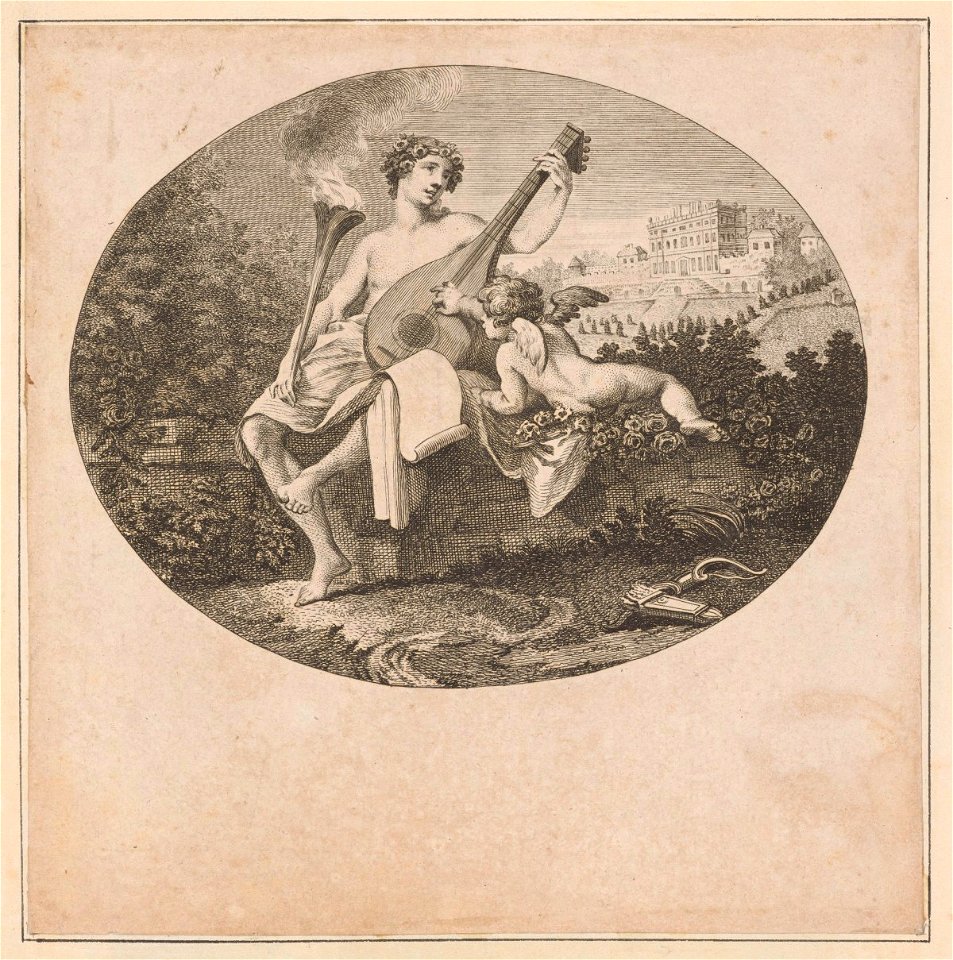
William Hogarth – Hymen and Cupid
This narrative structure prompts reflection on both the past and the future so natural as we embark on a new year: this aspect of that play informs our perspectives on the traditional New Year themes of hope, renewal and harmony.
The Neoplatonic learning technology of the Renaissance provided an intellectual backdrop for the minds of Shakespeare’s time. This philosophical system sought to reconcile classical philosophy with Christian theology, offering a framework for exploring profound ideas while navigating the complexities of a potentially dangerous political climate. Neoplatonism provided a cover, allowing thinkers to express ideas indirectly through art and classical references that might have been deemed too controversial if stated explicitly.

Close up of the Goff Map, showing the part of Arden around Birmingham and Tamworth
We can see this approach reflected in As You Like It. The play, set amidst the idyllic, yet subtly allegorical, Forest of Arden, grapples with the complexities of human nature and societal order. It explores themes of justice, usurpation, and the search for harmony, subtly mirroring the political anxieties of Tudor England.
The play’s characters engage in philosophical debates about love, duty, and the good life, reflecting the intellectual currents of the time. These debates, and the play’s exploration of these themes, will likely find echoes within us as we contemplate the New Year, a time of both endings and beginnings. Like Janus, and like the good characters in As You Like It, we will be acknowledging the past – the injustices and disruptions – while offering a vision of a renewed future, where harmony and justice prevail.
By framing As You Like It within this Renaissance context, we can see how Shakespeare, like the Neoplatonic thinkers, masterfully used art to explore profound philosophical and social questions.
Shakespeare, via As You Like It continues to offer valuable insights into the human condition and the timeless pursuit of a better world.
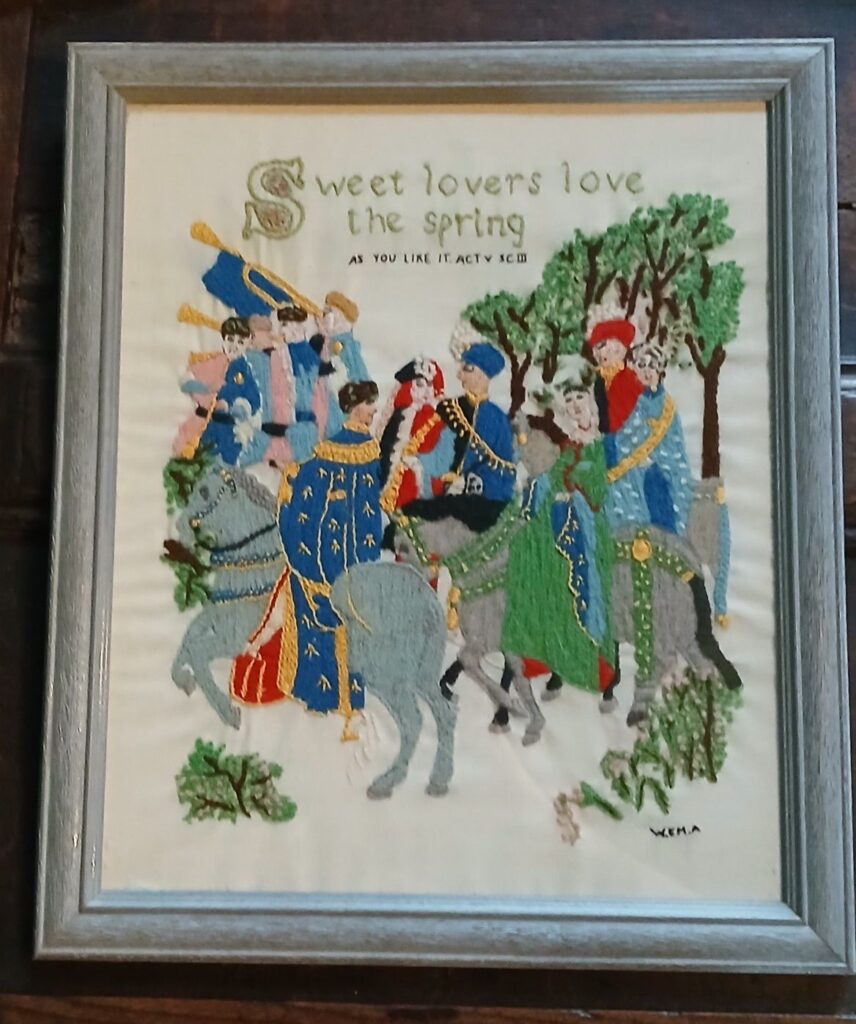
Needlework showing the return to the court of the good characters from their banishment having studied philosophy and now preparing to run a country justly at the end of AS YOU LIKE IT
