

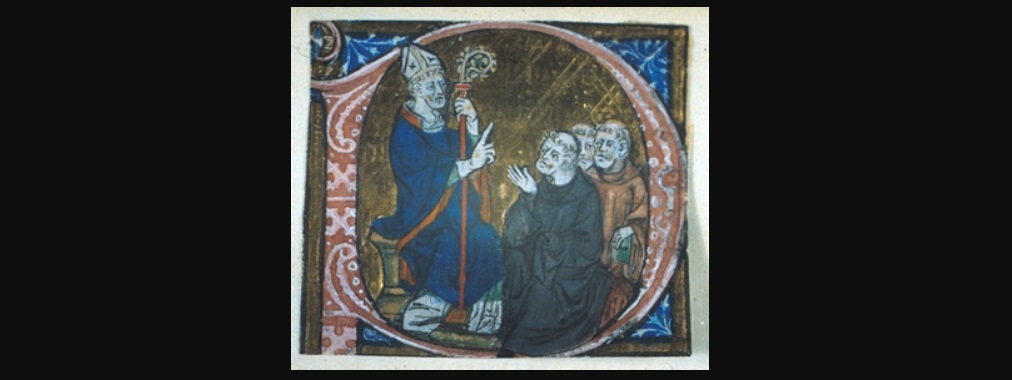
Rediscovering St. Erkenwald: A Modern Take on a Medieval Tale
Today is one of several annual Erkenwald Days (Feast Day: April 30; Translation Days: February 1, May 13, and November 14). St. Erkenwald, the patron saint of London, holds a unique place in English history and literature. He has a special significance for Shropshire, as the poet who wrote the renowned 14th-century poem about him is believed to have hailed from our region. Erkenwald’s influence extends beyond London, where he played a foundational role in the city’s development during Saxon times. His intellectual and pro-Renaissance identity resonated with figures like Sir Rowland Hill of Soulton.

Saint Erkenwald St Albans Cathedral
Erkenwald’s story, often shrouded in the dense language of 14th-century Middle English, can be challenging for modern readers to fully grasp. To celebrate this special day, this blog post offers a retelling of the saint’s legend, simplifying the narrative while preserving its core message of divine mercy and the possibility of redemption.
Erkenwald Days provide an opportunity to reflect on the life and legacy of this important figure. By reimagining his story for a contemporary audience, we hope to inspire a renewed interest in Saxon stories, High Medieval literature, and the enduring message of hope and forgiveness that St. Erkenwald embodies.
Here is a re-telling:
Long ago, in the ancient city of London, founded by Greek heroes who had fled the fall of Troy, lived a wise and just city official. He was renowned for his fairness and his unwavering commitment to upholding the law. This official believed in ancient gods, honouring their traditions and seeking their guidance.
He served his city with dedication, ensuring justice and order prevailed. When he passed away, the people of Ancient London mourned him deeply. They built a magnificent tomb, a grand monument to his memory, and buried him within it.
Centuries later, new beliefs and customs arrived in London, and the old traditions gradually faded, and Christianity came.
And over time, the city grew and expanded. Workers digging deep into the earth to build a grand church stumbled upon something extraordinary: the ancient tomb of the city official. To their amazement, his body was perfectly preserved, as if time had stood still.
But then, the impossible happened. The official’s eyes fluttered open, and he sat up, speaking in a voice that echoed through the tomb. The workers, terrified, fled, but the wise and holy Bishop Erkenwald, hearing the commotion, rushed to the scene.
The official, though centuries had passed, was lucid. He spoke of his life, his service to the city, and the choices he had made. He expressed regret for some of his actions and a deep yearning for understanding. He explained that though his beliefs differed from those held by Erkenwald and his people, he had always strived to be a just and honorable official.
Erkenwald, instead of fear, felt a profound sense of wonder and respect. He listened patiently to the official’s story, recognizing the shared humanity that connected them despite their different beliefs and the vast gulf of time that separated them. However, as the official spoke of his fear of not finding peace in the afterlife, Erkenwald was overcome with distress.
He grieved for the official, who had lived a good life and dedicated himself to the service of his city, but might be denied entry to heaven due to his different beliefs. Tears streamed down Erkenwald’s face, falling upon the official. As the tears touched him, they seemed to glow with an inner light.
Erkenwald, in his grief and compassion, was unknowingly performing a sacred act. His tears, born of love and sorrow, had become holy water, symbolically cleansing the official and welcoming him into the embrace of the divine.
In that moment, the official’s face lit up with an ethereal glow. He spoke of a profound peace and understanding washing over him, a sense of being welcomed into a realm of love and light. Then, with a soft sigh, his body dissolved into dust, his spirit finally at peace.
Erkenwald, witnessing this miraculous event, was awestruck. He realized that true faith and compassion transcend the boundaries of any one belief system. This act of intercession, born from his deep empathy, had not only saved the official’s soul but also demonstrated the power of love and forgiveness to bridge the divides between different faiths and beliefs.
