

Sir Rowland Hill and the Rowland Hall Press — A Shared Renaissance Printing House
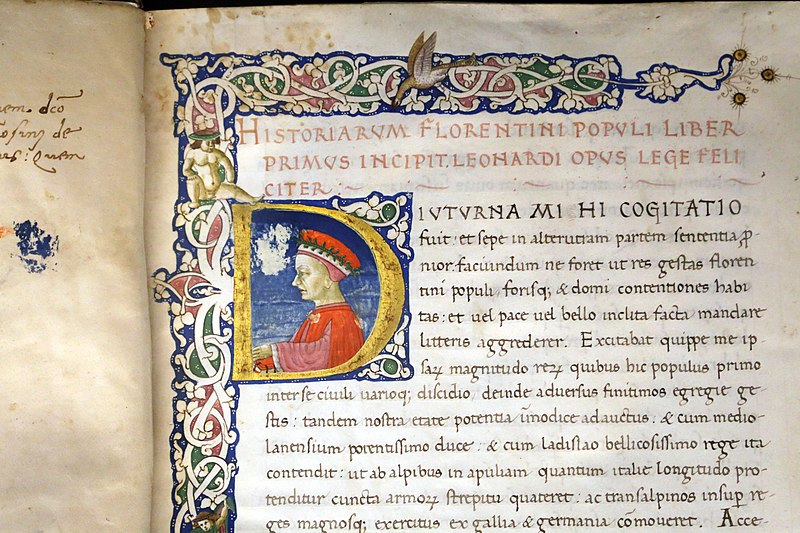
Leonardo Bruni aka Leonardo Aretino ‘s “On the War in Italy Against the Goths”
This blog needs to pay some attention to the publishing activities associated with Sir Rowland Hill via the publishing imprint “Rouland Hill”, which was the name he used to publish the Geneva Bible.
While scholarship has sometimes mistakenly attributed ‘Rowland Hall’ to a fictional printing technician, it’s important to recognize that this was likely a pseudonym used by Hill himself. This practice was not uncommon in the 16th century, as publishers often used pseudonyms to protect their identities and avoid potential legal or religious repercussions.
The Rowland Hall/Rouland Hall press continued to operate for a period after Hill’s death, while his estate was in probate. This press was utilized by Privy Councillors and other statesmen as a convenient means of publishing their own works. Due to their high rank and busy schedules, these individuals were unable to directly engage in the day-to-day operations of the printing trade, which was considered beneath their dignity.
In the following posts these works will be taken in turn, we will begin with this text:
The historie of Leonard Aretine concerning the warres betwene the Imperialles and the Gothes for the possession of Italy, a worke very pleasant and profitable. Translated out of Latin into Englishe by Arthur Goldyng.
The text can be found on-line via The University of Michigan Library at this link. It was dedicated to Sir William Cecil, in the followig terms:
To the ryghte honorable Sir William Sici Knighte principall Secretarie to the Queenes Maiestie and Maister of her hyghnesse Court of wardes and liueries
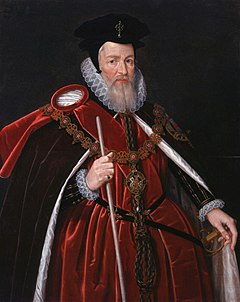
William Cecil, 1st Baron Burghley. Dedicatee of the 1563 translation of the ‘historie of Leonard Aretine concerning the warres betwene the Imperialles and the Gothes for the possession of Italy’
Leonardo Bruni (c. 1370-1444), also known as Leonardo Aretino, was a prominent Italian humanist, historian, and statesman. Widely regarded as one of the most influential humanist historians of the early Renaissance, Bruni is often considered the first modern historian.

Leonardo Bruni (c. 1370-1444), also known as Leonardo Aretino
Bruni was instrumental in developing the three-period view of history: Antiquity, Middle Ages, and Modern. While the specific dates he used for these periods differ from modern historical conventions, his conceptual framework laid the groundwork for the tripartite division of history that is still used today.
Beyond his historical contributions, Bruni served as Chancellor of the Republic of Florence and was a prolific writer, producing works on various subjects, including philosophy and literature. Bruni’s work had a profound impact on the development of historical writing in the Renaissance, promoting a humanist approach that emphasized the study of classical sources and critical analysis.
********
Bruni’s work provides a detailed account of the conflicts between the Byzantine Empire Justinian, a famous law giver and virtuous administrator, and the Ostrogoths for control of Italy during the 5th and 6th centuries AD.
He describes the initial invasion of Italy by the Goths led by Theodoric the Great, their subsequent establishment of a kingdom, and the eventual Byzantine counteroffensive.
Bruni highlights the strategic maneuvering, military battles, and political alliances that characterized this period. He discusses the role of prominent figures like Theodoric, Amalasuntha, Theodatus, and Belisarius, as well as the impact of these conflicts on the Italian peninsula.
The work offers a valuable historical perspective on the complex dynamics between the Byzantine Empire and the Germanic Ostrogoths, their struggle for dominance in Italy, and the lasting consequences of these conflicts.
********
A Renaissance humanist in England at the dawn of the Elizabethan era would have found the Gothic Wars, as described by Bruni, a compelling subject of study. The tumultuous events of this period, including the rise and fall of kingdoms, political intrigue, and military conflicts, resonated with their interest in understanding the cyclical nature of history and the lessons that could be learned from past events.
The Gothic Wars offered a direct connection to classical history, as they involved the clash between Germanic tribes and the remnants of the Roman Empire. Humanists were deeply interested in classical literature, philosophy, and history, and saw parallels between their own time and the ancient world.
Furthermore, the Gothic Wars provided valuable insights into military strategy, political maneuvering, and the challenges of maintaining power. Renaissance humanists involved in politics and diplomacy (as Hill and his friends were), would have found these lessons relevant and applicable to their own time.
The interaction between Germanic and Roman cultures during the Gothic Wars also offered a glimpse into the dynamic interplay between different civilizations. Humanists were interested in understanding cultural exchange and the transmission of knowledge across time and space.
Finally, Bruni’s narrative, with its vivid descriptions of battles, sieges, and political intrigue, would have provided a rich source of material for Renaissance humanists interested in rhetoric, history-writing, and literary style.
