

A Day of Literary Exploration: Tom Holland, His Dark Materials, and the Bodleian Library
Attending the Oxford Literary Festival is always a treat for lovers of ideas, but having the opportunity to hear renowned historian Tom Holland discuss his latest work, “Dominion,” was a truly unforgettable experience. Tom has visited Soulton on several occasions, which means this visit was an especially lovely trip.
Holland’s insightful analysis of the rise and fall of Christianity in Western history is both thought-provoking and captivating.
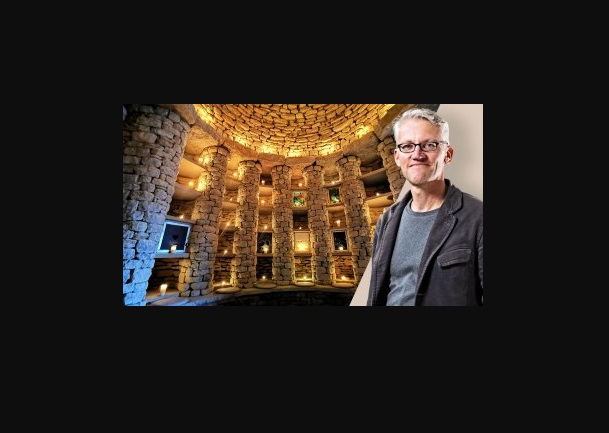
Historian Tom Holland has talked about the Soulton Long Barrow in The Times
Tom Holland is a celebrated historian known for his engaging and accessible writing style. His previous works, such as “Persian Fire” and “In the Shadow of the Rising Sun,” have garnered widespread acclaim. “Dominion” is his latest masterpiece, exploring the profound impact of Christianity on Western civilization.
Holland’s talk on “Dominion” was a masterclass in historical analysis. He skillfully navigated through centuries of history, tracing the rise of Christianity from its humble beginnings to its dominance in the West. Holland’s insights into the complex interplay between religion, politics, and culture were both enlightening and thought-provoking. One of the most fascinating aspects of Holland’s discussion was his exploration of the ways in which Christianity has shaped the modern world. He argued that many of the values and institutions we take for granted today, such as democracy, human rights, and scientific inquiry, have their roots in Christian thought.
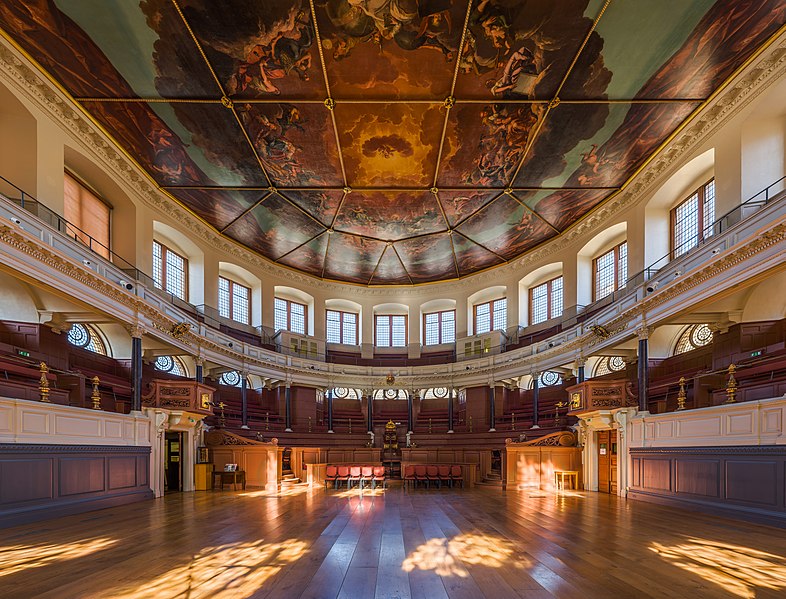
The interior of the Sheldonian Theatre, looking north, in Oxford, England.
The Tom Holland lecture was held in the Sheldonian Theatre, a stunning Baroque building designed by Sir Christopher Wren. The theatre’s classical architecture, with its pagan and secular influences, could have been an interesting point of origin for a question from the audience. However, despite the opportunity to explore the potential connections between classical mythology and Christian theology, no such question was raised during the Q&A session.
The Wren building of the Sheldonian is not compleatly unlinked to the Soulton Hall scheme of Sir Rowland Hill, as this reconstruction image helps to show.

This image depicts a scholarly reconstruction of Soulton Hall, highlighting its architectural elements inspired by the ancient theater of Epidaurus. The yellow lines trace these features, revealing the Rowland Hill’s homage to the renowned Greek structure.
********
Alongside the lecture event with Tom, we had the opportunity to explore the world of Philip Pullman’s His Dark Materials trilogy in a captivating exhibition of props and costumes from the BBC/HBO adaptation.
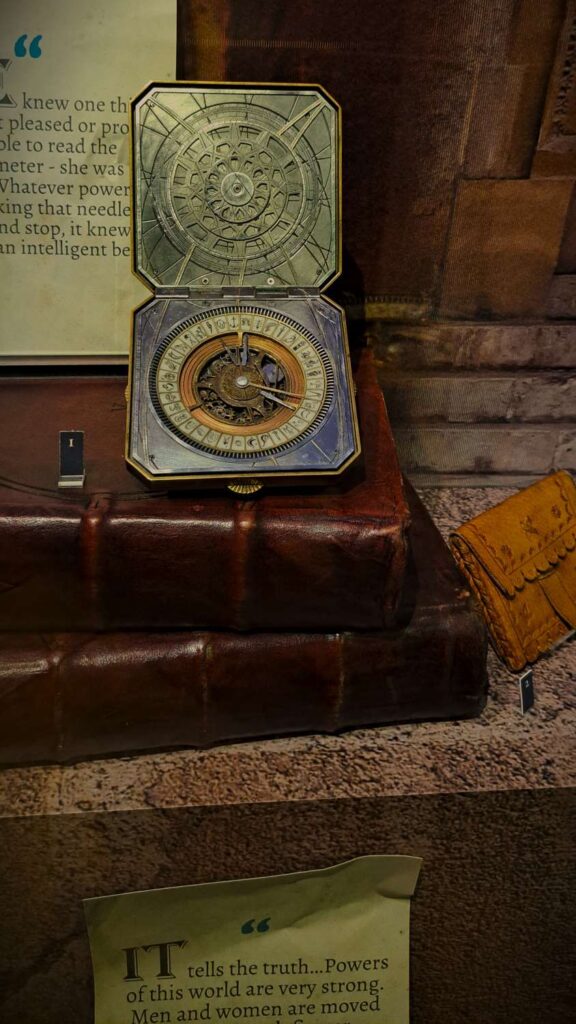
Lyra’s Alethiometer: A truth-seeking compass that reveals the hidden answers to life’s mysteries. From the epic BBC/HBO series His Dark Materials.
At the History of Science Museum, you can currently golden alethiometer, the amber spyglass, and the subtle knife – iconic objects from the series. The museum’s original historical displays, which influenced Pullman’s writing, have been thoughtfully integrated with the exhibition, creating a truly immersive experience.
Costumes from the series, including Lyra’s signature attire and Ruta Skadi’s warrior garb, were also on display, showing the intricate details and craftsmanship that brought these characters to life on screen.
The exhibition was a must-see for fans of His Dark Materials and anyone interested in the intersection of literature, history, and science.

A curious instrument at the History of Science Museum in Oxford: perhaps a lecture prop exploring Platonic solids.
The History of Science Museum’s founding collection of scientific instruments, originally donated by Lewis Evans, served as a source of inspiration for Philip Pullman’s His Dark Materials trilogy. The collection, now part of the museum’s permanent exhibit, includes intriguing artifacts such as lecture props related to Platonic solids. It was a delightful experience to explore this collection and witness firsthand how it sparked Pullman’s imagination, leading to the creation of the iconic alethiometer in his best-selling stories.
********
In addition to attending Tom Holland’s lecture and exploring the His Dark Materials exhibition, we took the opportunity to visit the Bodleian Library.
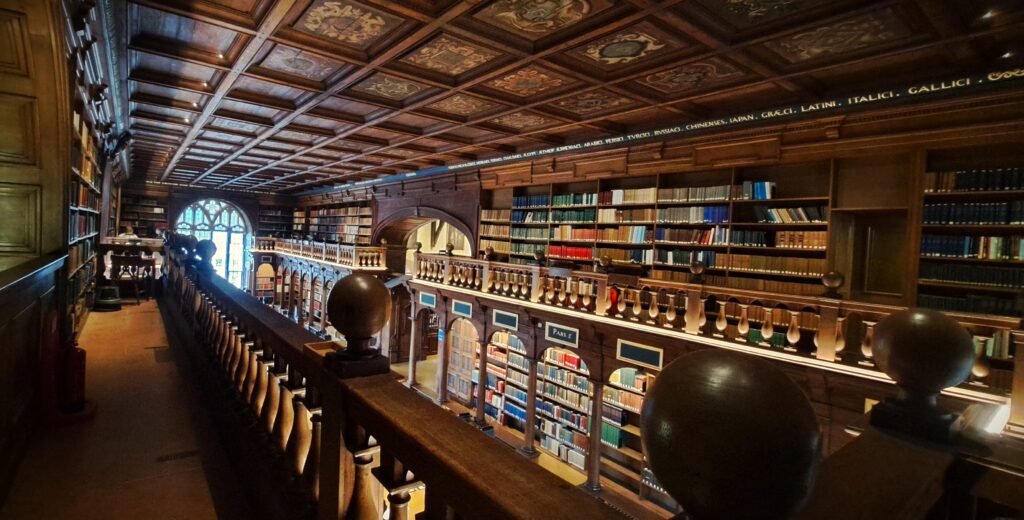
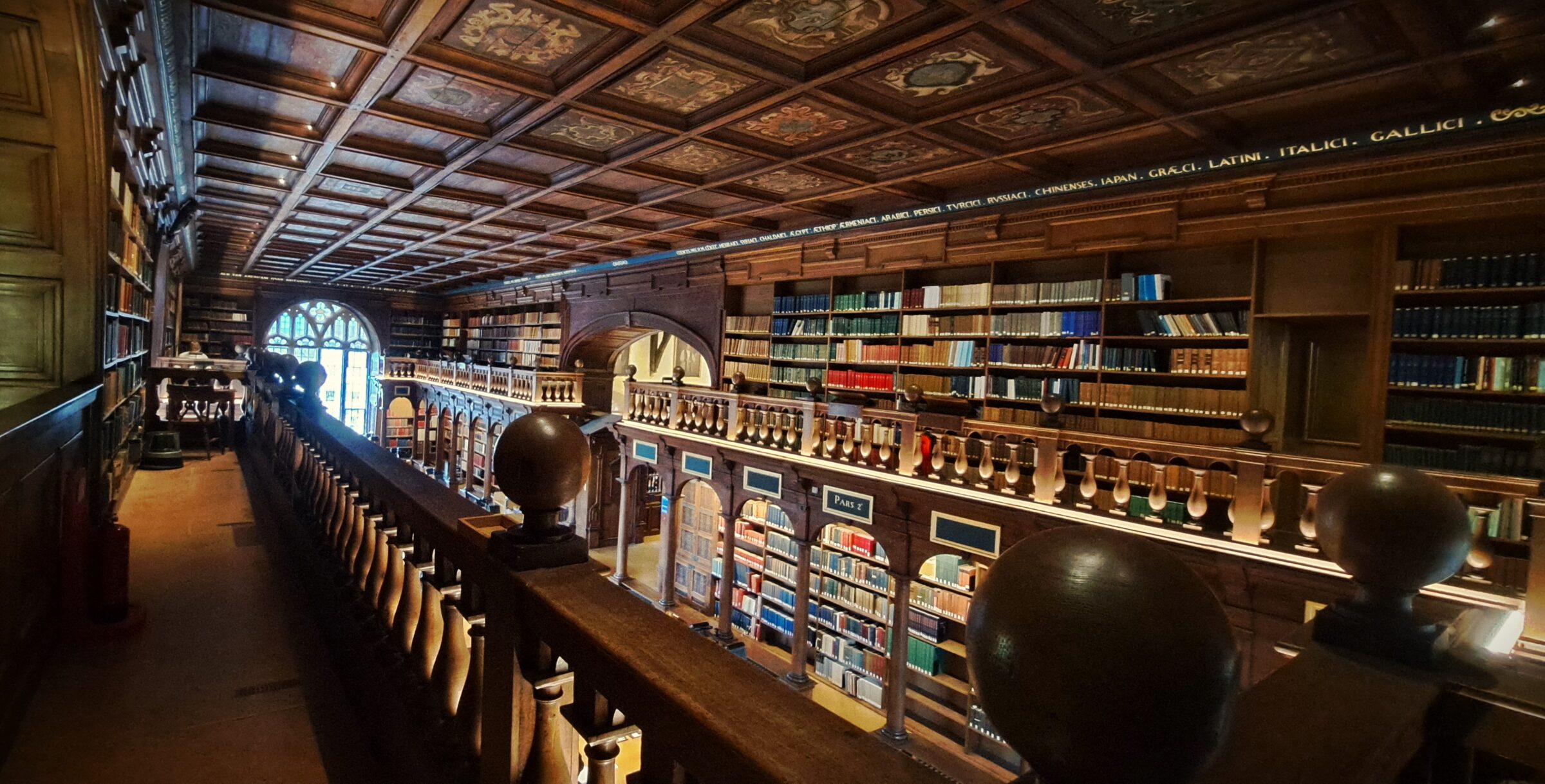
Duke Humfrey’s Library is the oldest reading room in the Bodleian Library at the University of Oxford.
This renowned institution houses a vast collection of books and manuscripts, making it an important place to conduct research when we need to.
One of the texts consulted was The Oxford Cabinet, consisting of engravings from original pictures, in the Ashmolean Museum, and other public and private collections; with biographical anecdotes, by John Aubrey, F.R.S. and other celebrated writers (1797).

VerulamHouse
This book proved invaluable for inquries into Verulam House, a topic our consultant, James Wenn is currently concerned with.
Aubrey was interested in Stonehenge, interestingly, and has features there named after him.
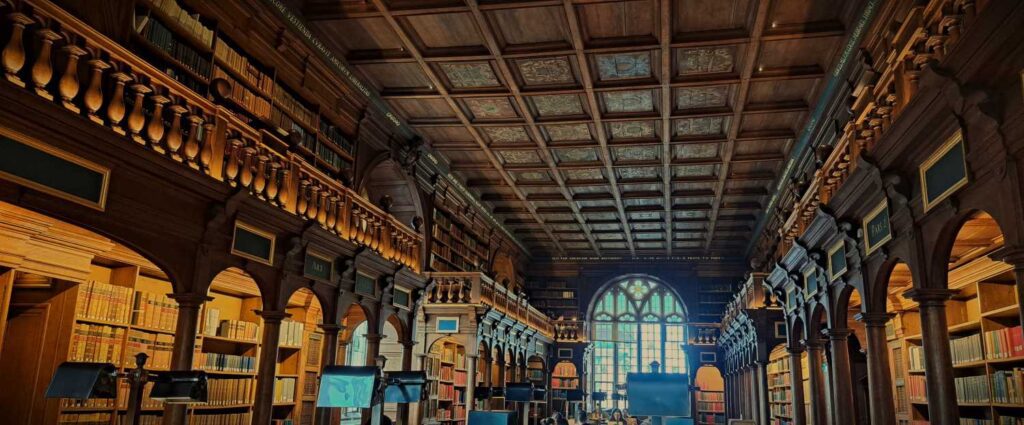
A quiet moment of research in the Duke Humfrey’s Library, a beautiful reading room within the Bodleian Library in Oxford. This iconic space, with its towering bookshelves andancient wood is humbling.
********
The Geneva Bible, with its well-known links to Soulton, holds a special place in the history of the Bodleian Libraries. This is beacuse the profits from the Geneva Bible’s publication provided the financial foundation for the establishment of the Bodleian Libraries.
John Bodley, the library’s founder, fled to Geneva (whose laws Rowland Hill published an account of) during the reign of Queen Mary.
As noted by Moulton[1], the English community in Geneva bore the expenses of publishing the Geneva Bible in 1560. John Bodley subsequently obtained a royal patent for its exclusive printing for seven years. During Elizabeth’s reign, numerous editions of the Geneva Bible and New Testament were published, both domestically and abroad. Hutchinson[2] further highlights Bodley’s involvement in the Geneva Bible’s publication, stating that he received a patent and was granted an extension by Archbishop Parker and Bishop Grindly. This underscores the importance of the Geneva Bible to Bodley and its role in the foundation of the Bodleian Libraries.
********
It is worth taking this moment to address some of the 20th-century confusion in erroneous texts that have periodically caused problems in scholarship, especially given our recent discussion of the mechanics of publishing the Geneva Bible.
Meyer’s 1961 article [3] is one of several post-1900 sources that incorrectly address these questions and fail to credit Sir Rowland Hill. This oversight has led to a plethora of incorrect citations, and anyone wishing to deal properly with these matters will need to go beyond these compounded errors.
________
[1] William F. Moulton, “The History of the English Bible” (5th edition, 1911)
[2] John Hutchinson “English Versions,” The International Standard Bible Encyclopedia, (1937)
[3] Meyer, Carl S. (1961) “The Geneva Bible,” Concordia Theological Monthly: Vol. 32, Article 14. Available at: https://scholar.csl.edu/ctm/vol32/iss1/14
