


Geneva’s Influence on Elizabethan England
A Renaissance Republic’s Impact on English Politics
Sir Rowland Hill was a prominent figure in the English Reformation and REeaisance, renowned for his involvement in the publication of the Geneva Bible and a variety of other esoteric texts.
Collectively, these works represent a series of intentional nudges on the rudder of the young Elizabethan age, influencing its statecraft, intellectual life, religious settlement, trade, and alliances.

Portrait of Sir Rowland Hill, publisher of the Geneva Bibel, in the Hall Mercers’ Company
One such publication was:
The Lawes and Statutes of Geneva, as Well Concerning Ecclesiastical Discipline, as Civil Regiment: with Certeine Proclamations, Duly Executed, Whereby God’s Religion is Most Purelie Maintained, and Their Commonwealth Quietly Governed. Translated Out of Frenche Into Englische
An on-line copy can be found provided by the University of Michigan Library, here.
An interesting feature of this book is a publisher’s stamp featuring a half eagle and a key, with the motto:
post tenebras lux
This stamp was also used on the quarto edition of Shakespeare’s A Midsummer Night’s Dream, suggesting a potential connection between the two works or their publishers.
Sir Rowland Hill was a successful businessman, exerted significant control over shipping on the Rhine River. His involvement in Rhine River trade earned him the title “a great occupier of Allemagne” (Germany).
Hill’s influence extended to various aspects of river trade, including the transportation of goods, the regulation of shipping practices, and the establishment of trade relationships with German cities and towns. His involvement in Rhine River shipping contributed to the economic prosperity of England and strengthened its ties with continental Europe.
The text contains a deication to “Lorde ROBERT DVDDELEY Maister of the Queenes Maiesties horse, and knight of the noble order of the Garter”, which is worth considering.
The dedication prominently highlights the translator’s sincere desire to have the protection of Lord Dudley which is “[he] vsually shewe[s] to the furtherers thereof”, and that the work itself should promote refelction on the Good governace of England. Adding that the text aims to provide English readers with a valuable resource for understanding and implementing effective governance.
The formal publication date of the text is slightly after Hill’s death in 1561. This delay can be attributed to the nature of the Rouland Hall press, which was more of a collaborative venture than a singular enterprise. The name ‘Rouland’s Hall’ itself was likely an inside joke, emphasizing the collaborative nature of the work. Additionally, the time-consuming process of translating, editing, and producing a book, coupled with the ongoing operations of the press during the probate of Hill’s estate, contributed to the publication delay.
Due to the sensitive nature of this text and the adjacent one, which could have led to legal or religious repercussions, the use of a pseudonym served as a form of deniability, protecting the individuals involved in some of the adjacent works.
This practice was not uncommon in the early modern period, and is evidenced by the Epistle to the Reader in the Geneva Bible, which states:
for God knoweth with what fear and trembling we have been now, for the space of two years and more day and night occupied herein,,, the time persecution sharp and furious.
This is also een in the 1537 Matthew Bible, the practice of hiding names and identities was common in the early modern period to avoid legal or religious repercussions. The pseudonym ‘Thomas Matthew’ was likely used to conceal the participation of William Tyndale in the translation.
Dr. Harding has suggested that in this instance the name ‘Thomas Matthew’ may have been chosen to indicate Tyndale’s significant contribution and the preservation of his writings by Coverdale and Rogers, in that way ‘Rouland Hall’ mean’s ‘Rowland’s Team’.
********
The book outlines the structure and functions of the government of Geneva during the 16th century. It covers various aspects of the political and administrative system, including:
- Church Governance: The text details the offices and responsibilities related to the governance of the church, such as the roles of ministers, elders, deacons, and the visitation of the sick.
- Civil Government: It also outlines the structure of the civil government, including the offices of the Senate, the Council, the Treasurer, and the Captain General.
- Legal Procedures: The text describes the legal procedures and the roles of various officials involved in the administration of justice.
- Proclamations: A collection of proclamations is included, providing insights into the specific laws and regulations enacted by the Genevan government.
- Currency: The valuation and regulation of Geneva’s currency.
- Taxes and Emoluments: The fees and taxes levied on citizens and officials.
- Financial Management: The responsibilities of the Treasurer and other financial officials.
The text offers a comprehensive overview of the political and administrative systems that governed Geneva during this period. It sheds light on the city’s commitment to religious purity, good governance, and social justice.
********
It is intersting indeed that the governance of Geneva, a city state republic, is set before an English radership in these terms at the dawn of the reign of Elizabeth I.
The book had an eduring importance, becuse it was reprinted in 1642 during the Civil War.
Sir Rowland Hill, published “The Laws and Statutes of Geneva” alongside Thomas Hacket, a well-known bookseller and publisher. Hacket, who was active in the London book trade from 1556 to 1590, financed and published a wide range of texts, including early English comedies, translations of classical works, and accounts of the Americas. His collaboration with Hill on the Geneva translation reflects the growing importance of publishers as mediators, translators, and patrons in the early modern book trade.
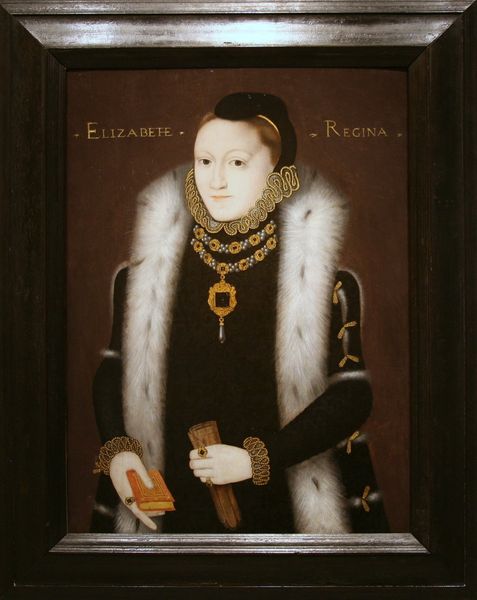
Clopton portrait of Elizabeth I, 1558 — dawn of her reign, guided by Parker with Rowland Hill on her Privy Counil working on pluralisum
