

Tudor Times seen via the River: A Thameside Exploration
Embarking on a journey along the Thames, we retraced the wake of many historical figures, including Sir Rowland Hill, whose legacy continues to shape London’s landscape.
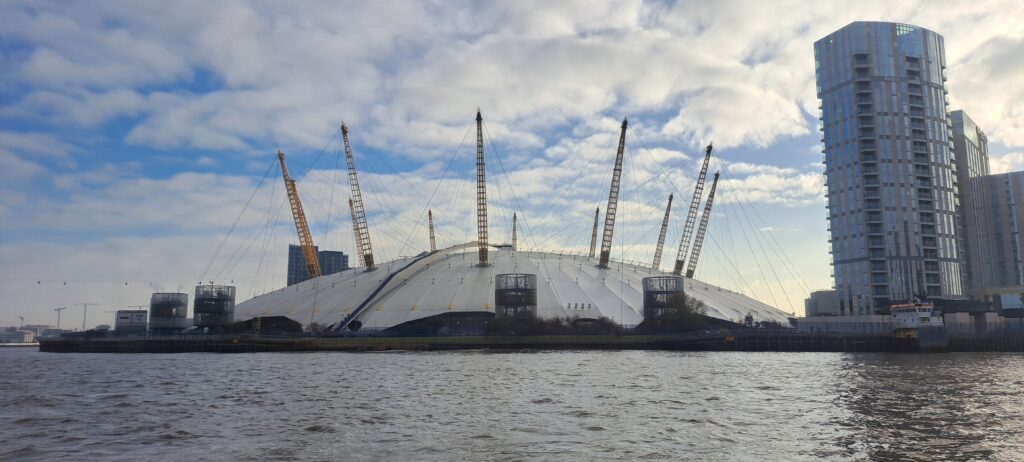
The O2 arena seen from the Thames
The trip began at the historic Greenwich, once a royal palace and now home to the iconic O2 Arena, a modern marvel echoing the area’s rich cultural heritage.
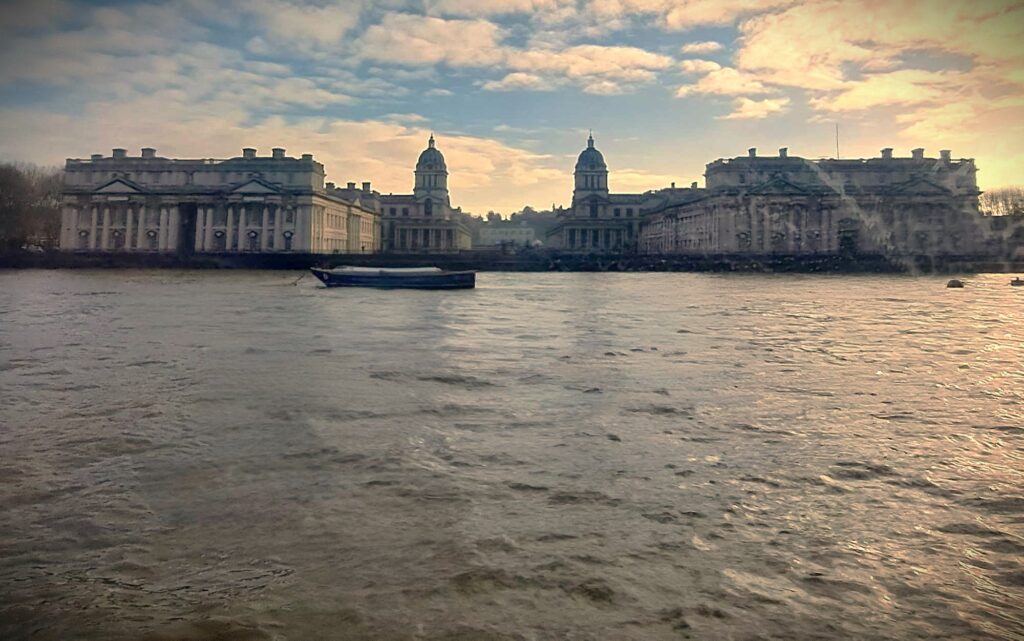
View to the Queen’s House beyond the Royal Naval School in Greenwhich
Nearby, the Royal Observatory, a beacon of scientific exploration, serves as a reminder of humanity’s enduring quest for knowledge.
The Royal Observatory at Greenwhich – Two towers and a light effect between, like Soulton
Continuing our journey, we encountered the grandeur of the Royal Naval College, and close by the Queen’s house: architecture that is a testament to the vision of Inigo Jones.
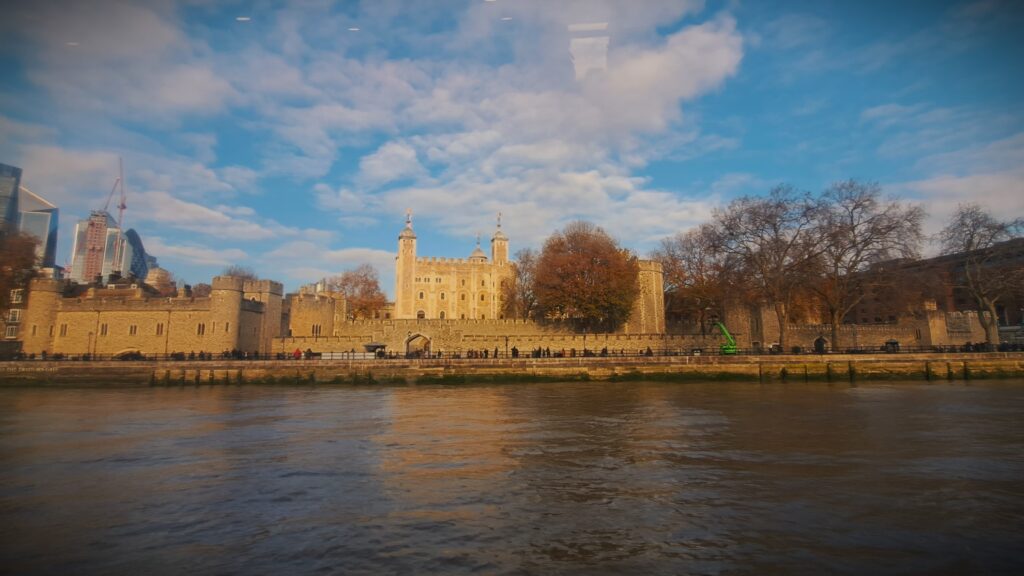
The Tower of London from the Thames
The Tower of London, an imposing fortress with a complex history, appears next as the Thames makes for London and the estury beyond. A place of both imprisonment and royalty, it holds echoes of Sir Rowland Hill’s own tumultuous era: it was here that Hill experienced firsthand the complexities of Tudor politics during a brief imprisonment.
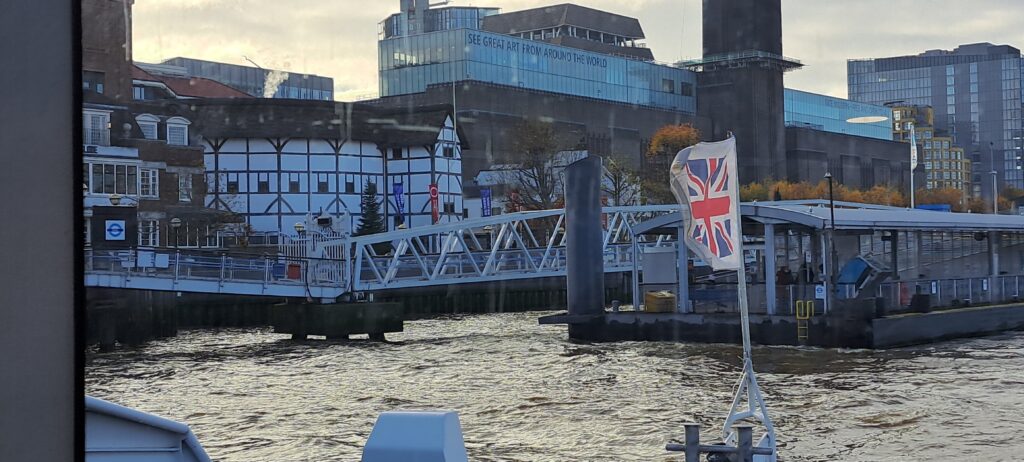
Shakespeare’s Globe, from the River Thames
The Globe Theatre, a modern reconstruction of Shakespeare’s playhouse, transported us to an era when language and performance held immense power. It is within these walls that the plays influenced by Sir Rowland Hill, such as As You Like It, were brought to life. The timber used in its construction even holds a connection to Soulton Hall, Sir Rowland’s ancestral home as it was grown in the woodland at Soulton.
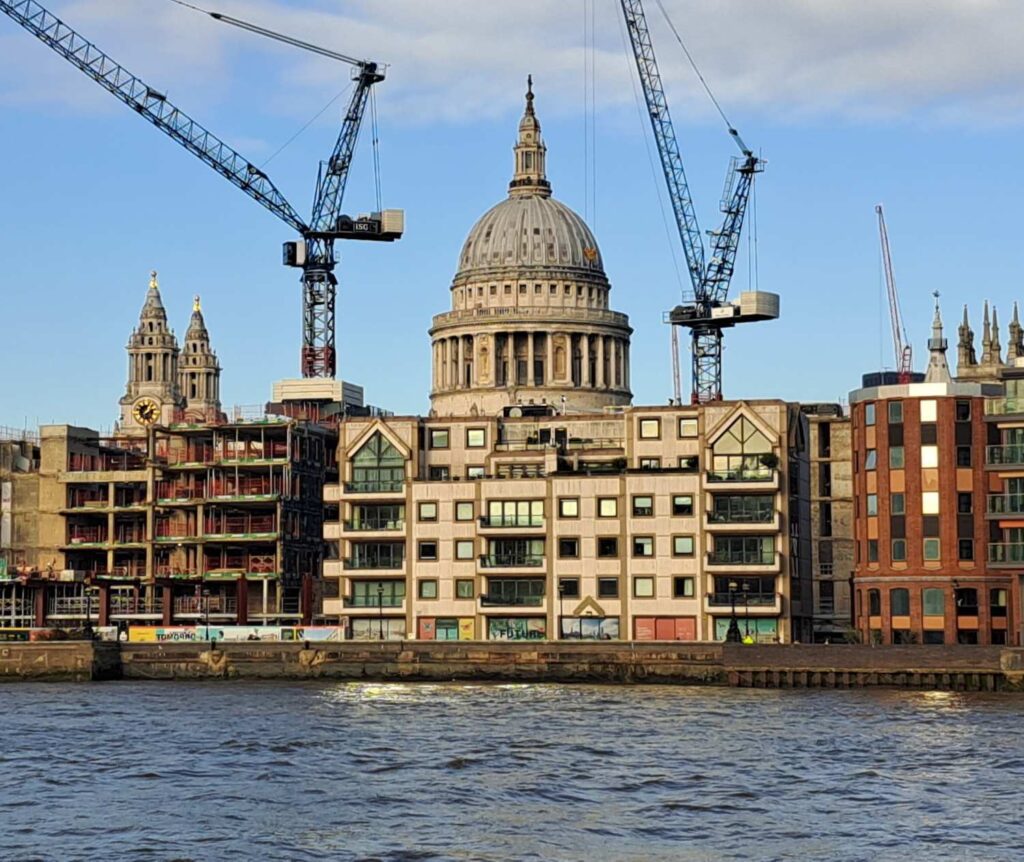
St Paul’s Cathedral from the Thames
Our journey next passe St. Paul’s Cathedral, a spiritual and architectural masterpiece. Here, one may reflected on Sir Rowland Hill’s role in the tumultuous reign of Henry VIII. It was within these walls that Hill delivered a de profundus oration during the chaos of the Reformation, a testament to his courage and conviction.

Portrait of Sir Rowland Hill, Mercer’s Copy
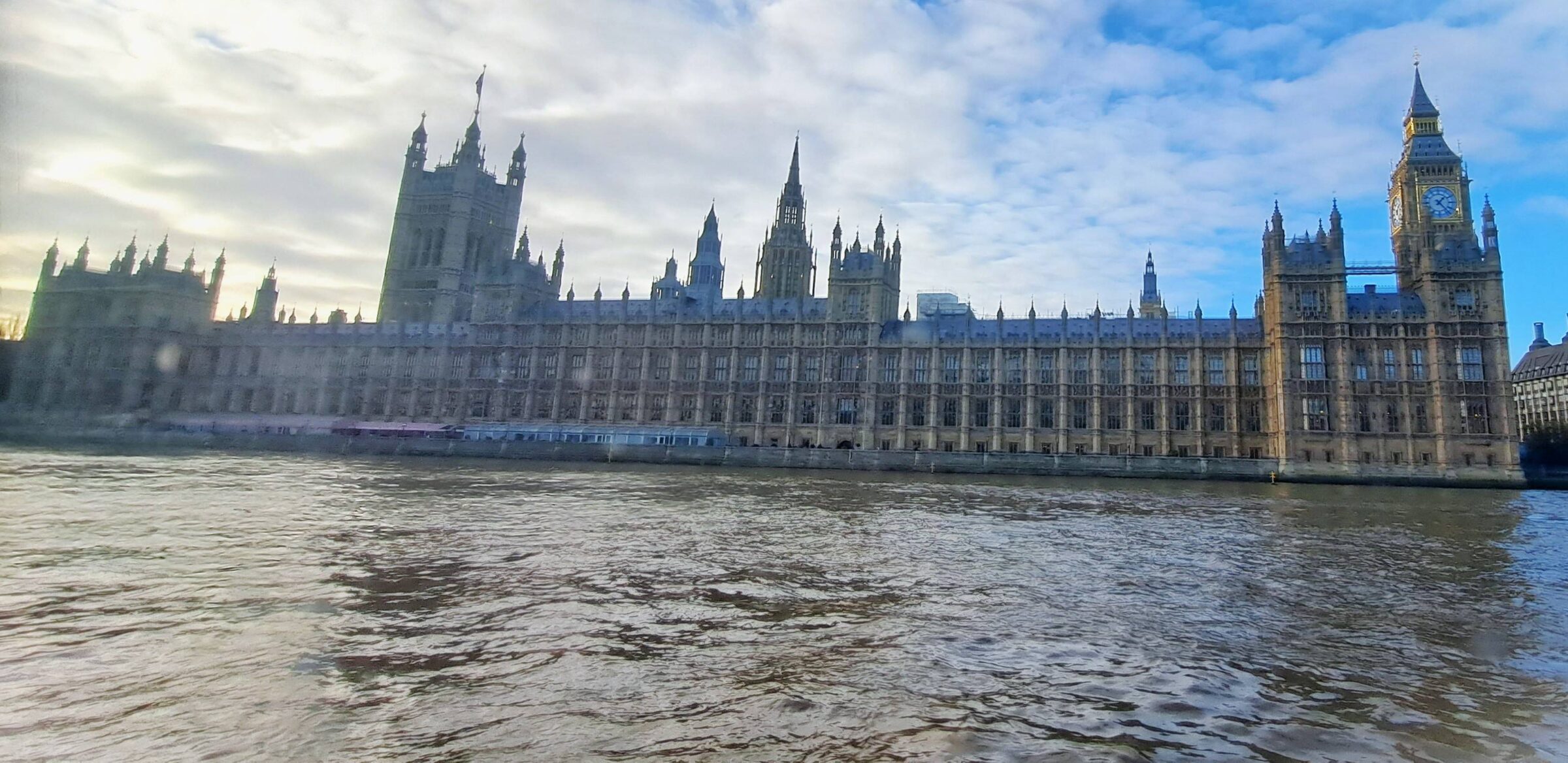
We next passed the Palace of Westminster where the Commons has met for centuries; Sir Rowland Hill was a statesman and MP for the City of London, working on public health, notably legislating on this question while he served in that office.
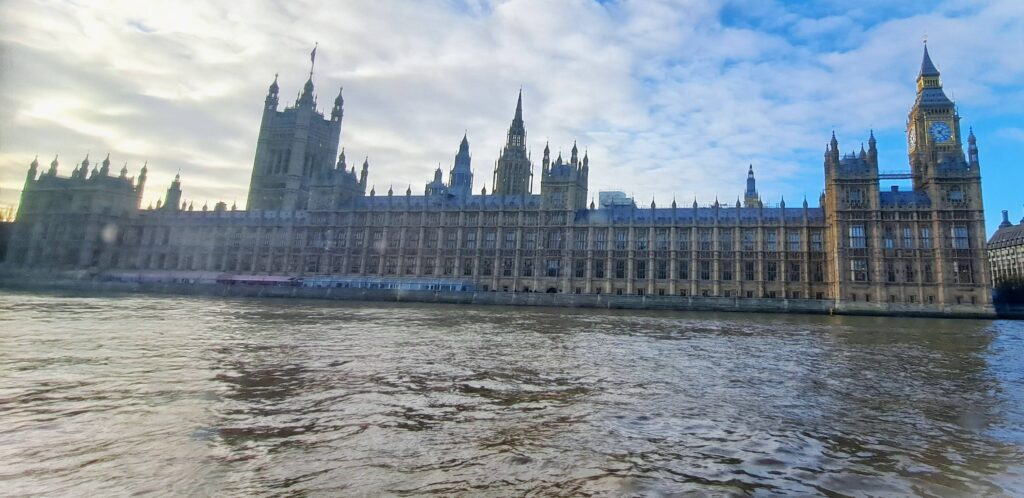
The Palace of Westminster for the Thames
Finally, we arrived at Lambeth Palace, the historic seat of the Archbishop of Canterbury. This was the residence of Matthew Parker, a close friend of Sir Rowland Hill. The palace stands as a symbol of the enduring power of faith and its influence on shaping the nation.
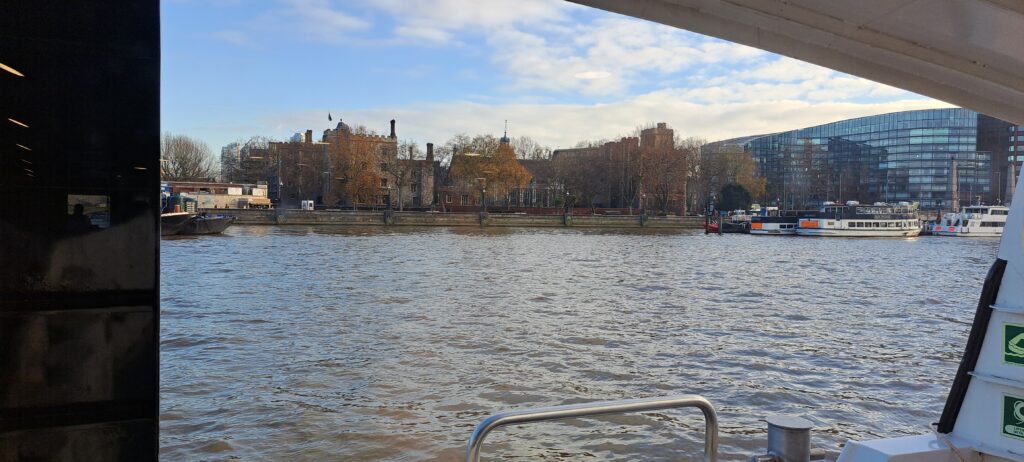
Lambeth Palace from the River
Our Thames-side journey was more than just a boat trip; it was a voyage through time, connecting the dots between historical figures, architectural marvels, and cultural landmarks. The legacy of Sir Rowland Hill, a man of faith, learning, and public service, was a constant companion throughout our adventure.
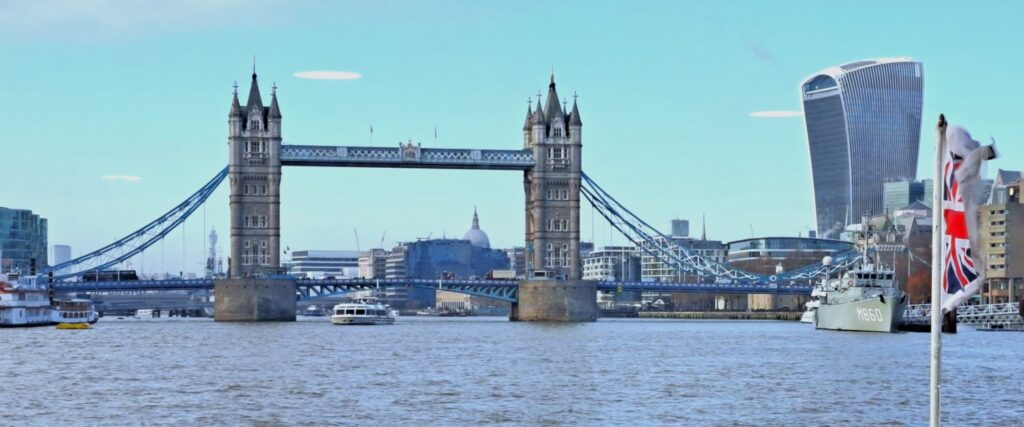
Tower Bridge, a landmark which is later than Sir Rowland Hill’s time
