

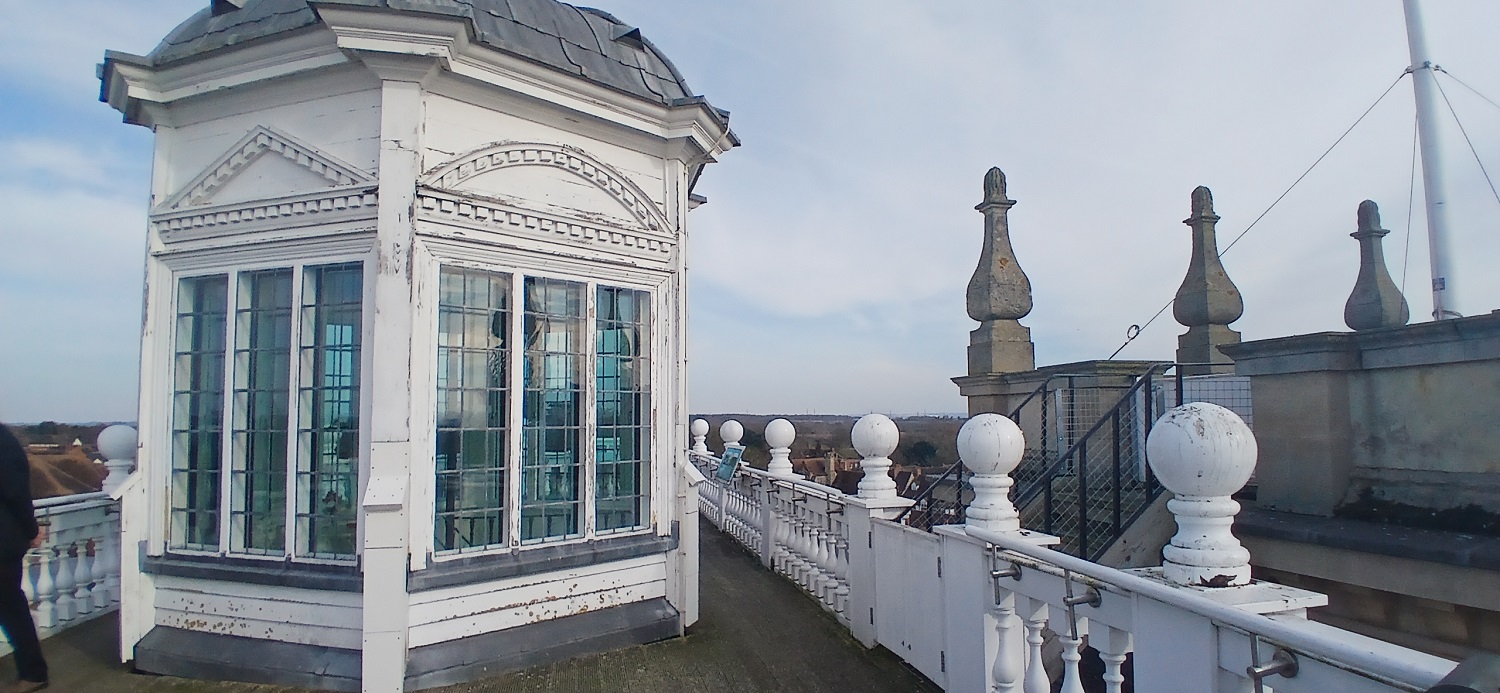
Recent travels to Abingdon, a town where ties of friendship run deep, presented a welcome opportunity to take a closer look at its historic Town Hall. This impressive building, situated in the heart of Abingdon, stands as a testament to the town’s prominence during the 17th and 18th centuries, a period when it was a key stop on the Grand Tour of England.
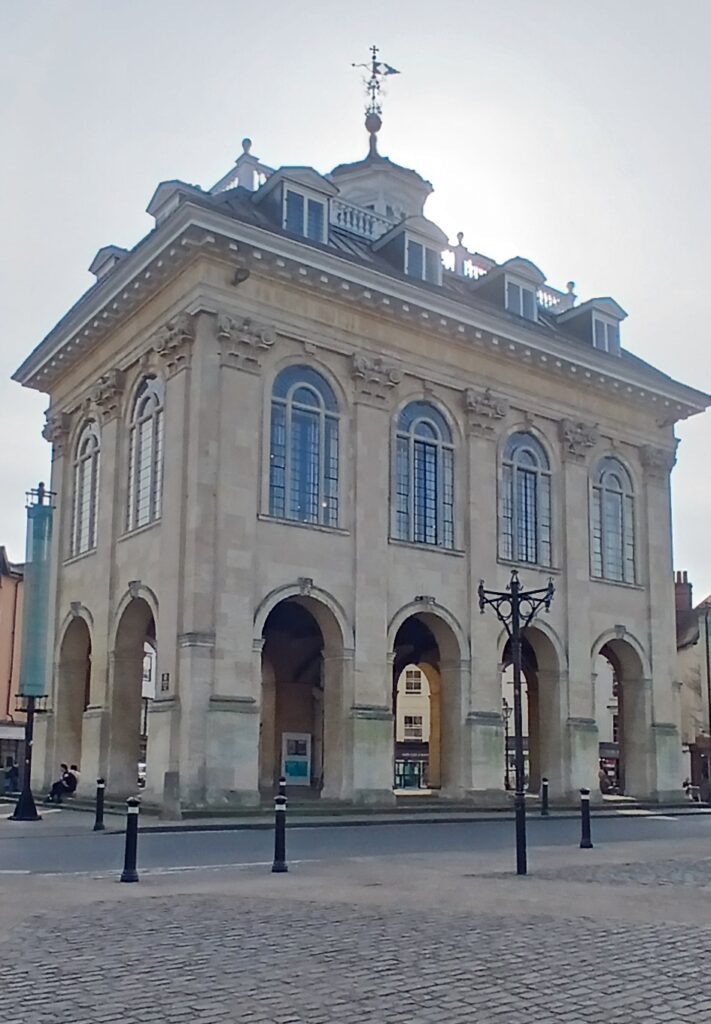
Abington Town Hall, 1670s
Built between 1678 and 1682, (shortly after the clever Soulton Door case, which may evidence the hand of Wren was added in 1668) the hall was designed by Christopher Kempster, a skilled mason and architect who worked closely with Sir Christopher Wren.
This building is a fine example of Baroque architecture, evident in the Town Hall’s grand façade and intricate details.
Notably, the building features a sheltered area beneath, designed for market activities and other municipal functions, a characteristic feature of the style, with the upper chamber being used for civic purposes — exactly as it was at Soulton in the late C17th adjustment to the base court buildings now known as Soulton Court.
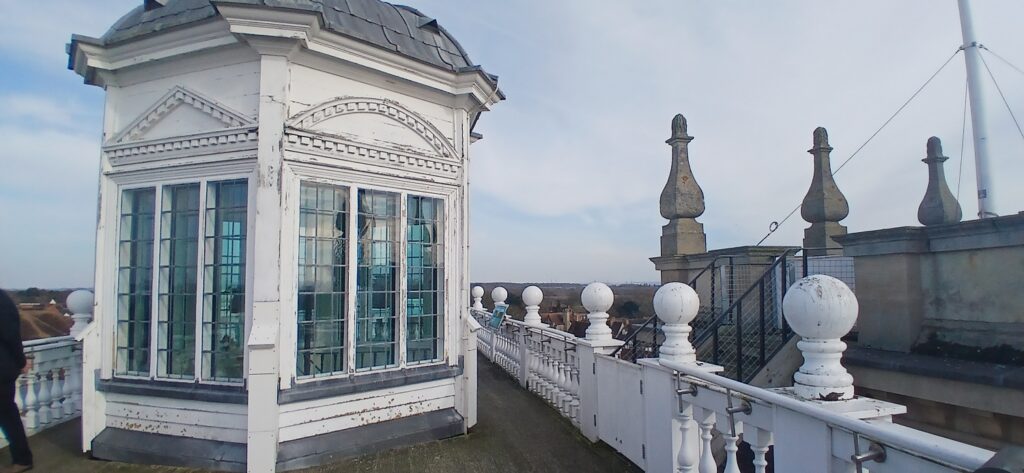
Abington Town Hall Cupola
The lively roof scape of this building is of interest to Soulton Hall, because this feature was lost at Soulton in the C17th, when it was stabilsied aand rendered a as a cube as we see it today, having lost its pyramidal roof.

Scholarly reconstruction of Soulton Hall in accession created by James D. Wenn and James R. Syrett of Byrga Geniht Ltd for Soulton Hall in 2024
The architectural features of Abingdon Town Hall, specifically its cupola and roof terrace, offer fascinating insights into the practices of the Restoration period, as informed by the the Tudor Renaissance period which Soulton Hall heralded.
Historical understanding suggests that these elements were not merely decorative. They served practical purposes, including the practice of astronomy, allowing for observations of the celestial bodies.
Furthermore, these elevated platforms were used for the staging of musicians during shows. The cupola and roof terraces, therefore, functioned as both scientific observation points and performance spaces, reflecting the use of architectural elements in these historical eras.
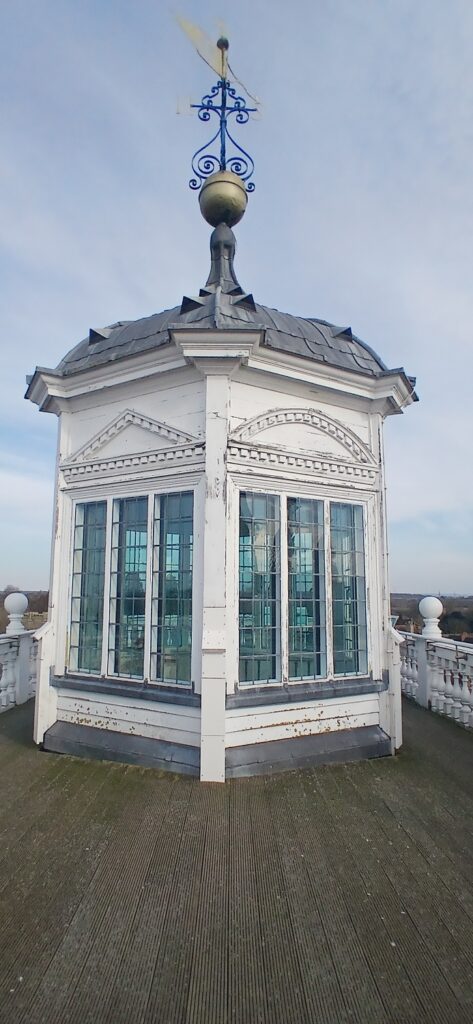
The cupola on the roof of Abingdon Town Hall
We can see something of this tradition in this curious illustration showing scholarly activities around a cupola of the C17th.
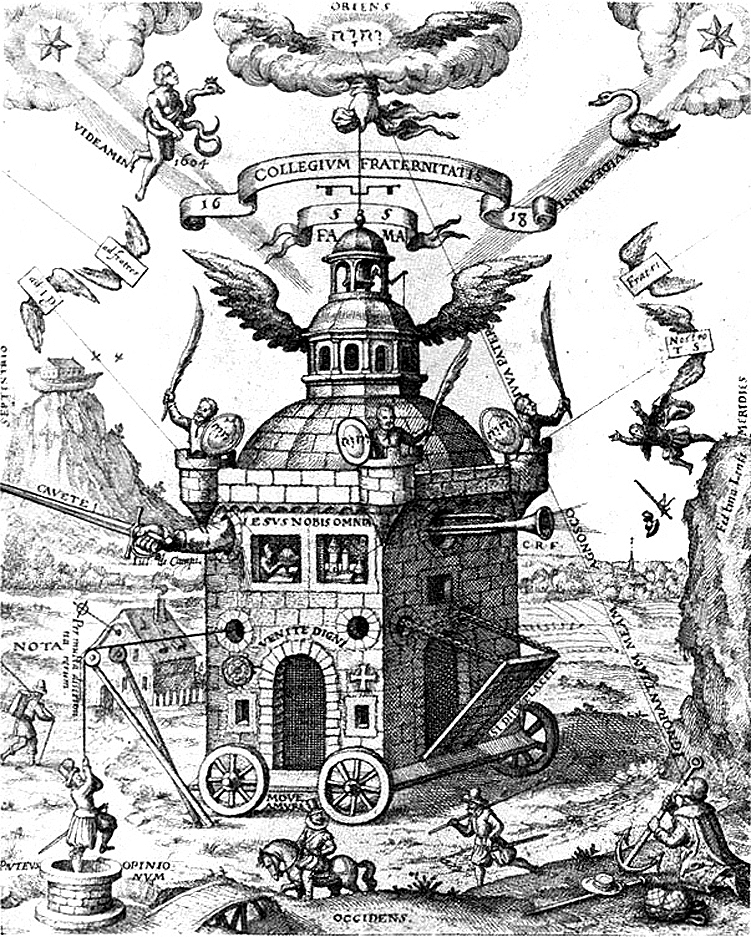
Emblematic image of a Rosicrucian College; illustration from Speculum sophicum Rhodo-stauroticum, a 1618 work by Theophilus Schweighardt. Frances Yates identifies this as the “Invisible College of the Rosy Cross”.
Abingdon Town Hall served as the principal sessions house and administrative home for the Justices of the county. Its courtroom held the Berkshire Assizes until 1867, a significant role that underscored Abingdon’s importance as a legal centre. The courtroom, now part of the museum’s exhibits, offers a glimpse into the history of justice and legal proceedings in the region.
One of Abingdon Town Hall’s most distinctive modern traditions is the ceremonial throwing of buns from its roof. This practice, deeply ingrained in the town’s identity, occurs during significant royal occasions and other celebratory events: baked buns are thrown into the crowd gathered below. This exuberant display of community spirit draws large crowds and creates a festive atmosphere,
