

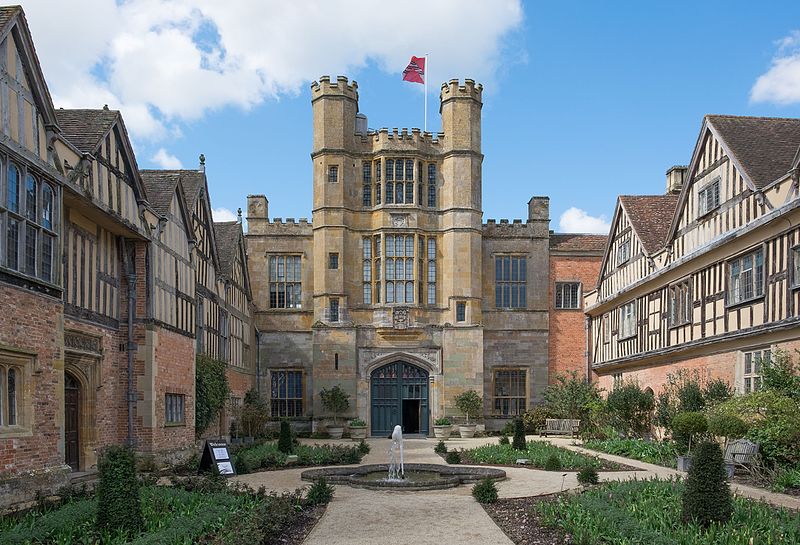
A House Divided: Faith, Family, and Treason
Coughton Court, is a magnificent manor house, offering a captivating encounter with important parts of England’s into the past.
On the southern edge of the estate stands the ancient Coughton Cross, a silent sentinel marking the gateway to the fabled Forest of Arden. This very forest, steeped in myth and legend, inspired Shakespeare’s “As You Like It.” Tradition holds that travellers would pause at this cross to offer a prayer for safe passage through the sprawling woodland that stretched out before them, full of danger.

The Crumbling Wayside Cross: Guardian of the Forest of Arden’s Southwest Corner
Sadly this important cross is in urgent need of conservation and repair, with the above picture being old and the badly faded sign now gone entirely. Pleasingly much is being done by the Nationally Trust to repair the house, which was clear on this visit, and hopefully this cross will be on a list for some attention shortly.
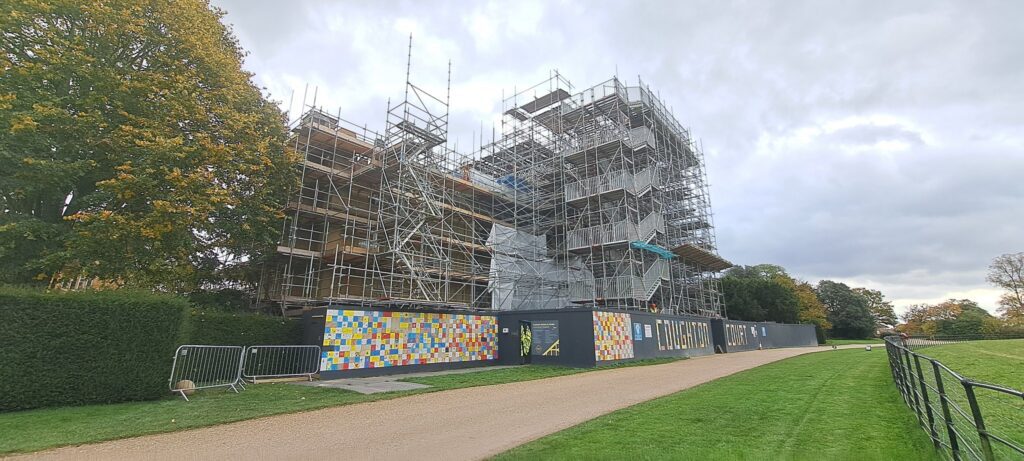
Scaffolding on Coughton Court
Like Soulton Hall, Coughton Court also boasts a hidden priest hole, a testament to the turbulent religious climate of the time. This secret chamber, ingeniously concealed within the house’s structure, provided sanctuary for Catholic priests during the Elizabethan era when they faced persecution. While the Soulton priest hole is associated with hiding persecuted Protestants, Coughton Court’s priest hole served as a refuge for Catholic clergy, highlighting the complex religious landscape of 16th-century England.
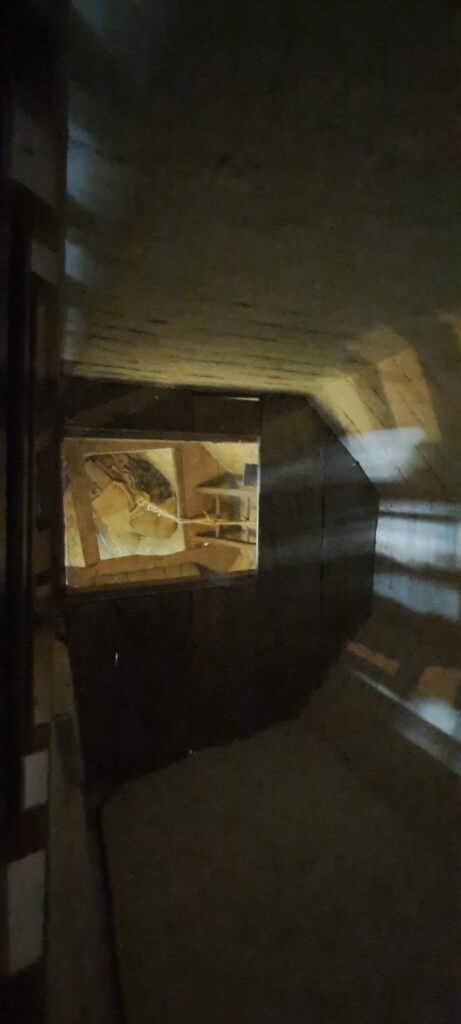
The Coughton Court Priests Hide
The Throckmorton family’s involvement in the Gunpowder Plot adds a dramatic chapter to the history of Coughton Court. In 1605, a group of Catholic conspirators, including several members of the Throckmorton family, planned to assassinate King James I and his Protestant government.
While the men were busy with their plot, the women of the families, nervously awaited news from London. The tension in the house must have been terrible as they prayed for the success of the plot, which they believed would restore Catholicism to England.
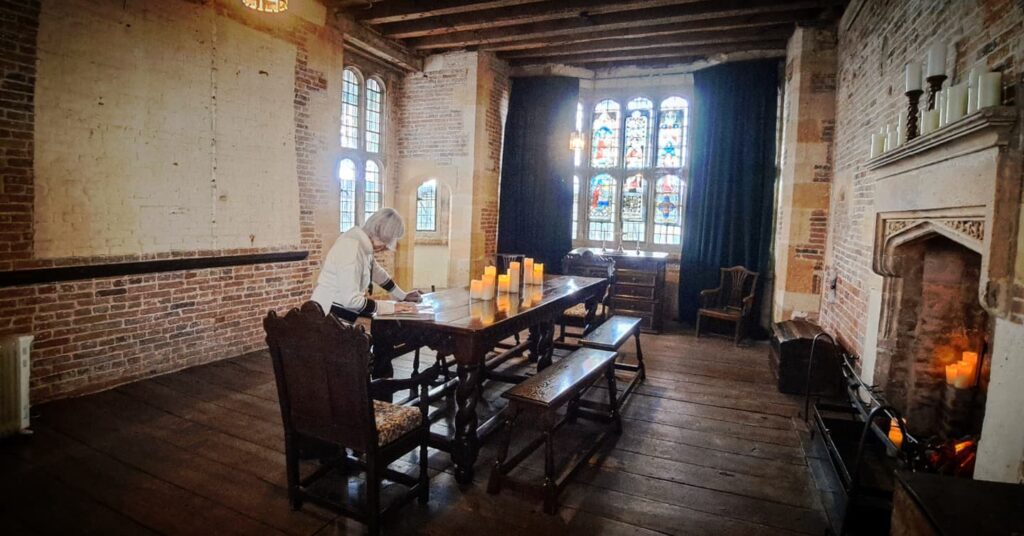
The Room in which news of the Gunpowder Plot was awaited
However, the plot was foiled, and many of the conspirators were arrested and executed. The Throckmortons were deeply affected by the events, and the family’s reputation was tarnished.
The family at Soulton are related to Sir Everard Digby, one of the key conspirators, also faced the consequences of the Gunpowder Plot.
Coughton Court houses a significant collection of religious artifacts. One such treasure is a chemise believed to have been worn by Mary, Queen of Scots, during her execution. This simple garment offers a poignant reminder of the tragic fate of a monarch and the tumultuous, persecutory period of English history that led to her death.
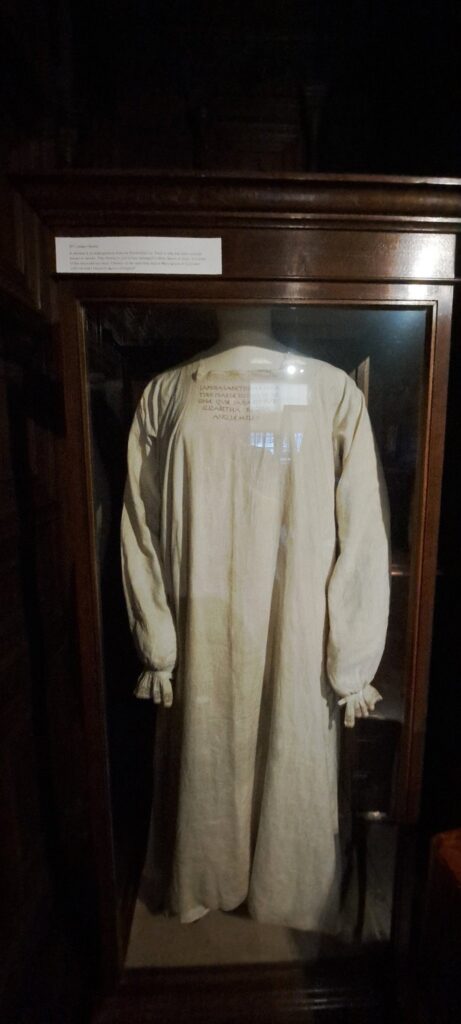
Chemise believed to have been worn by Mary, Queen of Scots
Another intriguing piece is a vestment that may have been worked on by Catherine of Aragon. This exquisite item, decorated with pomegranates and intricate embroidery, provides a glimpse into the religious practices of the Tudor era and the devotion of the royal family.
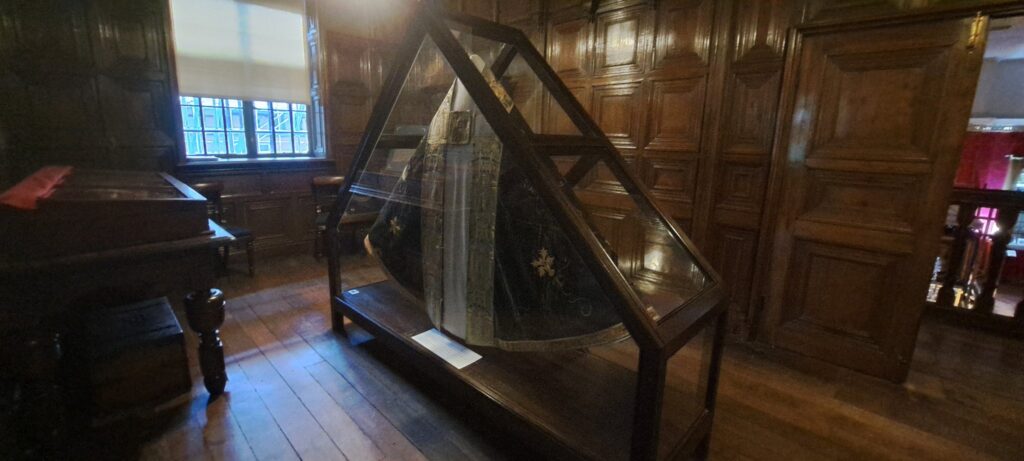
Catholic Vestments Linked to the the Tudor Royal Family
