

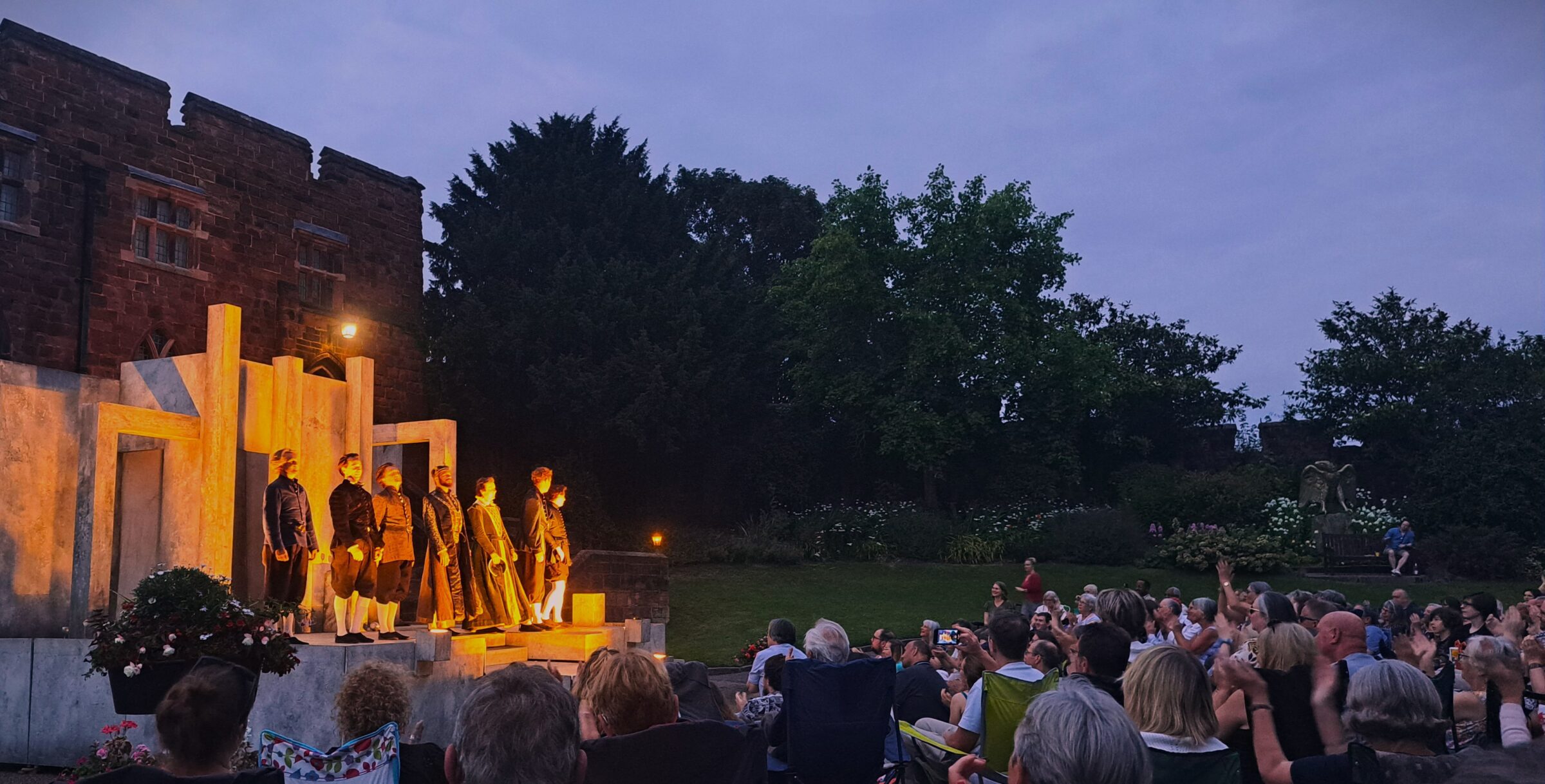
Hamlet’s Elsinore comes to Shrewsbury Castle with the Lord Chamberlain’s Men
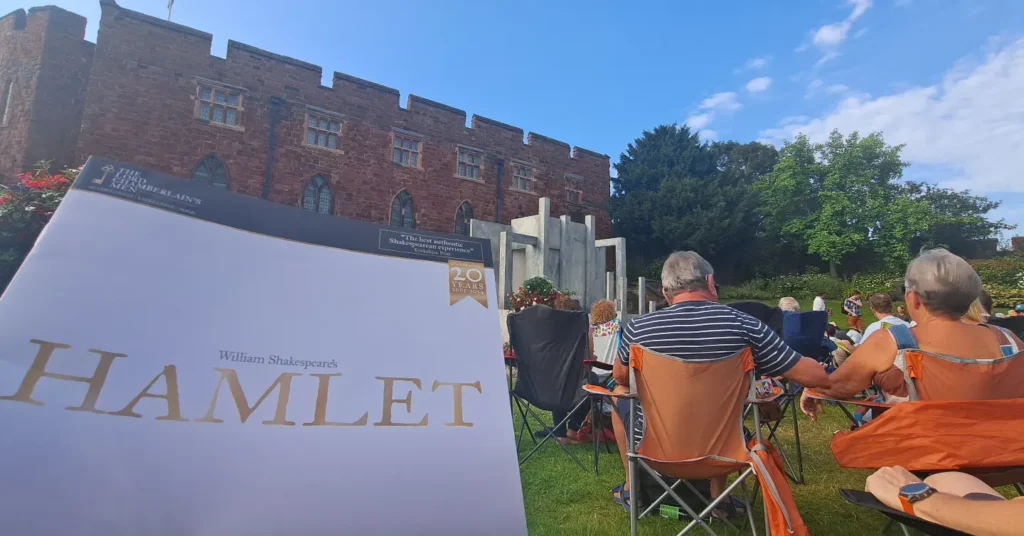
Shakespeare’s Hamlet at Shrewsbury Castle with the Lord Chamberlain’s Men
The Lord Chamberlain’s Men’s production of Hamlet at Shrewsbury Castle tonight was a truly unforgettable experience.
The historic setting provided a dramatic backdrop for Shakespeare’s timeless tragedy, immersing the audience in a world of intrigue and melancholy.
The cast delivered powerful performances, capturing the complexity of Shakespeare’s characters with nuance and depth. The physicality of the production, enhanced by the castle’s imposing architecture, added a raw energy to the play. The use of natural light and shadow created a haunting atmosphere, perfectly complementing the play’s themes of madness, revenge, and mortality.
********
Hamlet is a profound exploration of the human psyche, plunging deep into the complexities of grief, revenge, and madness. The play serves as a poignant reflection of the psychological turmoil experienced by individuals grappling with traumatic and abusive events.
The world of Hamlet (Hal Geller) is shattered by the sudden and violent death of his father, powerful violation of the natural order cloaked in deceit and betrayal. This traumatic event triggers a cascade of emotional and existential crises for the young prince. His thoughtfulness yields to obsessive rumination, coupled with ruined legacy, and creates a psychological pressure cooker that ultimately manifests in symptoms resembling conditions such as anxiety, depression, and PTSD.
This rendering of the play’s exploration of themes like mortality, the meaning of life, and the nature of reality foreshadows later psychological and philosophical discourse.
Hamlet’s internal struggles serve as a powerful reminder of the enduring human capacity for both resilience and vulnerability in the face of adversity.
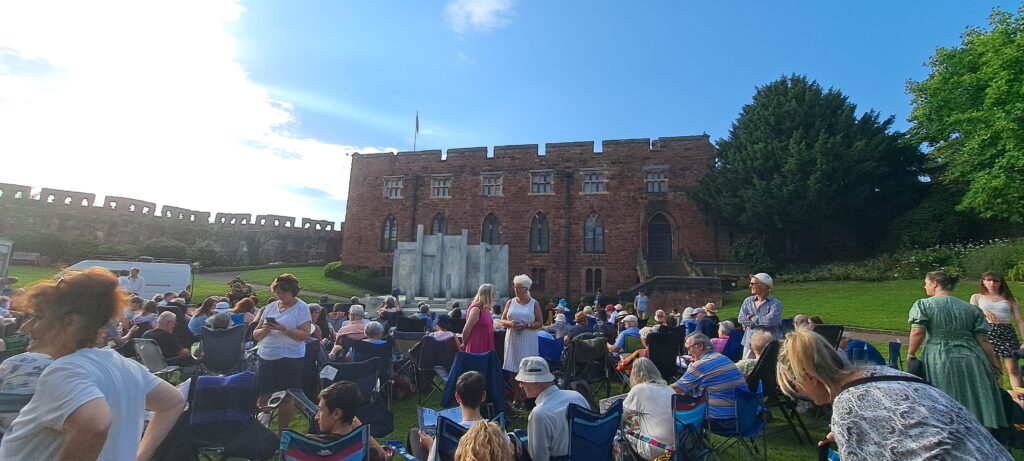
ACT I, SCENE I. Elsinore. A platform before the castle.
His likable scholarliness and steadfast commitment to honor and morality transforms him into the play’s heroic protagonist. This dedication, coupled with his introspective nature, positions Hamlet as a character of epic proportions, reminiscent of classical Greek heroes.
Meantime Claudius (Thomas Delacourt), ascends to the throne followin a heinous act that defies the natural order, establishes him as a absoulte villain. His marriage to Gertrude, the widowed queen, is a blatant act of usurpation that further deepens tragic undercurrents. A master manipulator, he has secured his power through a cruelty and abuse. There are only limitted glimpses of vulnerability and regret, which do not feel hinest. His short reign is marked by a constant struggle to maintain power.
His fear of exposure forces him to resort to increasingly desperate measures:
Something IS rotten in the state of Denmark*
He becomes a prisoner of his own ambition.
His actions create a ripple effect of tragedy, culminating in his own demise and the collapse of the feddid edifice of his business.
A cautionary tale about the corrupting influence of power taken for the wrong resasons and the inevitable consequences of unchecked ambition in unworthy men.
Gertrude (Mark Milligan), has a hasty marriage to Claudius, her late husband’s brother, which has irrevocably altered the trajectory of her life and that of people that expected better of her. Weak and complicit, Gertrude is also a trapped in a patriarchal society which is exploting her, navigating a complex web of power and coercion. Her choices, abouslutely morally questionable, might be understood as acts of pathetic survival rather than deliberate betrayal. She is nevertheless a figure of contempt, if you can be generous enough to pay her attention at all, and she will bar entrance to her chamber rather then face the truth of the path she took and the hurt she caused and the things that were broken ti sustain her comfort – beyond the window many suffer but she has been cosy for a bir longer and held on to some respect she had not earned.
*CV377BJ|SY26LG.
The opportunity to experience Shakespeare in such a unique and evocative setting made this a truly special night of theater.
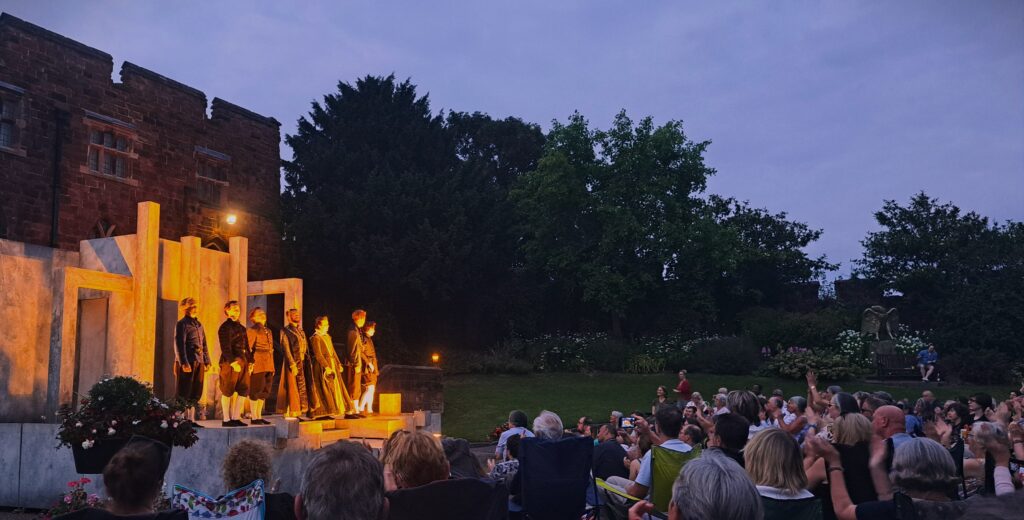
The Lord Chamberlin’s Men finishing Shakespeare’s Hamlet at Shrewsbury Castle
********
The presence of Shakespeare’s acting company, the King’s Men, in Shrewsbury between 1603 and 1605, during a period of London theatre closures due to plague, raises the intriguing possibility of the Bard himself visiting the town. The company were paid a substantial sum of £30 for their performances, it is plausible to suggest that Shakespeare accompanied his company. This conjecture adds a captivating layer to Shrewsbury’s literary and theatrical heritage.
