


The Entrance to Sir Rowland Hill’s Prayer Room with the Rithmomachia Floor
This is a very imporant door.
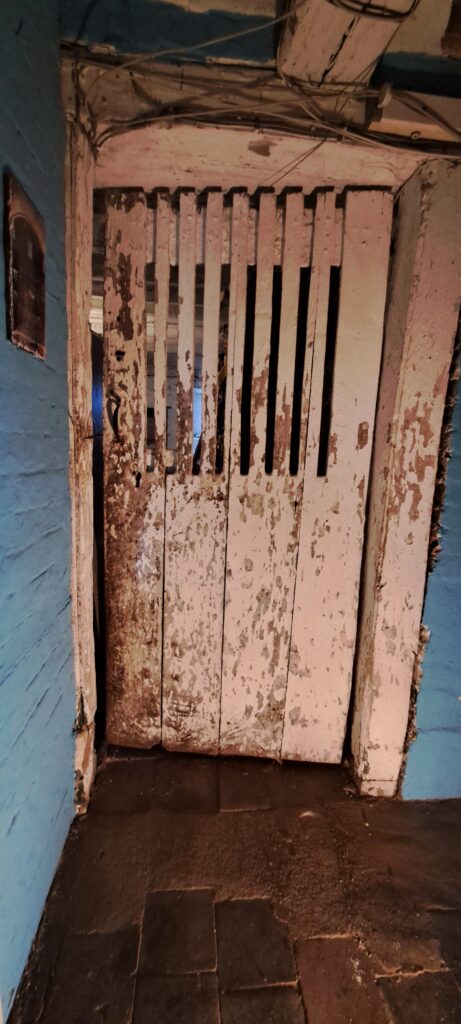
A rare survivor! This doorway is the last remaining Tudor door at Soulton Hall. It leads to Sir Rowland Hill’s prayer room and the fascinating Rithmomachia floor. (For many years [centuaries], the vestibule leading to the chapel and the Prayer Room has served utilitarian purposes, hence the cabels you can see).
Most doors here date from the 19th century, reflecting centuries of improvements and the scars of events like the Civil War.
However, one exceptional door stands out – a testament to the building’s Tudor past. This sole survivor leads to Sir Rowland Hill’s prayer room and the fascinating “Rithmomachia” floor.
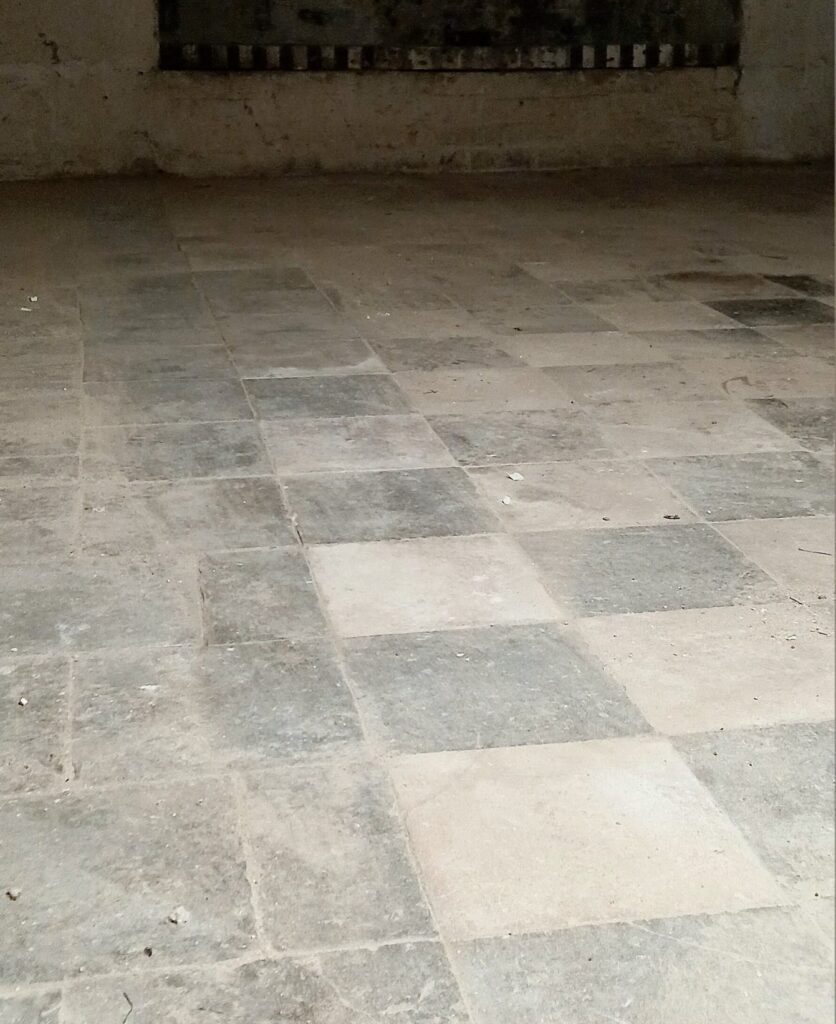
The Rithmomachia Pavement in the Prayer Room of Soulton Hall – 2022, awaiting conservation.
This sole surviving Tudor door at Soulton Hall offers a tangible link to Sir Rowland Hill’s inner circle. Used by those closest to him, it provided access to his prayer room, a space dedicated to activities that may have been considered religious dissent, subversive, or unorthodox…. some perspectives in that time would, without question, have seen as treasonous or heretical.
This door has some interesting features related to numbers, a subject Sir Rowland Hill was known to be obsessed with:
- Eight slots for light: This detail may be a reference to the dance, if you accept that (the number 8 is on everything here)
- there are four planks (which may be a reference to the Evangelists).
********
The above references matters upon which the Ashton family has consulted Byrga Geniht.
