

“And this our life exempt from public haunt / Finds tongues in trees, books in the running brooks, / Sermons in stones and good in every thing.”
— William Shakespeare, As You Like It (Act II, Scene 1)
When Shakespeare wrote about finding “tongues in trees,” he was tapping into a landscape with deep family and literary roots. Soulton Wood is directly tied to Thomas Lodge, Jr. and his text Rosalynde: Euphues Golden Legacie (1590), the direct source material that Shakespeare adapted to create the Forest of Arden.
This same land was home to Sir Rowland Hill, the real-life inspiration for “Old Sir Rowland” in the play.
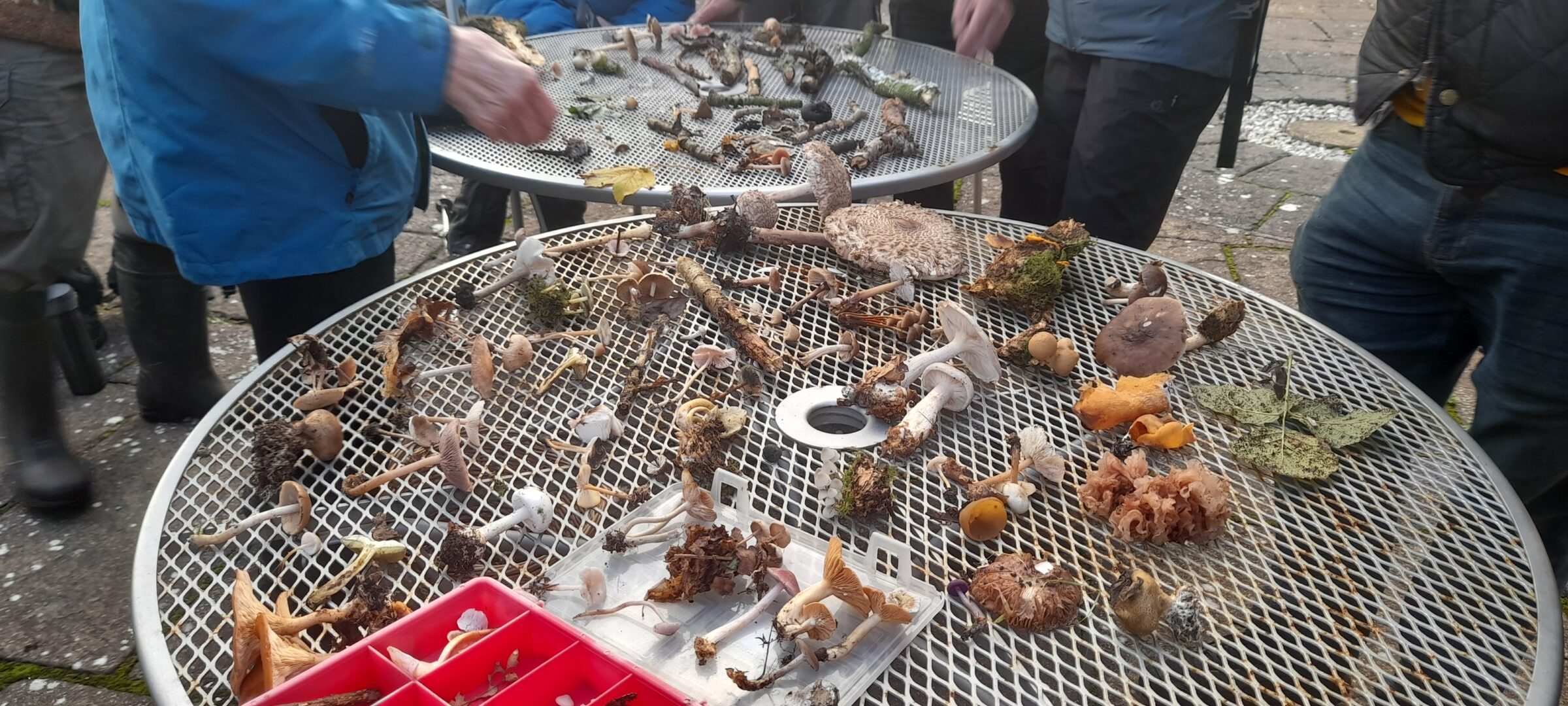
Shropshire Fungus Group Discoveries in the As You Like It Wood 2026
Today, those “tongues in trees” take a very literal, scientific form. Through the ongoing assaying work of the Shropshire Fungus Group, the ancient woodland that birthed one of English literature’s most famous pastoral worlds is being read like an ecological book. On October 4, 2025, the team recorded a rich snapshot of early-autumn life, documenting rare species such as Cystolepiota bucknallii (Stinking Dapperling) and Porphyrellus porphyrosporus (Dusky Bolete), alongside wood-decay champions like Fistulina hepatica (Beefsteak Fungus). Fast forward to October 31, 2026. Nearly four weeks later in the autumn season, the mycologists returned to assay the same ground.
Returning to the exact same stretch of trees is essential to understanding a woodland like Soulton. Fungi do not keep a human schedule, and a single snapshot only captures a fraction of what lives beneath the soil. Late-October temperatures and thick autumn leaf litter coax out entirely different fungal networks than those that show up earlier in the season. By tracking these seasonal shifts and watching which species return over time, mycologists can gauge the true vitality of the woodland’s underground ecosystems. Finding specialized micro-fungi that rely on specific host trees proves that the delicate ecological relationships forged in Tudor times are still actively working under our feet today.
There is a powerful harmony in using modern mycology to steward a forest with such profound cultural heritage.
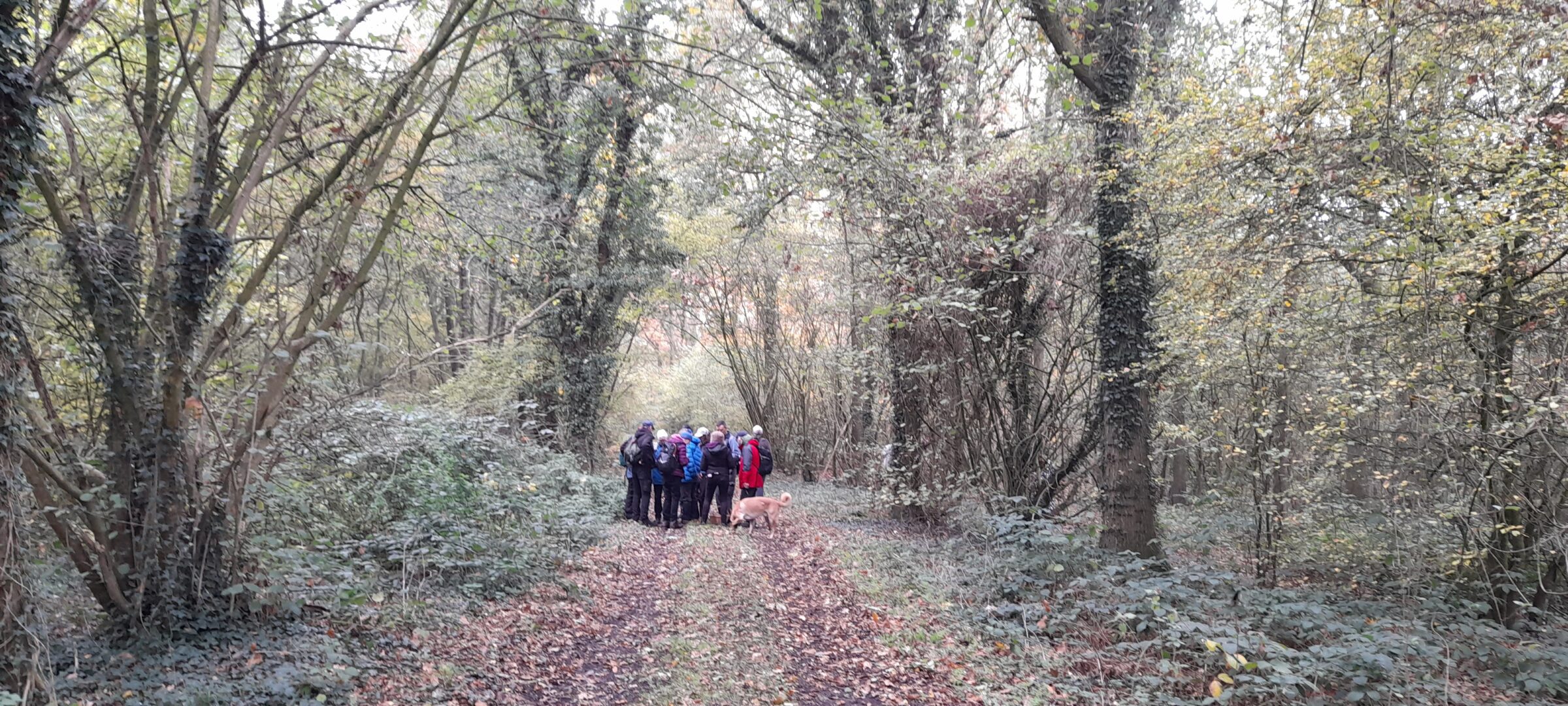
Shropshire Fungus Group in Soulton Wood 2026
As the findings from the late-October 2026 foray are cataloged, verified, and added to the national records, they remind us that Soulton Wood is not a static museum piece. It is a living, breathing, evolving sanctuary.
