

Yesterday, we were glad to have a moment to look at our local heritage, setting out with the intent to visit Moseley Old Hall.
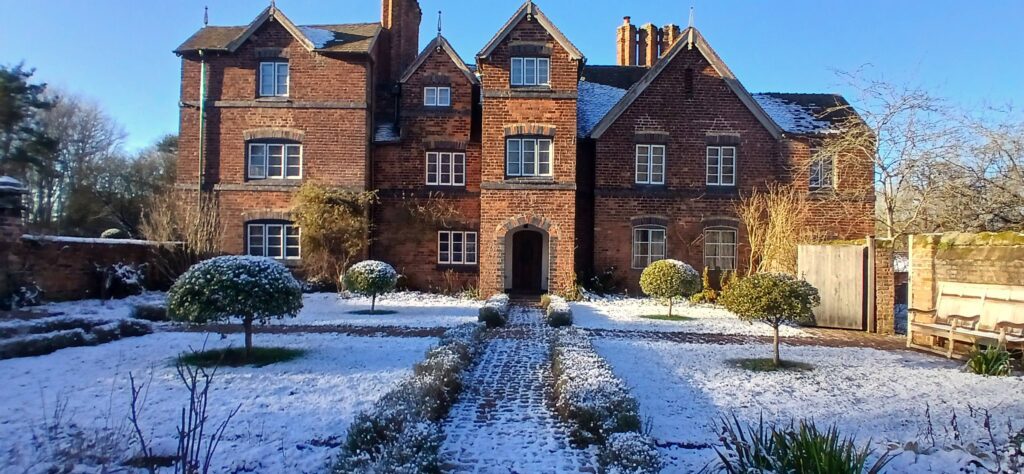
Mosely Old Hall
We were particularly interested in the site not just for its famous royal associations, but for the presence of its domestic chapel and prayer room, a rare survival that might help contextualize the arrangements at Soulton; where these spaces, which fell out of use centuries ago, have been carefully conserved and, hopefully, will one day be fully restored.

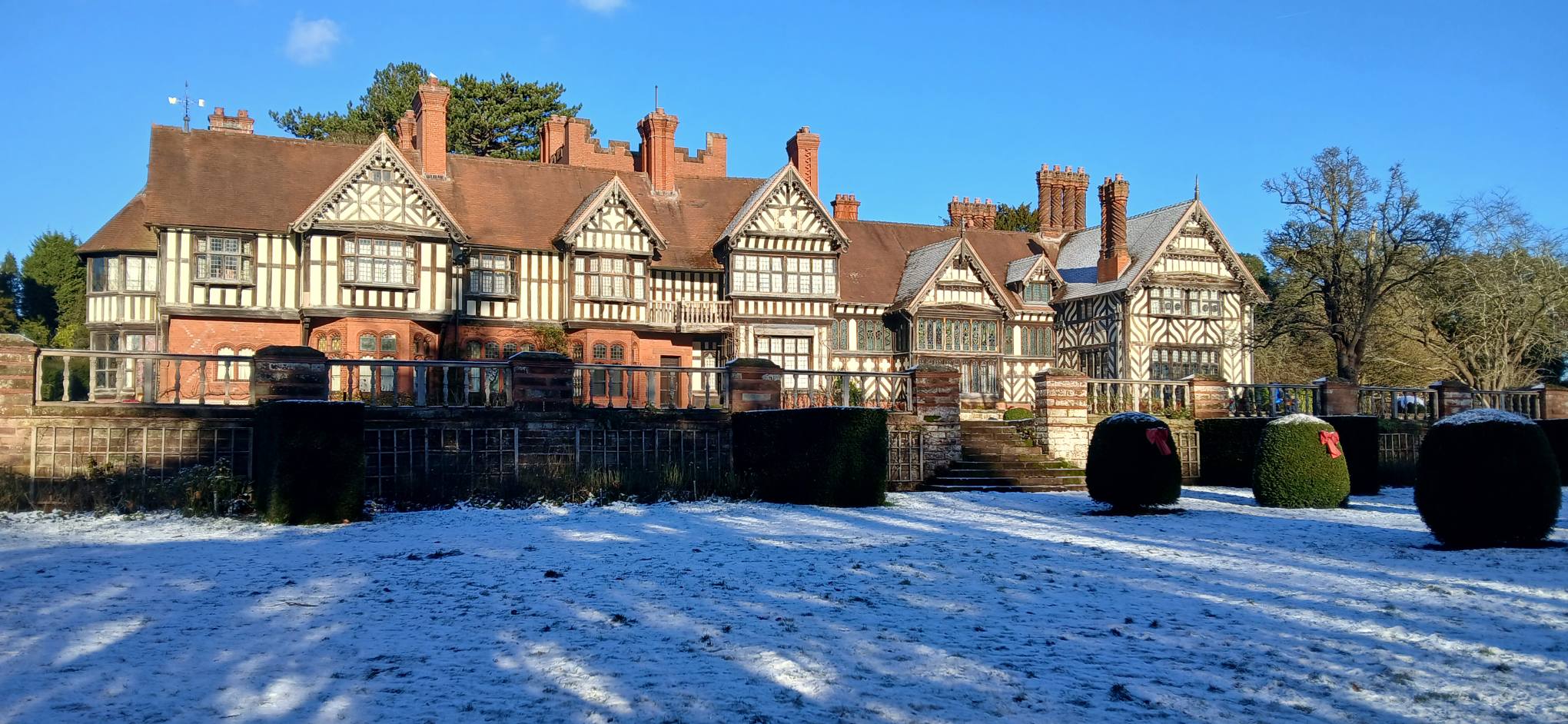
Wightwick Manor in the Snow
Sadly, Moseley was closed at the last minute due to the snow.
We turned instead to Wightwick Manor, which is famous as a masterpiece of the Aesthetic Movement. In the Great Parlour, the narrative of revival is foregrounded. We found the magnificent Kempe windows, which feature intricate eight-fold stars—geometric symbols of harmony. High above, the plaster frieze is a deliberate nod to the “High Great Chamber” at Hardwick Hall. But where Bess of Hardwick’s frieze depicted the court of Diana, Wightwick’s version is interestingly dedicated to Orpheus. The family were prominent Liberal politicians, and you could trace a familiarity with some of the energies also seen in Alfred Waterhouse’s Liberal Club in Westminster, built at the same time.
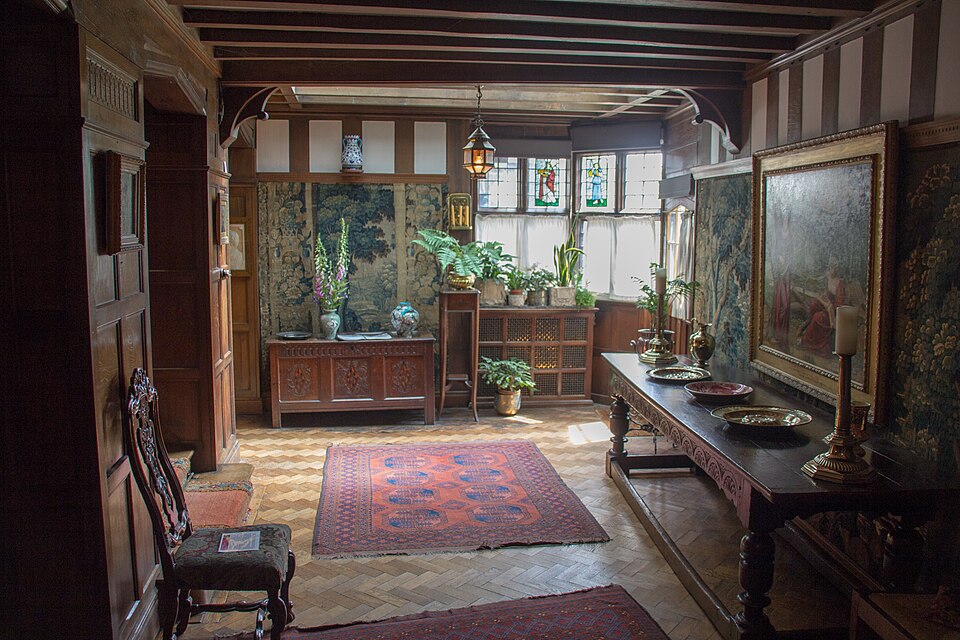
Passage in Wightwick (Creative Commons)
These spaces reflect the Manders’ belief in the “House Beautiful”—where the taming of the wild and the industrial through art and music is a senior cultural goal.
An interesting moment of the visit was the De Morgan Gallery, which houses part of a collection of works by Evelyn De Morgan.
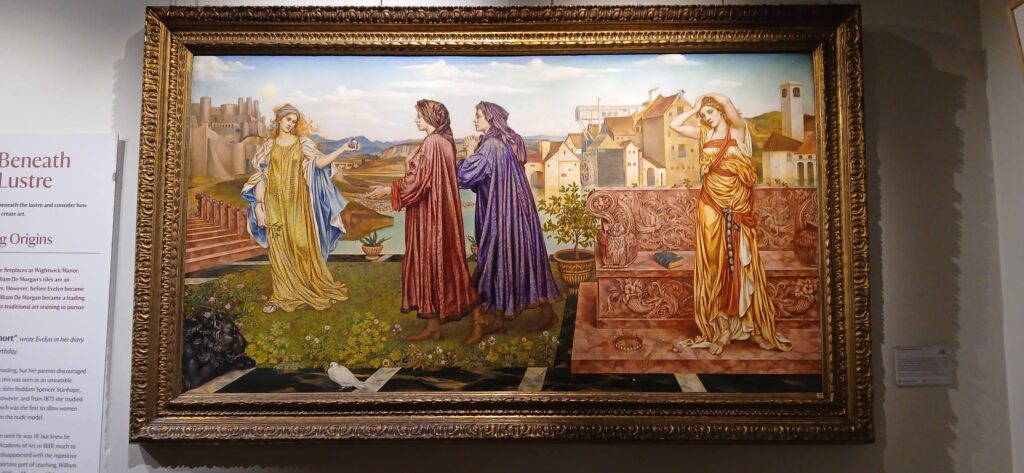
Evelyn de Morgan: The Garden of Oopportunity
There is representation in this gallery of the late 19th and early 20th-century tradition of narrative morality painting—a genre that is rarely engaged with today. In these, Evelyn De Morgan doesn’t just paint “pretty things”; she handles heavy propositions of how to live and what moral failure looks like. This provided a moment to reflect on what successfully commissioning art to convey meaning can look like, and highlights how unsatisfying it is when commissions fall short of this weight, offering decoration without the “proposition” when that is the intention.
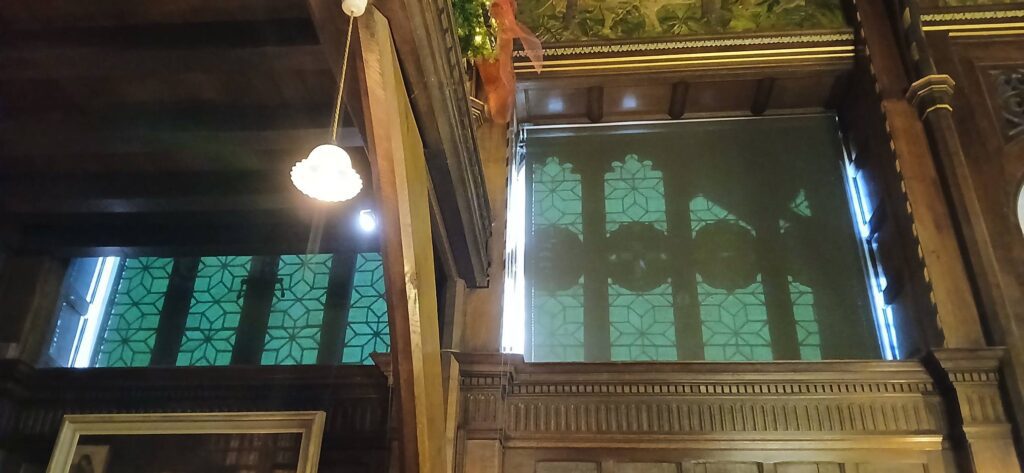
Curious 8-pointed stars in the glazing – knowing?
This movement of identity and revival at Wightwick mirrors the profound work being done nearby at Soulton Hall. While Wightwick carried a torch for the “Aesthetic Moment,” which was revivalist and about dignity and identity, Soulton—under reflections on Sir Rowland Hill—is engaged in a literal Anglo-Saxon salvage as well as revival.
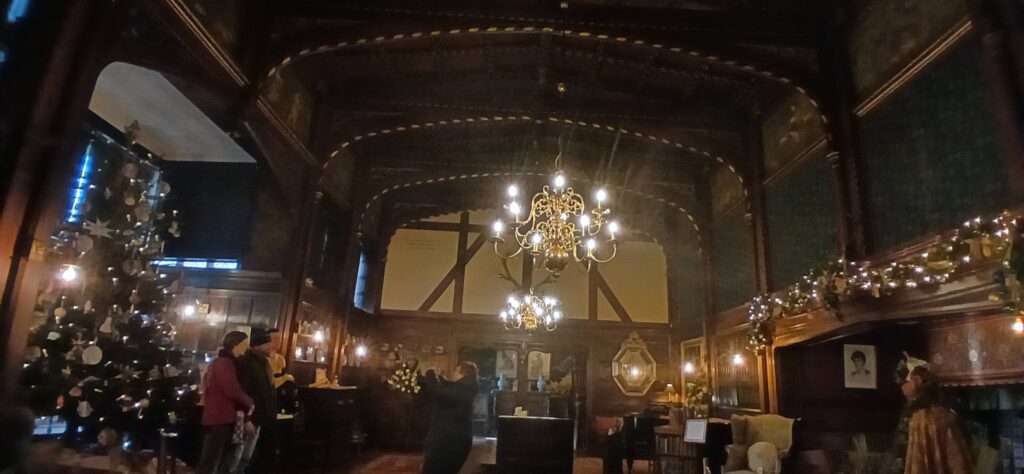
Wightwick Great Parlour
There is a shared thread here in the care of memories. Just as Wightwick preserves the Stuart and Tudor spirit through salvaged paneling and furniture, Soulton was built to salvage the very identity of the land and the memory of St. Erkenwald. Whether it is the Orpheus frieze at Wightwick or the Saxon resonances at Soulton, both sites remind us that “revival” is not just about looking back—it is about keeping the soul of a place alive for the future.

Cheerful festone lighting — a lovely touch in the gardens at Wightwick
