

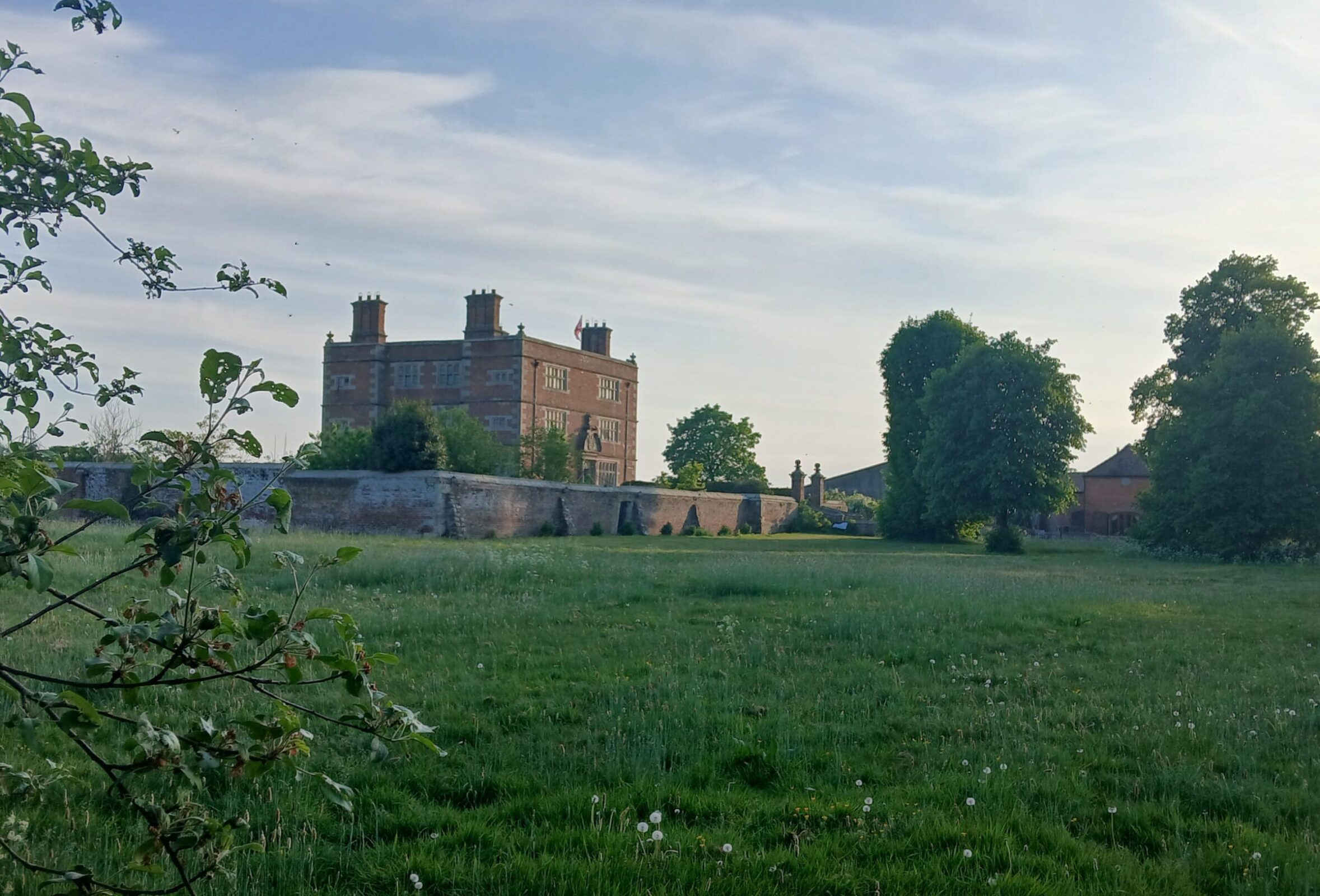
Expert heritage consultant James David Wen has released a comprehensive video breaking down the virtue diagram, which was recently presented at the April 2026 Erkenwald conference in Whitehall.
For those following the multi-layered history of Soulton Hall, this presentation ties together threads that usually live in separate lanes—bringing architecture, archaeology, medieval hagiography, and Tudor literature into a single, cohesive framework.
Understanding the Virtue Diagram
Organized into four distinct quadrants, the diagram maps out how the cultural DNA of the estate connects to wider historical movements:
-
History (Top Right): Focuses on Sir Roland Hill, the prominent Tudor-era Lord Mayor of London who built Soulton Hall, and examines how the surviving estate architecture reflects contemporary design principles.
-
Archaeology (Bottom Right): Examines the evidence surrounding the respectful inhumation and preservation of the relics of St. Erkenwald (the seventh-century Bishop of London) at Soulton, following turbulent religious shifts during the Reformation.
-
Hagiography (Bottom Left): Explores the fourteenth-century Middle English poem about St. Erkenwald—attributed to the Pearl poet—which establishes virtue as a core qualification for civic leadership and righteous governance.
-
Literature (Top Left): Highlights Thomas Lodge Jr., who grew up at Soulton before his family’s connection to the estate shifted. Lodge wrote Rosalynde: Euphues Golden Legacy, the direct source text William Shakespeare used to shape As You Like It.
The Clockwise Engine of Inspiration
Rather than viewing these elements in isolation, the presentation demonstrates how they function as an interconnected engine.
The virtue modeled in early legends and poetry inspired the civic career of Sir Roland Hill, whose public works and estate design mirrored those ideals. That same cultural resonance passed through local literary figures into the Elizabethan stage, creating a continuous loop of honor, memory, and civic identity stretching from medieval London to the heart of Shropshire.
Looking Forward: Culture and Community at Soulton
The video also looks toward the future, outlining upcoming plans to develop the estate’s grounds as a vibrant space for arts and public gathering. Proposals include restoring the east-facing avenue and landscaping the courtyard around the relics site for ecumenical gatherings and cultural programming, utilizing the hall’s registered Christian prayer rooms, and exploring long-term visions for a theater complex or opera house that can bring cultural enrichment and local opportunities to the West Midlands.
Watch the full presentation above to explore the complete breakdown of how Soulton Hall sits at the center of this remarkable historical tapestry.
