

A recent discovery (reported by the BBC here) brings to light a fascinating nuance of the Tudor period that often gets lost beneath the broad narrative of destruction.
Academic researchers from the universities of Sussex and Cambridge found six missing pages of a medieval Catholic manuscript—Nicholas Love’s Mirror of the Blessed Life of Jesus Christ—hidden away in a Brighton archive at The Keep.
The manuscript had ties to Sir John Gage, a prominent Tudor courtier tasked by Henry VIII with overseeing the dissolution of monasteries across Sussex, Surrey, and Kent from 1536.

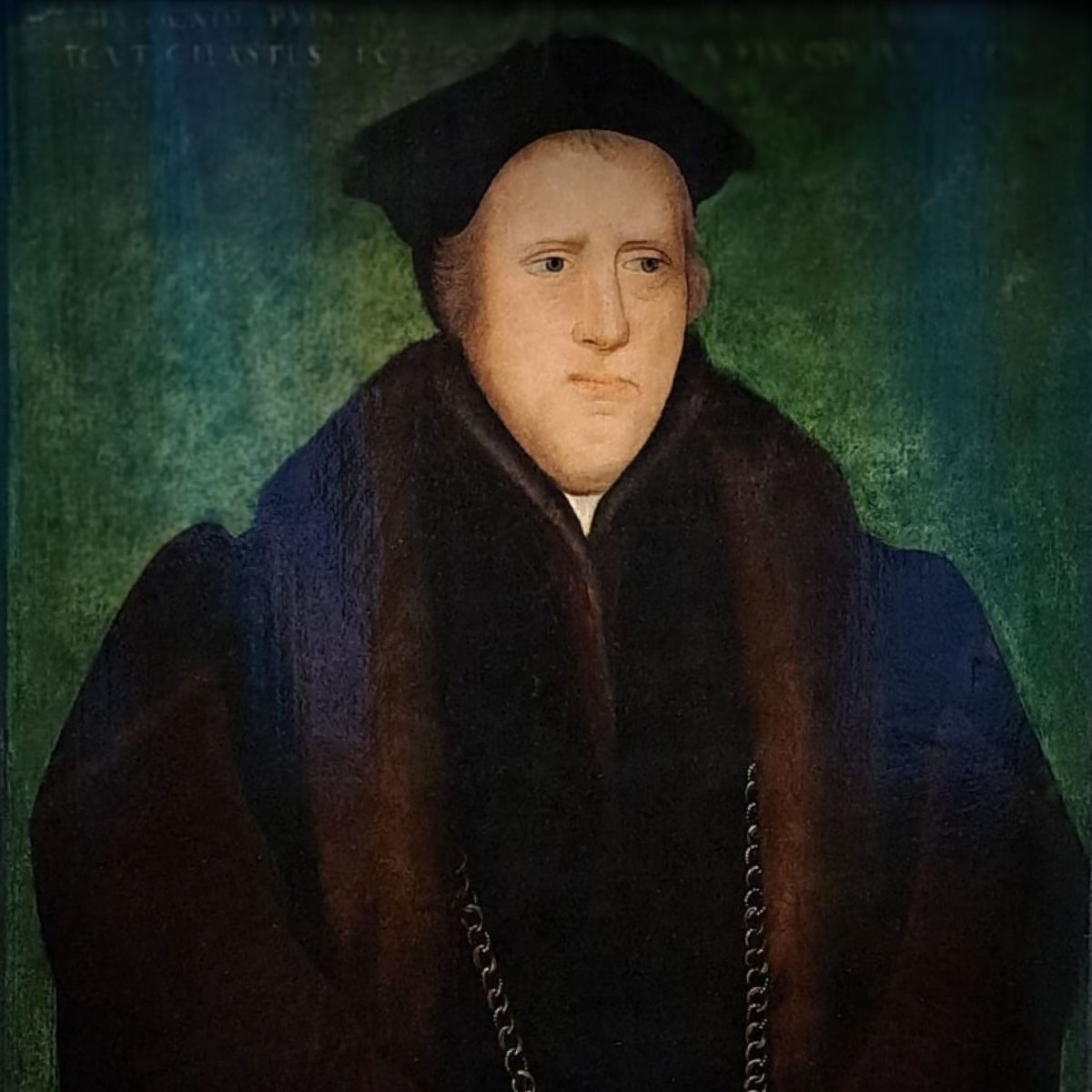
Portrait of Sir John Gage, by Hans Holbein the Younger (c. 1535–1540)
Although Gage served as one of the King’s primary enforcers in dismantling monastic institutions, he remained a Catholic throughout the Reformation. Rather than destroying every forbidden item he encountered, Gage quietly shielded and preserved this sacred text, which has now been successfully matched with the remainder of the manuscript held at Yale University.
As Dr Katie Walter of the University of Sussex points out, while we frequently associate this era with book burning and aggressive erasure, stories like this reveal a more complex reality. People were actively rescuing, valuing, and caring for cultural artefacts through informal networks, defying the very policies they were charged with implementing.
Dr James Wade of Cambridge University notes the striking irony that Gage kept the book safe precisely when he was supposed to eradicate works of that exact nature.
‘Old’ Sir Rowland, Hill – Shakespearian hero.
This dynamic offers a compelling read-across to the history surrounding figures like Sir Rowland Hill. Navigating the religious and political shifts of the Tudor era required immense dexterity, and the individuals operating at the intersection of state authority and personal conviction often played paradoxical roles. Just as Sir John Gage covertly preserved Catholic heritage while serving the machinery of the dissolution, the architectural and cultural records tied to early figures like Sir Rowland Hill reflect a period where the preservation of heritage was frequently a quiet, nuanced act of resistance against total loss.
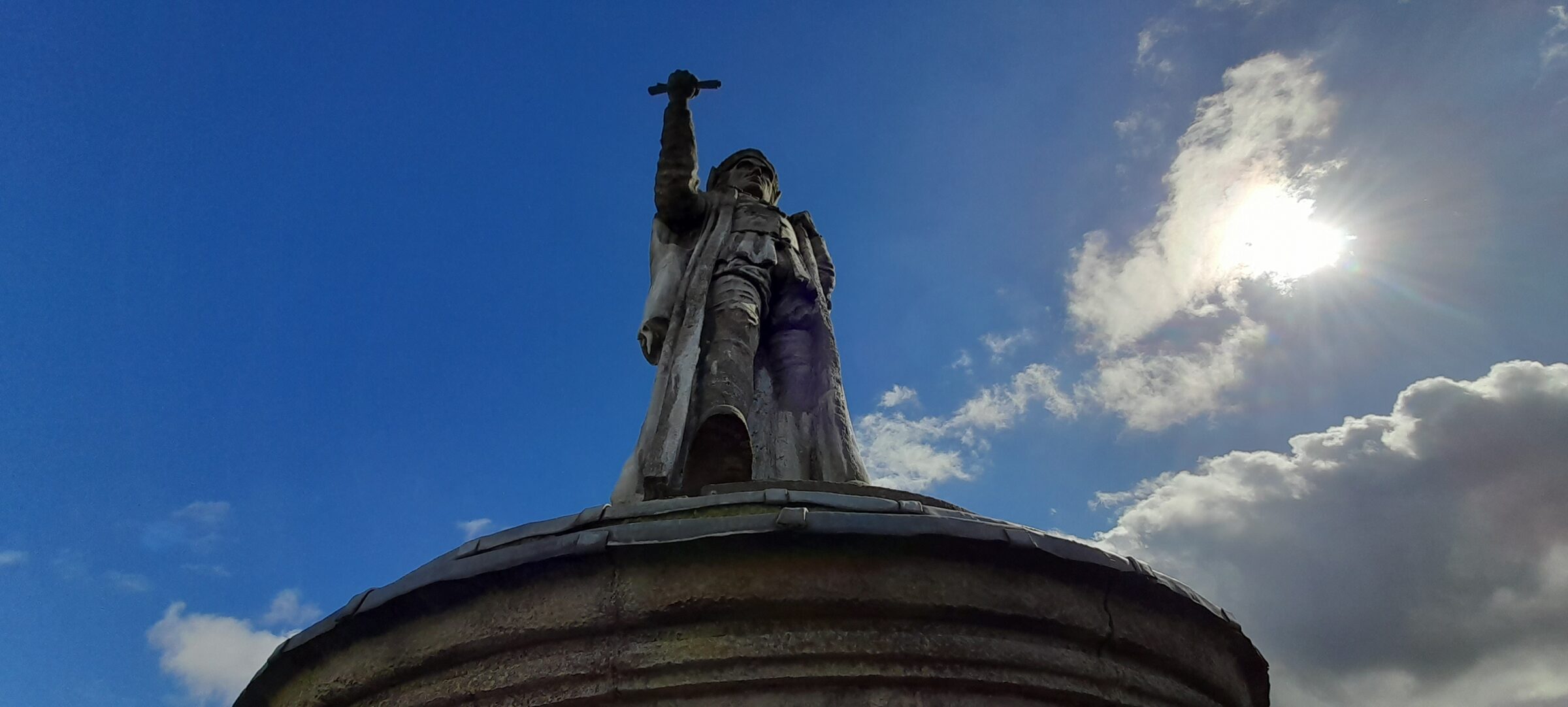
Old Sir Rowland Hill at Hawkstone is memorialised with a copy of Magna Carta—an enduring symbol of foundational liberties, which he is thought to have safeguarded for the Mercers through the acute emergencies of the mid-Tudor period.
The connection to Sir Rowland Hill runs even deeper when looking at institutional records.

The Tower of London – site of the commital of Old Sir Rowland in a curious crisis
Gage served as the Constable of the Tower of London between 1540 and 1556, meaning he held that office during Hill’s arrest in his shrieval year of 1541–1542—an imprisonment brought on by spurious grounds, from which Hill was later released and honoured with a knighthood.

St Erkenwald window – St Dominic’s Church – The Shrine of Our Lady
This very period also coincided with the removal of the relics of St Erkenwald.
-

- Scholarly reconstruction of Soulton Hall in 1560 created Byrga Geniht Ltd
-

- The lost Shrine of Erkenwald – the inspiration for Soulton Hall’s building
Furthermore, Gage served as Lord Chamberlain from 1553 to 1556, precisely when Rowland was temporarily out of favour and began the Soulton project. As Hill subsequently recovered favour, that office came to an end.
Intriguingly, both men found themselves directly involved in the removal or handling of relics and religious artifacts during these turbulent transitions.
Encountering these stories reminds us that the Tudor century was not merely an epoch of sweeping devastation, but one shaped by individuals who walked a fine line between public duty, institutional power, and the private stewardship of history.
