

The rhythm of the drumbeat led the way through Wem today as the brass band guided the procession toward the parish churchyard.
Standard-bearers held flags steady against the breeze while the parade marched down the street, filling the air with sound before reaching the stone cross of the war memorial. Wreaths of red poppies were laid at its base, and the entire crowd fell silent for two minutes.
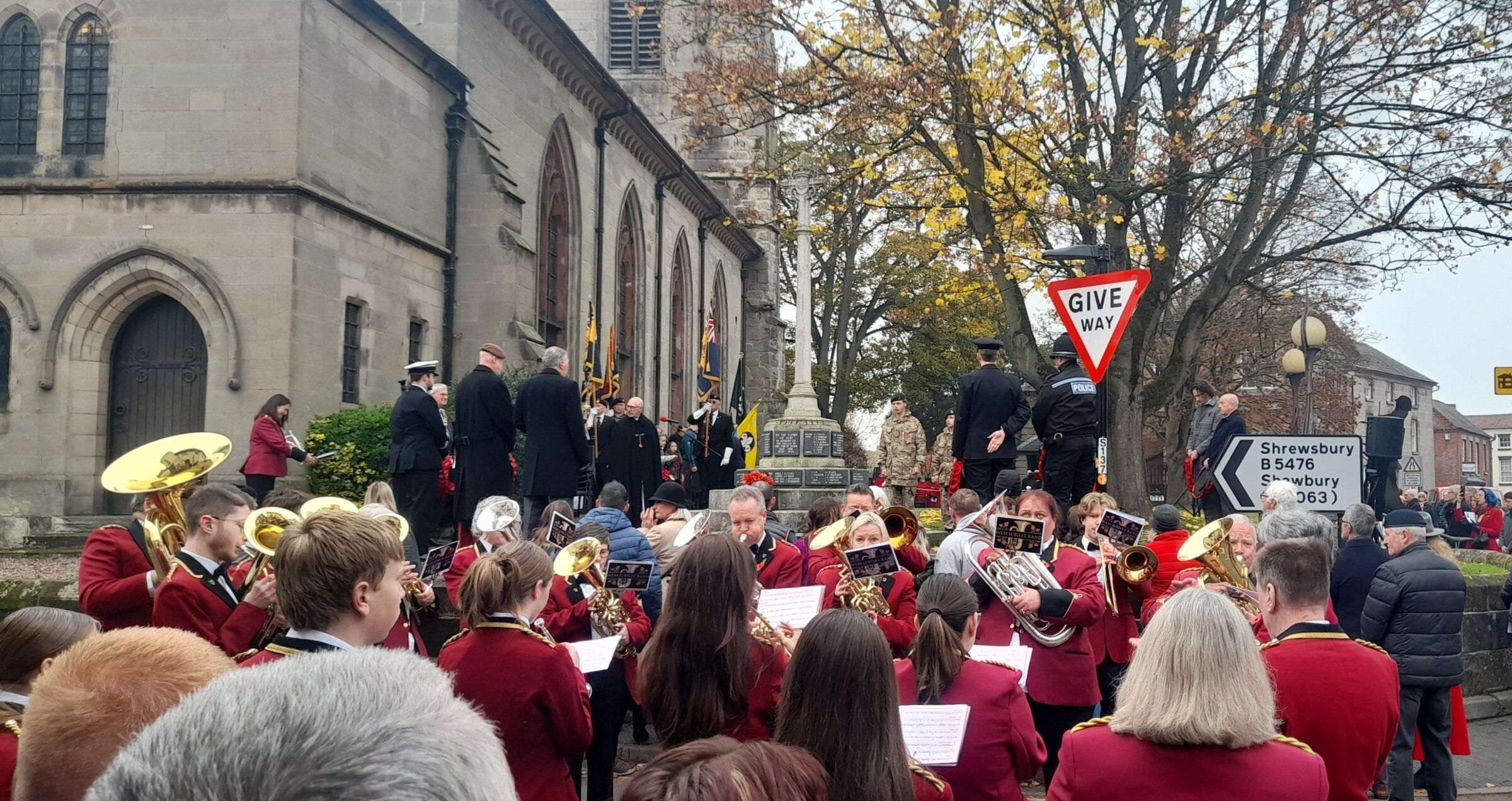
Act of Rememberence, Wem. 2026.
Inside the church following the service outside, Reverend Jukes focused his sermon on the life of St. Maximilian Kolbe. In 1941, inside the Auschwitz concentration camp, Kolbe stepped out of line to take the place of Franciszek Gajowniczek—a fellow prisoner and father sentenced to death.
Reverend Jukes placed that individual act of courage alongside the terror, total war, and squalid debasement of human dignity that defined the atrocities of the twentieth century.
In the face of systems designed to break the human spirit, Kolbe’s choice exposed the ultimate failure of terror: it could not destroy the capacity for self-giving love.
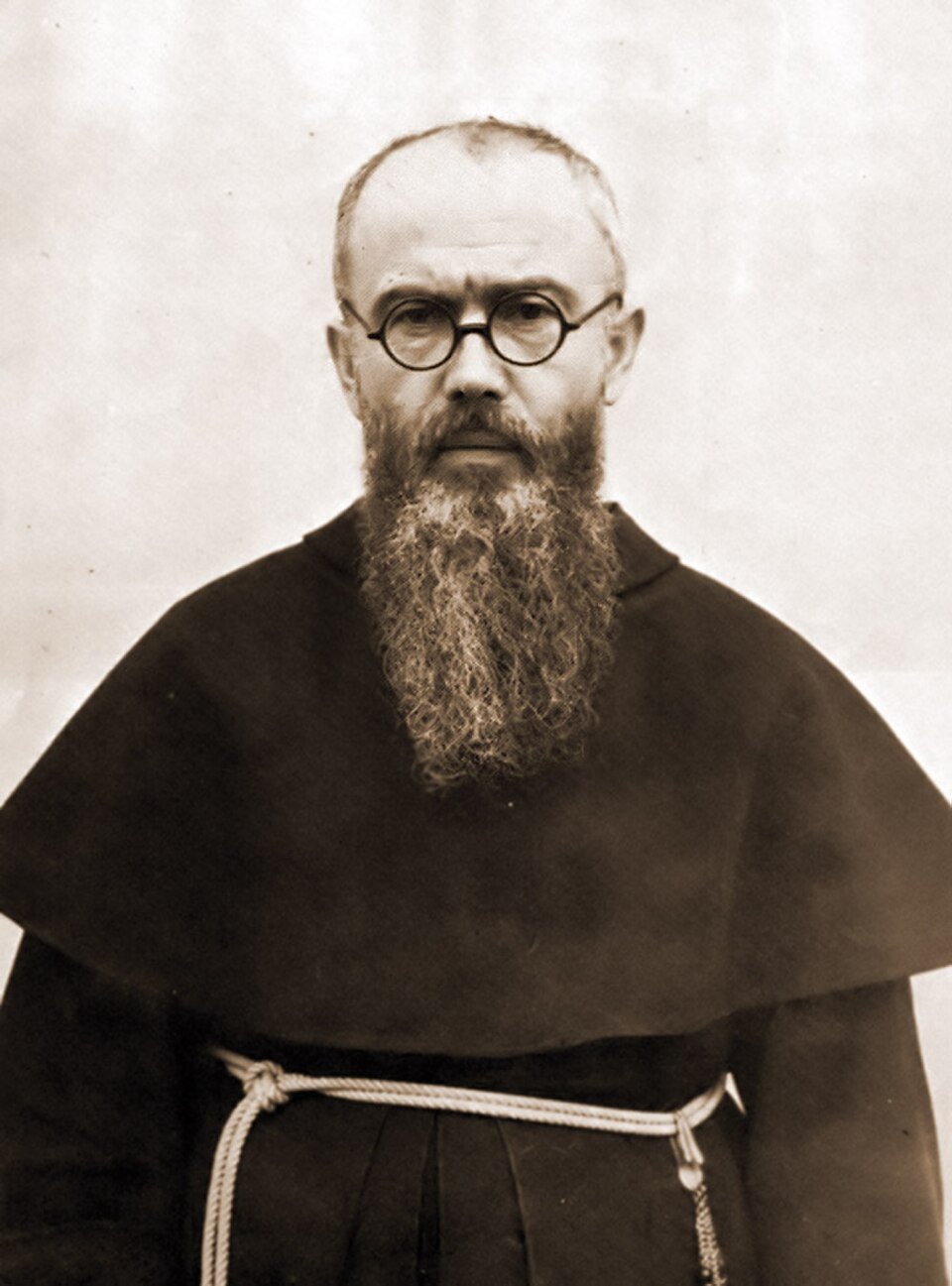
Maximilian Kolbe in 1936. Public domain because its copyright has expired and its author is anonymous.
After hearing a sermon of such weight, it was deeply significant to watch those present in the church stand together, recommitting themselves to the work of peace and the defense of the law and the vulnerable before singing the National Anthem.
Seeing generations join in that shared promise at the foot of the cross was a powerful reminder that peace is not merely inherited—it must be actively upheld.
