

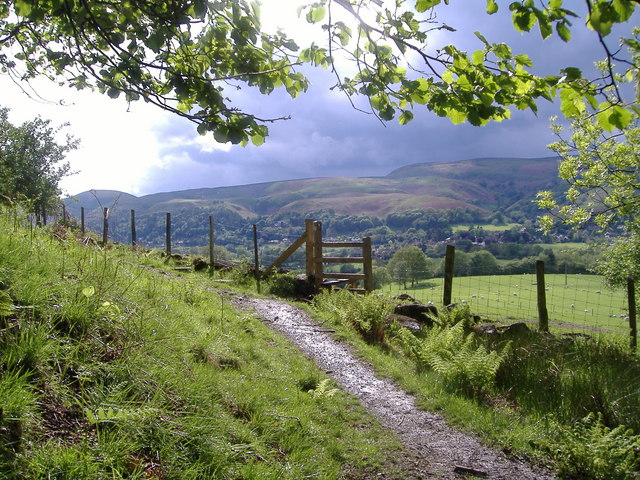
Yesterday, we returned to Carding Mill Valley and the Long Mynd for a hike, finding the landscape busy with a large number of GCSE geographers undertaking field studies.
At Carding Mill Valley, the path follows the course of a clear stream, ascending steadily between steep, heath-covered slopes toward the broad plateau of the Long Mynd.
The terrain holds deep history; the underlying rocks were formed over 500 million years ago along the Church Stretton Fault, while meltwater from the last ice age carved out the narrow v-shaped valleys—known locally as “batches” — that define the surroundings today.
Beyond its geological character, the high plateau bears the marks of early human presence. Ancient routes such as the Portway traverse the ridge, while Bronze Age bowl barrows — including prominent mounds near Boiling Well and the old Shooting Box site — punctuate the high moorland, standing as quiet monuments to those who walked these hills thousands of years ago. Looking out from the heights, one can also reflect on the broader history written into the terrain; prominent elevations such as Caer Caradoc near Church Stretton — or more likely Caer Caradog nearby Chapel Lawn on the Redlake river — are linked by local tradition and informed opinion to the site of Caratacus’s final stand.
As you ascend toward the open heath, another feature of the landscape is the presence of the semi-feral Long Mynd ponies. These hardy wild horses have grazed the common land for generations, playing an important role in maintaining the natural habitat of the plateau. Observing them against the vast backdrop of the hills offers a direct connection to the enduring natural heritage of Shropshire.
Continuing along the valley path, the trail leads toward Lightspout Waterfall, where the water cascades over hard rock layers before the track emerges onto the open ridge above. From the summit, sweeping views extend across the valley floor to the volcanic silhouettes of Caer Caradoc and the Lawley, offering a striking perspective across the wider region.
Carding Mill Valley remains one of the finest natural features in Shropshire.
