

There is a familiar, almost cinematic narrative we often tell about the English Reformation. It is a tale drenched in high-stakes martyrdom, clandestine operations, and heroic translators like William Tyndale risking — and losing — their lives to get the Word of God into the hands of ordinary people.
But — as any historian will tell you — a spiritual revolution cannot survive on martyrdom alone. It needs capital, paper, logistics, and ruthless commercial strategy.
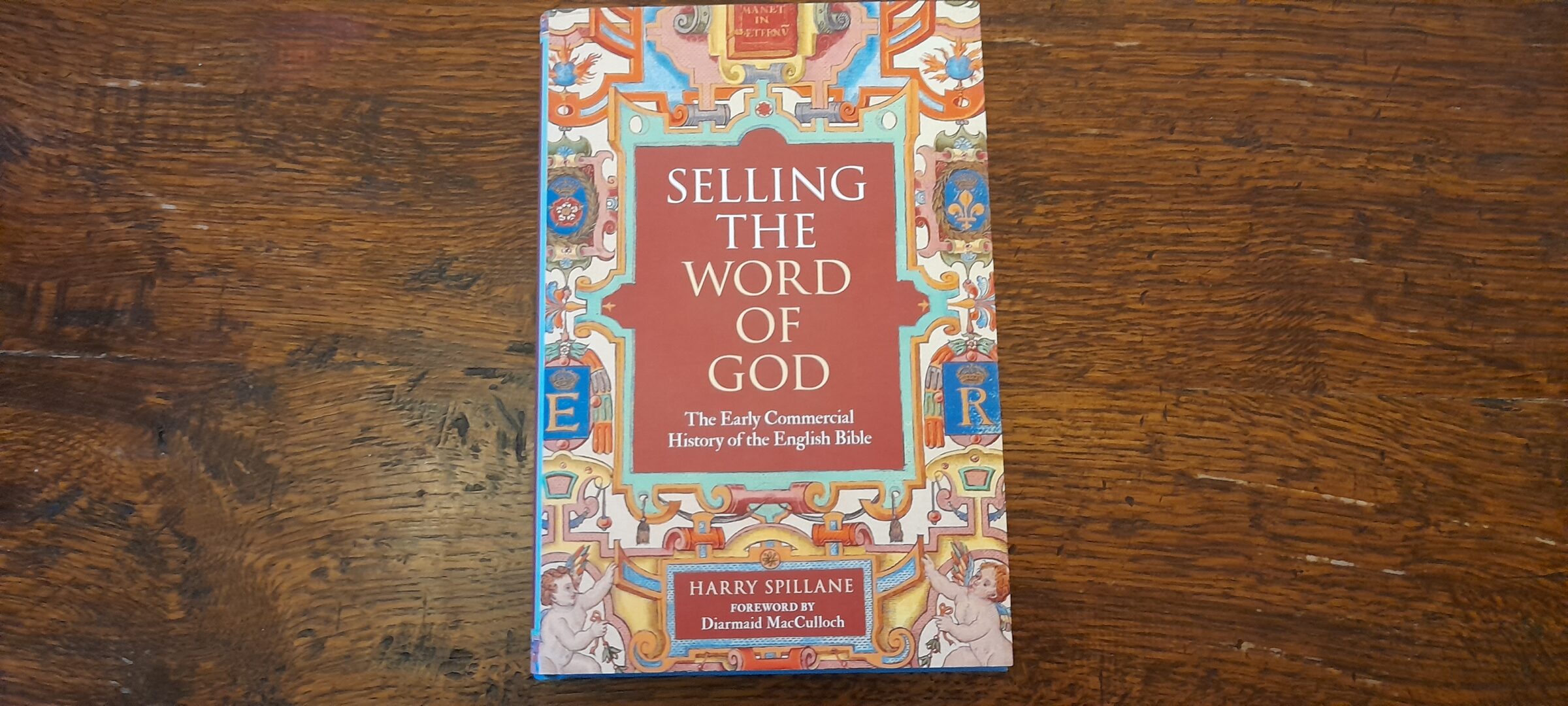
Celebrated Authority Diarmaid MacCulloch Praises Harry Spillane’s New Book
Enter Harry Spillane’s brilliant new release, Selling the Word of God: The Early Commercial History of the English Bible—a book that is generating special excitement right here at Soulton Hall, given its vital spotlight on our historical connection to Sir Rowland Hill, one of the key masterminds behind the printing of the 1560 Geneva Bible.
Endorsed by a Master Authority
Adding massive academic and institutional weight to Spillane’s work is a magnificent foreword by preeminent church historian Diarmaid MacCulloch of Campion Hall. He makes the excellent point that the mercantile background is too often neglected in favor of viewing translators as isolated figures operating in a vacuum, stripped of the robust financial backing, commercial support, and discreet political savvy that were so clearly and necessarily present.
As a celebrated global authority on the history of Christianity and the Reformation, MacCulloch’s expert endorsement offers definitive proof of the book’s scholarly significance.
MacCulloch immediately grasps the unique genius of Spillane’s approach, celebrating how the book shifts our gaze from traditional, romanticized tropes down to the gritty, real-world mechanics of how books were funded, printed, and distributed. Highlighting the book’s profound authoritative value, MacCulloch writes:
“All those concerned to understand how and why over the next half millennium the English Reformation proved such an effective and lasting revolution, in these islands and beyond, will benefit from reading the tale told here.”
Why This Matters: Commerce Meets Conviction
What Spillane and MacCulloch bring to light is that the men who financed and produced these texts were titans of business just as much as they were champions of religious reform. Figures like Sir Rowland Hill and John Bodley (father of the founder of Oxford’s Bodleian Library) were not trained printers; they were visionary entrepreneurs who recognized that a spiritual movement needed a solid, scalable commercial infrastructure to endure.
From the clandestine circulation of early New Testaments—where copies were famously smuggled or even pickpocketed from priests—to the massive, multi-edition explosion of the Geneva Bible between 1560 and 1640, commerce and conviction walked hand in hand.
Celebrating a New Chapter in History
For those passionate about local heritage, Tudor history, and the true mechanics of how the English-speaking world found its literary foundation, Selling the Word of God is essential reading.
Backed by the authoritative praise of Diarmaid MacCulloch, we now have a much sharper, more comprehensive picture of the economic engine that built our religious landscape.
Be sure to grab a copy, explore the fascinating ties to Sir Rowland Hill, and see the English Reformation through an entirely new lens!
