

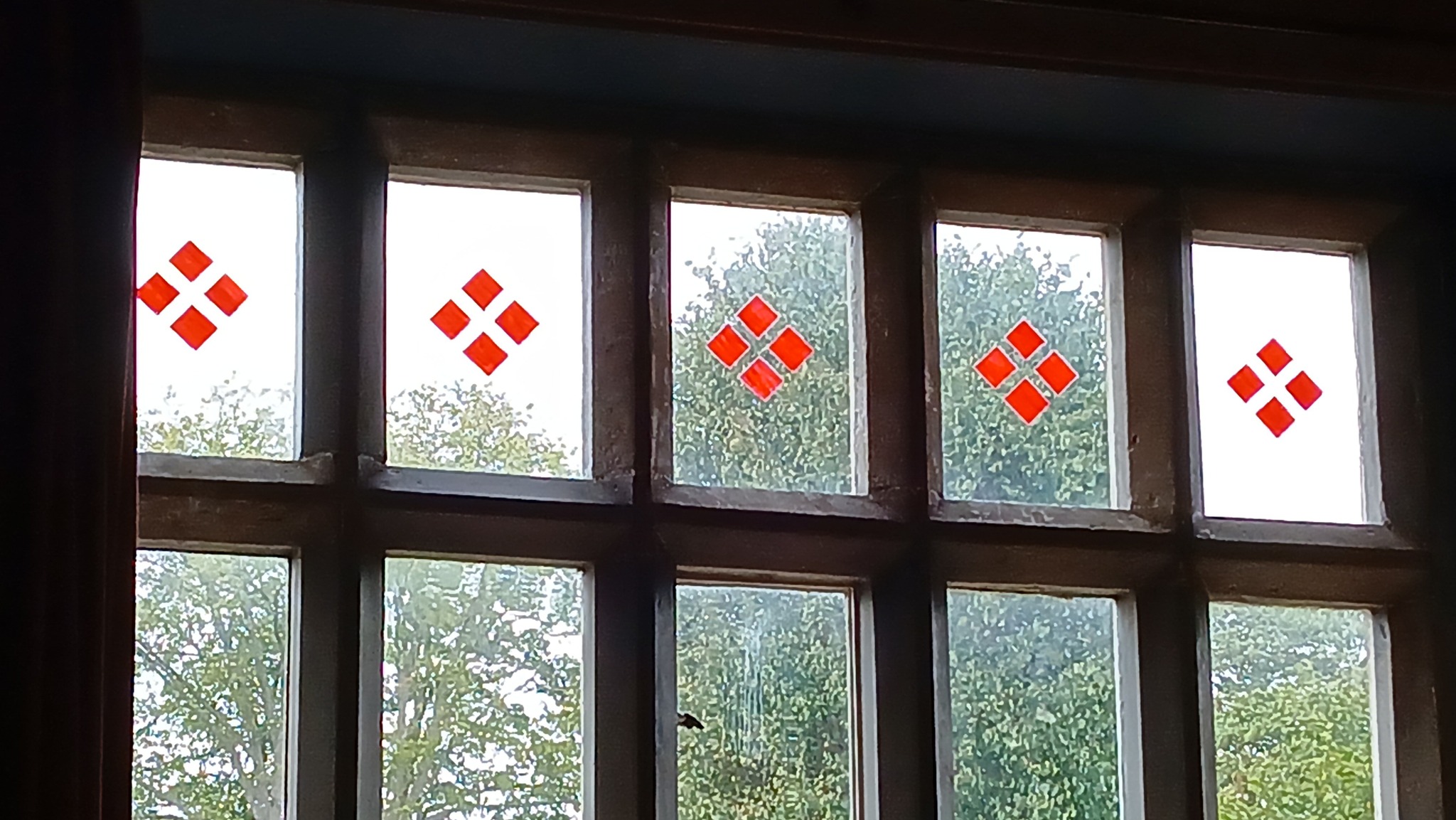
One of (frankly quite a few) mysteries that has captivated us for years is the “curious painted glass”, documented in the early 18th century.
This window treatment was tragically sadly lost around 1850, just before photography and any known images of that side of the house clearly handling the windows. leaving behind only tantalizing historical records.
For a long time, we’ve pondered what this glass might have looked like.
Now, after a period of deep reflection and research, we have strong reasons to believe we’ve uncovered its secrets, and our investigations suggest that this lost glass was a testament to the hall’s rich Tudor heritage, likely dating back to a 1550s treatment.
The evidence for this exciting conclusion comes from two surprising sources.
The first is a fascinating “maths code” around rhombic dodecahedrons left behind by Sir Rowland Hill, an intriguing puzzle that has provided key insights.
The second comes from studying other buildings believed to have drawn inspiration from similar sources. These architectural parallels have helped us piece together a picture of what our own windows may have looked like centuries ago.

Imagining the garnet code as seen in the windows
To share this discovery and inform our long-term preservation strategy, we have have installed a reversible, temporary recreation of the painted glass. This is not a permanent fixture but a valuable teaching tool. It allows us to experience the room as it may have been, to learn from the past, and to inform the best approach for the future of these historic windows.
Come and see this remarkable restoration for yourself and be a part of Soulton Hall’s ongoing story.
