
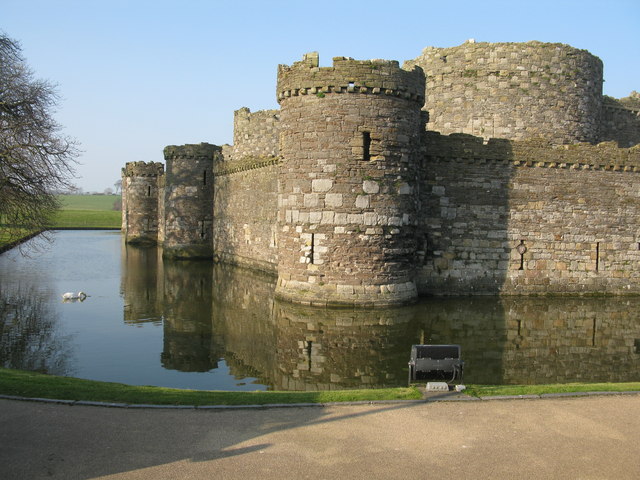
A recent trip to the beautiful Isle of Anglesey led us to the imposing walls of Beaumaris Castle, right by the sparkling Menai Strait.
Walking its grounds, what struck us most was not just the medieval architecture, but the sheer depth of conflict this island has absorbed, stretching back two millennia—a continuous history of final resistance and brutal conquest.
Long before the Normans arrived, Anglesey, then known as Mona, was the stage for one of the most decisive battles in the Roman conquest of Britain. The island served as the last great spiritual and political stronghold for the Druids, who continually incited resistance. In 61AD, Roman Governor Suetonius Paulinus launched an invasion to permanently destroy this spiritual heart of the rebellion. The Roman legions were, it is said, met by a terrifying sight on the shore: Druids raising their hands to curse the invaders, and women dressed as Furies brandishing torches. The ensuing battle was a final stand that broke the power of the Druidic movement in Britain.
Twelve centuries later, the island was again the target of a conquering power – Eward I. Following his final invasion of Wales, the English king decided to permanently cement his control, establishing new counties and building his famous “iron ring” of castles to secure strategic points like Caernarfon and Conwy. The construction of Beaumaris (Norman-French for “Beau Mareys,” or “fair marsh”) began swiftly in 1295 under the brilliant master architect, James of St George. The site was chosen for its strategic placement, but its construction necessitated the brutal displacement of the local Welsh population from the nearby wealthy trading port of Llanfaes, who were forcibly moved to found the settlement of Newborough. The sheer scale of the medieval project was staggering, requiring an average of 1,800 workers at its peak.
Beaumaris was designed as the ultimate defensive machine, featuring a sophisticated concentric design: a castle-within-a-castle where the low outer ward provided defensive cover for the massive inner ward. However, the castle’s perfection was never fully realised. By the early 14th century, Edward I’s new wars in Scotland diverted his attention and, crucially, his vast financial resources. Work stopped almost entirely by 1300 and finally halted in 1330. The castle stands today, magnificent but critically incomplete. The inner walls and towers never reached their intended height, leaving their tops open—a colossal, silent testament to a project that ultimately fell victim to the shifting priorities of empire.
The end of native Welsh rule was cemented by a dramatic legal proceeding rooted in the English conquest. Due to his frequent military campaigns, Edward I was often in Shropshire, and in 1283, he summoned a parliament in Shrewsbury (later adjourned to nearby Acton Burnell). This assembly was convened specifically to try and condemn Dafydd ap Gruffydd, the last native Prince of Wales. After Dafydd’s capture, this parliament sentenced him to the brutal execution of hanging, drawing, and quartering. This event is profoundly significant for two reasons: it publicly ended Welsh independence, and the parliament itself is widely considered to be the first Parliament to include representatives of the commoners, establishing a landmark in English constitutional history right on the Welsh Marches.
