

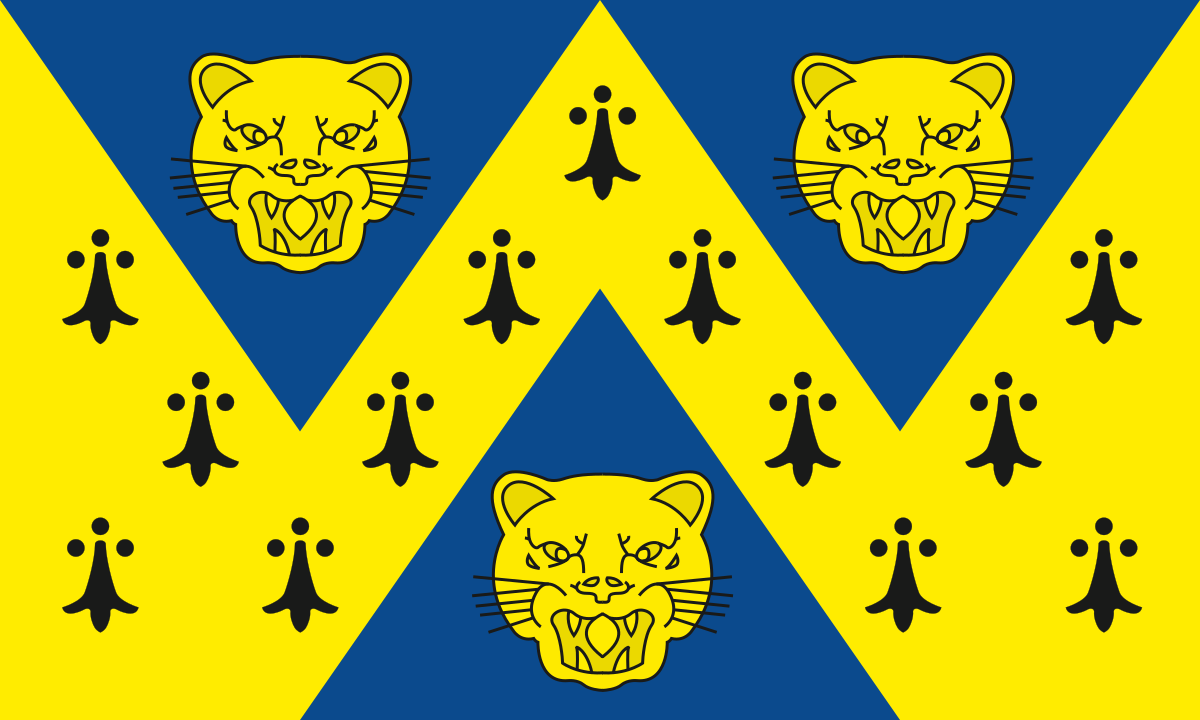
Shropshire Day, observed annually on February 23rd, is a celebration of all things Shropshire – its rich history, stunning landscapes, vibrant culture, and the warm, welcoming spirit.

Shropshire – Destination of the English Grand Tour. William Williams’ 1780 painting of Ironbridge commissioned by Abraham Darby III. Creative Commons.
This date was chosen as it is the saint’s day of St. Mildburh of Wenlock, a figure whose legacy is a resonant part of the early history and identity of the county, and the focus of this blog.
*********
St. Mildburh’s was Abbess of Wenlock, a powerful figure in the late 7th, earlt 8th century English church.
Though her original abbey was destroyed by invading Danes, her tomb remained a place of veneration. After the Norman Conquest, Cluniac monks, arriving from France, built a new monastery on the site – the impressive ruins we see at Much Wenlock today.
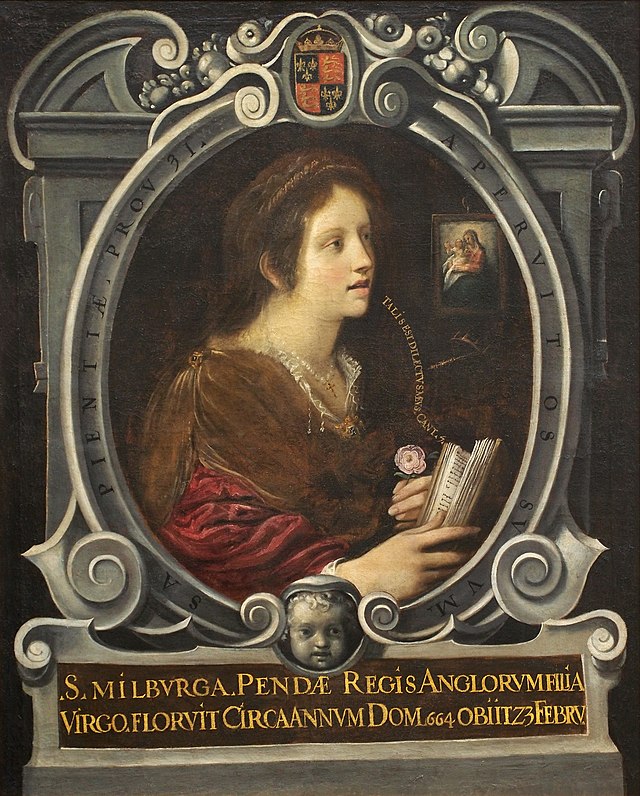
Saint Mildburh of Wenlock
In 1101, the Cluniacs, believing they had rediscovered Mildburh’s bones, began promoting her relics as a pilgrimage destination, particularly for those suffering from leprosy. While this initially met with some resistance from the local English population, it successfully attracted pilgrims from France and Wales, and spurred a flurry of written accounts about her life and miracles.
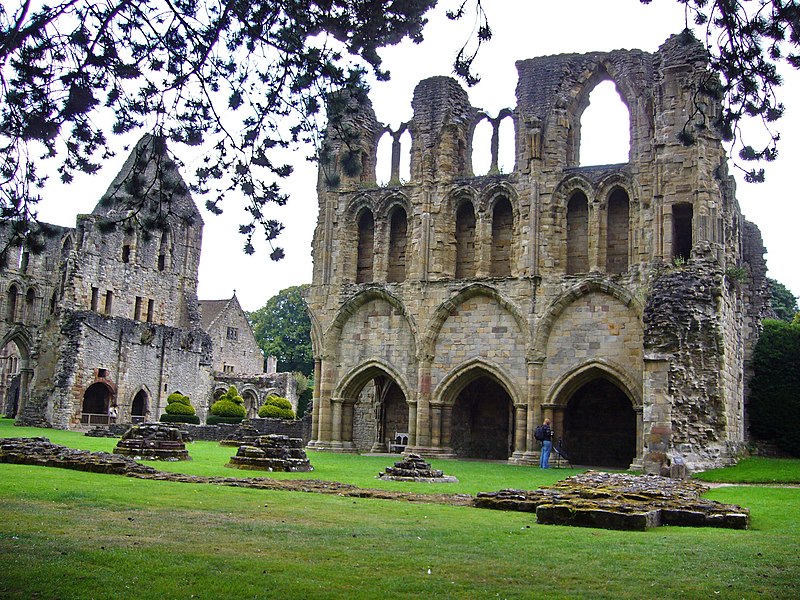
Wenlock Priory
Around this time, the Miracula Inventionis Beatae Mylburge Virginis was written, and shortly after, the hagiographer Goscelin penned his Vita Mildburga, incorporating an older account known as ‘Mildburh’s Testimony,’ a purported first-person narrative of her life. She is also mentioned in some Kentish Royal genealogies, drawing on Anglo-Saxon traditions, and is listed among 89 saints in the 11th-century Old English text Secgan (On the Resting-Places of the Saints).
These various texts attest to the enduring importance of St. Mildburh in the religious and cultural landscape of the region.
While St. Mildburh’s legacy is central to Shropshire Day, it’s fascinating to consider her alongside other prominent female saints of the region, such as St. Winifred, whose story resonates deeply in neighboring Wales and beyond. Like Mildburh, Winifred was a woman of noble birth who dedicated her life to religious service. Both are associated with specific locations – Mildburh with Wenlock and Winifred with Holywell in Wales – where their influence and miracles were centered. Both saints are celebrated for their piety and their connection to the natural world, with stories of holy wells and healing often intertwined with their legends.

Winifred’s Well: the roof above the well – early C16th work

Winifred’s Well: The well basin
However, their stories also diverge in interesting ways. Mildburh’s life is rooted in the Anglo-Saxon period, a time of significant change and the establishment of Christianity in England. Winifred’s legend, while also steeped in early Christian tradition, has a strong Welsh cultural identity, and her story, involving a miraculous resurrection after being beheaded, has taken on a particularly vivid and dramatic form. Interestingly, Winifred’s bones, like Mildburh’s, also became a focus for pilgrimage. They were translated to Shrewsbury Abbey, establishing a new pilgrimage route and further strengthening the connections between Shropshire and its neighboring regions.
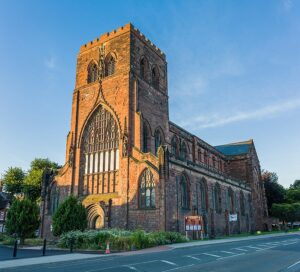
Shrewsbury Abbey
Saints played a crucial role in shaping local identity and driving economic activity throughout the medieval and early modern periods. 1 Their veneration wasn’t simply a matter of spiritual devotion; it was deeply intertwined with community life and even military endeavors. Saints served as powerful symbols of local identity, embodying the values, history, and aspirations of a region. Shrines and relics associated with popular saints attracted pilgrims from far and wide, generating significant revenue for local economies through lodging, food, and the sale of devotional items.
This economic impact extended beyond the immediate vicinity of the shrine, benefiting trade routes and regional markets.
Moreover, saints were often invoked in times of crisis, from disease outbreaks to military threats. As the example of St. Cuthbert at the Battle of Neville’s Cross demonstrates, the perceived presence and protection of a saint could inspire and unite armies, bolstering morale and even influencing the outcome of battles. Whether through divine intervention or the psychological impact of shared faith, the invocation of saints played a recorded role in military campaigns, further underscoring their importance in the medieval and early modern worldview.
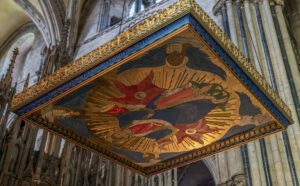
Durham Cathedral, tester above the tomb of Saint Cuthbert
This powerful combination of spiritual significance, economic benefit, and military invocation cemented the importance of saints in shaping local identities and influencing the course of history in earlier times
