

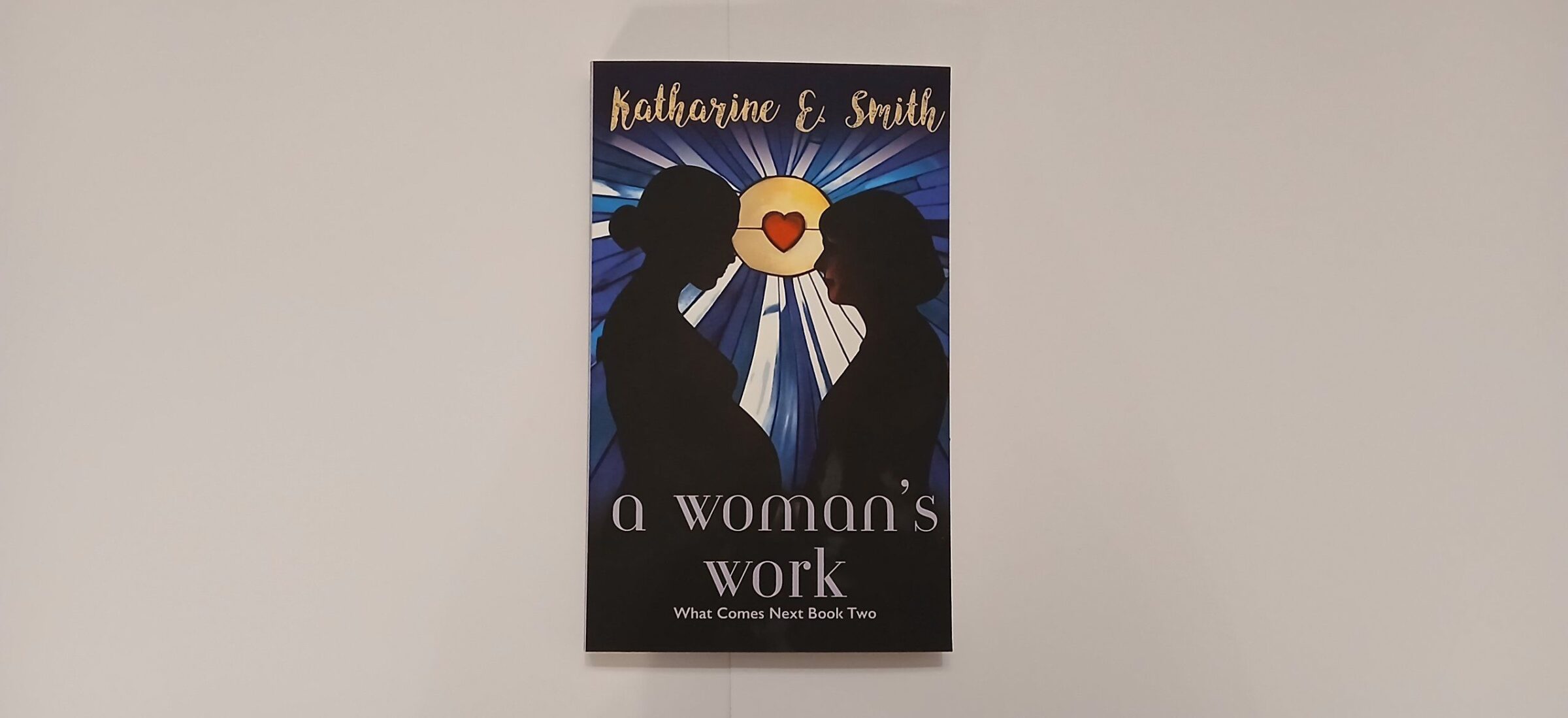
Katharine E. Smith’s writing is characterized by a deliberate, measured pace.
Her prose avoids the frantic, focusing instead on the subtle shifts in human relationships and the steady endurance of memory. This restraint is most evident in her latest novel, A Woman’s Work, a study of family life, history, and the often-unseen labour of maintaining a legacy over generations.
Katharine E. Smith – “A Woman’s Work”
In A Woman’s Work, Smith explores how the past informs the present.
It is a narrative that values the long view, mirroring the author’s own perspective on the world: one that is deeply rooted in the observation of place and the cyclical nature of time.
Her series, What Comes Next, has established this interest in the quiet aftermath of life-altering events, and her newest work deepens that exploration with increased maturity and poise.
Smith’s creative process is strongly linked to her surroundings. Living and working within the Shropshire landscape, her writing reflects a sense of permanence and atmospheric stillness. This connection to the land is not merely aesthetic; it is a fundamental part of the stories she tells, where the environment acts as a silent witness to the characters’ internal lives.
This literary work exists within the wider intellectual framework of Soulton Hall.
The estate has long served as a crossroads for philosophy, theology, and the arts, creating a unique environment where contemporary storytelling meets ancient tradition. This estate’s historical associations (ranging from Shakespearean influences to the structured beauty of English poetry) provide a backdrop of rigorous thought. The presence of the Soulton Long Barrow emphasizes a preoccupation with time and memory, themes that are central to Smith’s bibliography. From the architectural precision of the Hall to the theological inquiries hosted on the grounds, the estate fosters an atmosphere where the act of writing is seen as a continuation of a centuries-old dialogue.
Katharine E. Smith does not write in isolation; she writes as part of a landscape that has always invited reflection. Her books offer a point of entry into this world of quiet continuity, inviting the reader to slow down and consider the deeper rhythms of experience.
For more information on the author’s bibliography and upcoming projects, visit www.katharineesmith.com.
You can also read this article in the Shropshire Star.
