


Following the recent lecture and exhibition honoring former Mayor Pauline Dee BEM, our community has been buzzing with renewed interest in Wem’s incredible history.
The event reminded us of the town’s unique Domesday Book connection and another link to William Shakespeare through his mother’s family, the Ardens.
The Domesday Book Celebration
Among her many accomplishments, a highlight of Pauline’s mayoral term in 1986 was the town’s starring role in the national celebrations for the 900th anniversary of the Domesday Book.
The BBC chose to focus on Wem because of its unique historical connections.
The town was exceptional in having direct, unbroken male-line descendants of both its pre- and post-Conquest Manorial Lords.

Arms of the Aden family – Lords of Wem before 1066
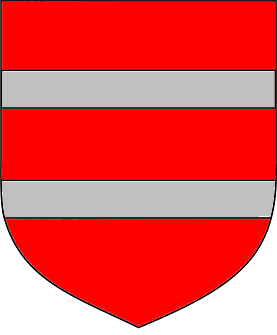
Pantulf, first Lords of Wem after the Conquest
This historical moment was made even more significant by the presence of historian Michael Wood, who presented the televised event. He is some of the 1986 coverage, involving Micheal Wood.
The two heirs brought together for the occasion were Pierre de Panthou (a descendant of the Norman lord who took over the land after the Conquest) and Dr. George Arden. The presence of Dr. Arden, representing the pre-Conquest Anglo-Saxon lineage, was a powerful symbol of Wem’s long and continuous history.
The English Forest of Arden and its Inhabitants
While the name “Forest of Arden” in Shakespeare’s play As You Like It initially evokes the Ardennes of France and Belgium, it also refers to the English Forest of Arden.
This was an ancient and geographically vast ‘great forest’ that extended across a wide band of Middle England, including much of Warwickshire and parts of Shropshire, Staffordshire, and Worcestershire. The term ‘forest’ didn’t necessarily mean continuous woodland, but a large, predominantly wooded area with many clearings and cultivated areas.

Close up of the Goff Map, (C13th) showing Arden over much of the West Midlands
The English Arden, defined by Roman roads like Icknield Street and Watling Street, was the ancestral home of the Arden family. They were a dominant Anglo-Saxon family who retained power after the Norman Conquest.
The Ardens, whose name was the maiden name of Shakespeare’s mother, had their main quarters at Park Hall, Solihull, by the C16th but had held extensive land for centuries, with holdings extending as far north as Wem in Shropshire prior to the Conquest.
A Shakespearean Echo
This history of dispossession and exile is not just a historical footnote; it’s a real-life echo of the central plot of Shakespeare’s As You Like It.
The play’s setting in this forest is a deliberate nod to Shakespeare’s mother’s family and their ancestral lands.
The fact that their history involved the alienation of their lands in Wem adds a powerful layer of meaning to the play’s themes of loss and the search for refuge.
Moreover, the connection to our area is strengthened by evidence linking the play’s source material to Soulton Hall, once owned by the family of author Thomas Lodge. These combined historical threads suggest that the fantastical Forest of Arden was at least partly inspired by the very real landscape and history of Shropshire.
The exhibition honoring Pauline Dee has, in a way, brought this ancient history back to life. It reminds us that our local history is interwoven with some of the biggest names in English literature, and that the stories of our community echo through the pages of a timeless play.
To learn more, we encourage you to visit the exhibition at Wem Town Hall, which honors Pauline Dee BEM and the rich history she helped reveal.
