

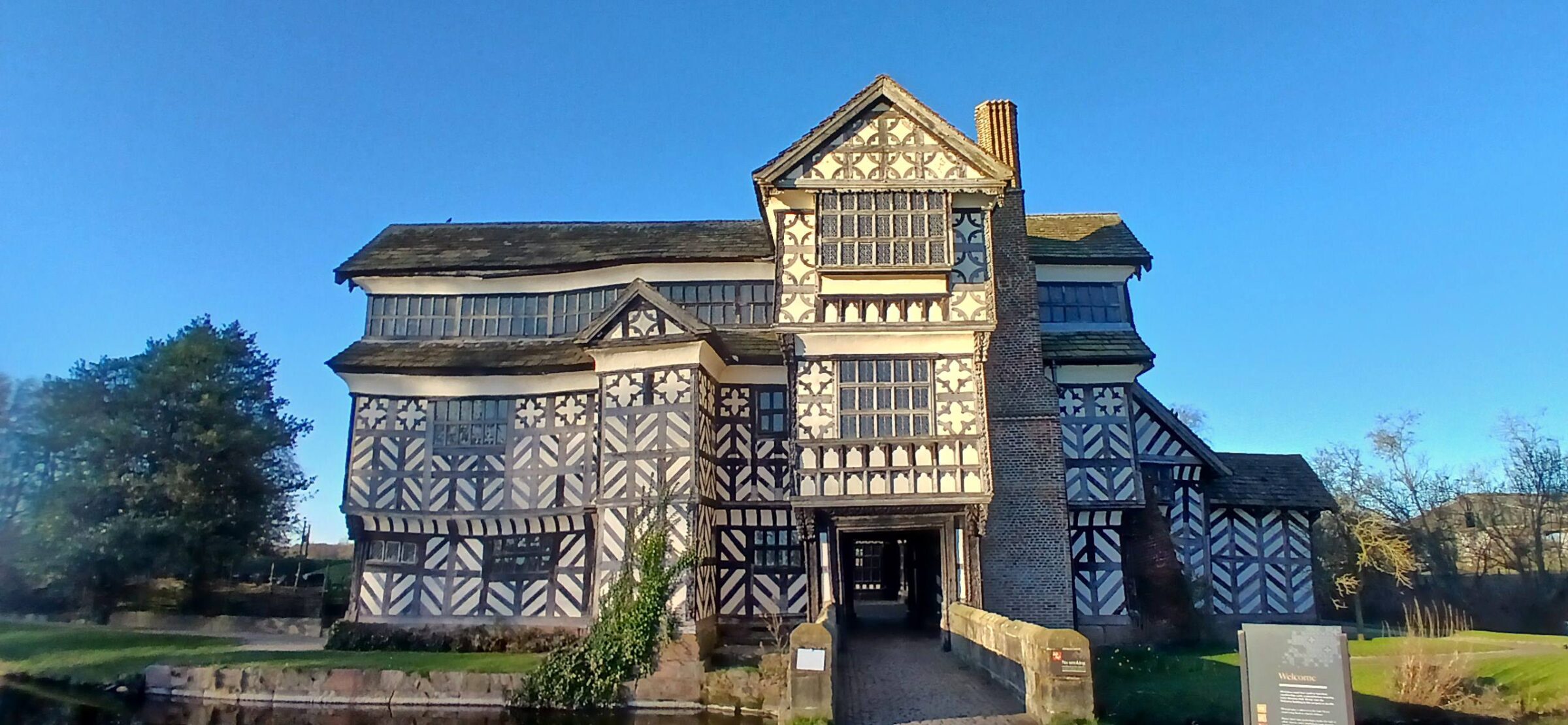
Today was a really special day – We had the great pleasure of hosting staff and dedicated volunteers from the National Trust’s Little Moreton Hall.
It was a fantastic chance for two historic houses, both rich in Tudor and early Renaissance history, to connect, share ideas, and simply learn from each other.
Little Moreton Hall, with its famous crooked look and incredible survival as a true Tudor manor, is wonderful and beloved property of the National Trust.

The Long Gallery of Little Morton Hall

Part of a similar gallery in Soulton Hall
We’ve long admired their dedication to preserving and showing off this unique piece of history, and we are well aware of the immense scale of restoration efforts at Little Moreton Hall in the 1990s that brought it back to such magnificent form. It was a joy to welcome their team to our own ancient grounds.
The visit was a lively exchange of thoughts, not just about keeping our old buildings standing, but especially about the Renaissance philosophy and amazing mathematics found in both places.
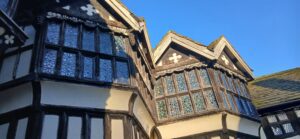
Little Moreton Hall glazing: Octograms of 8 lozenges, referencing the ‘As You Like It’ dance.

The Soulton Dancing Pavement, showing The Dance, which features in AS YOU LIKE IT
We looked at how both Soulton Hall and Little Moreton Hall, though they look quite different, subtly or clearly show the Renaissance ideas of balance, order, and human thought. We discussed how people have used these big ideas in their homes, aiming for a sense of calm and intellectual curiosity within their own walls.
A significant part of our discussion focused on the scholarly research into the Renaissance ideas that both houses exhibit, which is the incredible work of James D. Wenn of Byrga Genihta scholar of whoes work Soulton has been proud patrons.
One of the most interesting parts of the day was uncovering the clever mathematical principles and geometry that lie beneath the design and building of both halls. From the precise, even if seemingly irregular, timber frames of Little Moreton to the clear geometric plans at Soulton, we saw how intelligent design from that era connected us.
Hearing about the unique challenges of Little Moreton Hall’s famous lean was particularly eye-opening, and we talked about our own ongoing restoration work here at Soulton, always aiming to keep the original intentions and craftsmanship alive.
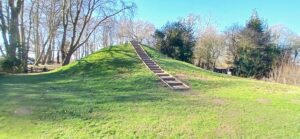
A close look at the mound outside the moat at Little Moreton Hall- these are a common C16th feature, Francis Bacon builds one in Gray’s Inn
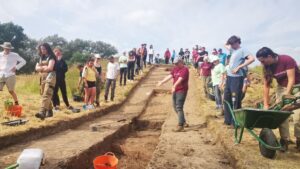
Through years of exploration, DigVentures archaeologists have unraveled the secrets of the Soulton landscape, revealing remarkable finds.
Thinking about new ways to bring history to life for people visiting today, we discussed how understanding the intellectual world of the Tudor and early Renaissance periods makes the visit even better.
Both our teams are passionate about making history easy to understand and exciting, including showing off the ‘brains’ behind the beauty of these ancient homes.
The shared passion for these incredible structures and the clever minds behind them was clear to see.
We believe that getting together like this is invaluable, helping us learn from each other, strengthen our dedication to preservation, and ultimately make the visitor experience even richer at both our sites by revealing the deeper layers of their history.
Our heartfelt thanks go out to the team from Little Moreton Hall for their visit today.
It was a true pleasure to connect with their dedicated staff and learn from their experiences. This visit also served as a wonderful reminder of the amazing, indispensable work carried out by National Trust volunteers across the country. These passionate individuals, especially those who give their time so generously at Little Moreton Hall, are the unsung heroes of heritage preservation. Their commitment brings these historic places to life for countless visitors, ensuring that the stories, the beauty, and the profound lessons held within buildings like ours and Little Moreton Hall continue to be shared and cherished for generations to come.
We look forward to future chances to connect and keep working on our shared mission of looking after and celebrating England’s amazing heritage, especially its hidden intellectual treasures.
