


This year, our farm is joining the UK Government’s Sustainable Farming Incentive program, and you might notice a few changes.
Exceptional, record-breaking rains from late summer 2023 continued into early 2024. Without a modern, globalized supply system, this could have been very serious for the UK’s food supply. It’s a cause for concern.
We have a long-standing interest in soil health, the environment, biodiversity, and related issues.
In 2024, we’re taking the opportunity to rest a number of fields and prioritize wildlife and the non-commercial aspects of farm life.
Many of our fields are being set to legume fallow, a Sustainable Farming Incentive (SFI) option that offers a range of environmental benefits and contributes to a healthier and more resilient agricultural system.
We’re also working on plans to establish proper, managed public access to the “As You Like It” wood and the landscape here. These will take time, and we are glad of consultancy support for this work.
These plans, which will take time will focus on landscape and biodiversity gains, including wetlands for an otter sanctuary.
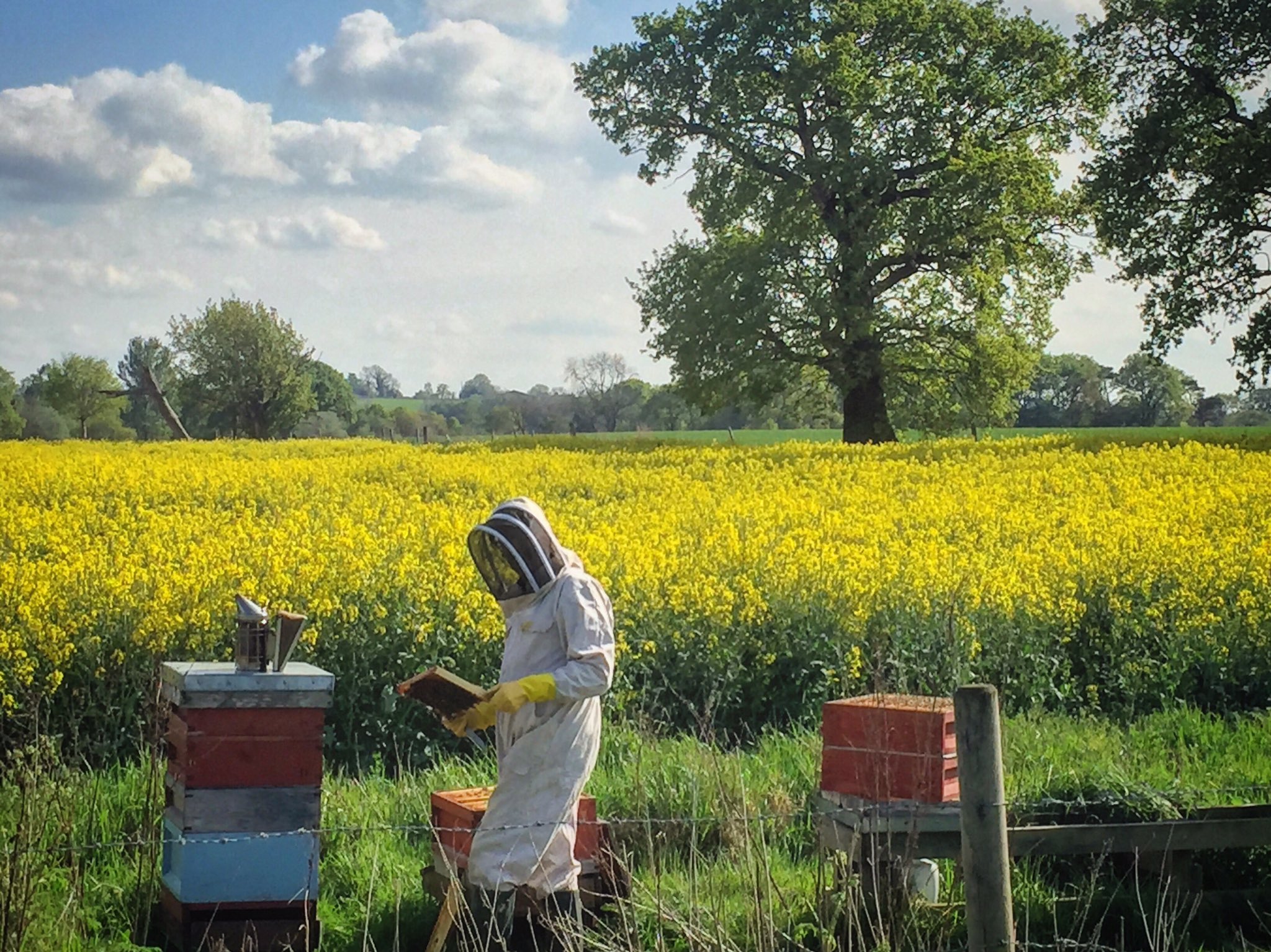
A bee keeper near the AS YOU LIKE IT wood at Soulton HallHere are some key advantages:
Enhanced Biodiversity
Pollinator Haven: Flowering legumes attract a variety of pollinators like bees and butterflies, essential for healthy ecosystems and fruit set in surrounding crops.
Food Source for Wildlife: The fallow provides valuable food and habitat for birds, insects, and small mammals, promoting biodiversity on the farm.

Summer Solstice Sunrise at Soulton Long Barrow
Improved Soil Health
Nitrogen Fixation: Legumes have the unique ability to capture atmospheric nitrogen and convert it into a usable form for plants. This reduces reliance on synthetic fertilizers and improves overall soil fertility.
Organic Matter Boost: Legume roots decompose, adding valuable organic matter to the soil. This enhances water retention, improves soil structure, and promotes beneficial microbial activity.
Weed Suppression: Legume fallows act as a natural weed control method. Their dense growth competes with weeds for light and resources, reducing reliance on herbicides.
Reduced Environmental Impact
Lower Greenhouse Gas Emissions: Reduced use of synthetic fertilizers associated with nitrous oxide emissions.
Erosion Control: Legume cover helps prevent soil erosion from wind and rain, protecting waterways from pollution.
Additional Benefits:
Disease and Pest Management: Breaking the disease cycle of certain pathogens associated with continuous cropping.
Improved Crop Yields: Studies suggest that crops following a legume fallow can experience increased yields due to improved soil health.

Soulton Wood, inspiration for Thomas Lodge’s Rosalynde and for Shakespeare’s AS YOU LIKE IT
Overall, legume fallow contributes to a more sustainable agricultural system by promoting soil health, enhancing biodiversity, and reducing environmental impact.
