

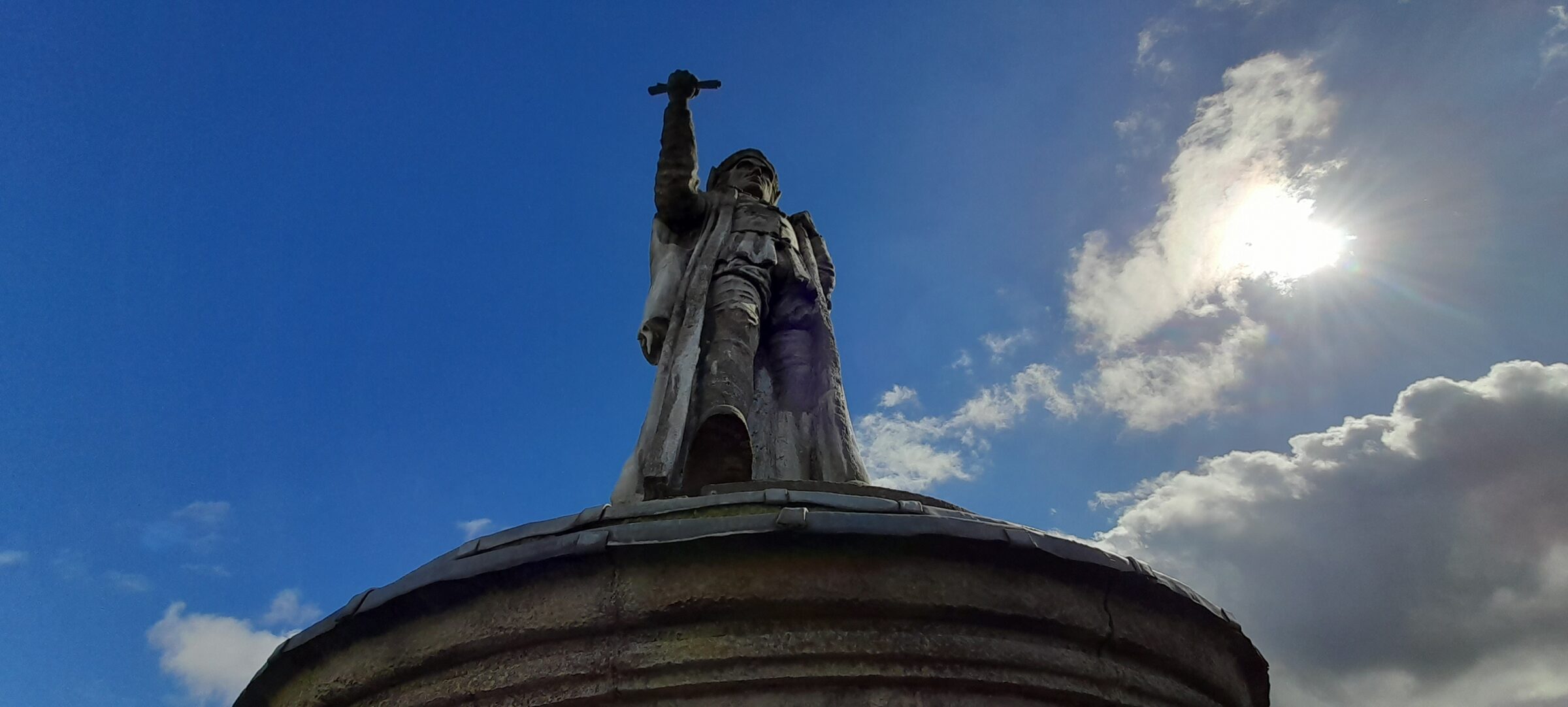
Sir Rowland Hill (Hyll or Hylle or Hull or Hall) – the only vowel not seen used in sixtenth century spelling is ‘e'(!)
Polymath and Philanthropist
‘Old’ Sir Rowland Hill is an exceptional figure of the Tudor era who defies easy categorization.
He was a statesman, philosopher, merchant, and patron of the arts. His life intersected with some of the most significant events and themes in English history. His most enduring legacy lies in his role as the major patron of the 1560 Geneva Bible.
Early Life and Career
‘Old’ Sir Rowland’s birth date was around 1495 and he was born to a famous Shropshire family who were in South Shropshire by the 11th century, and had arrived in the parish of Hodnet, which traditionally includes part of the manor of Soulton, by the 13th century.
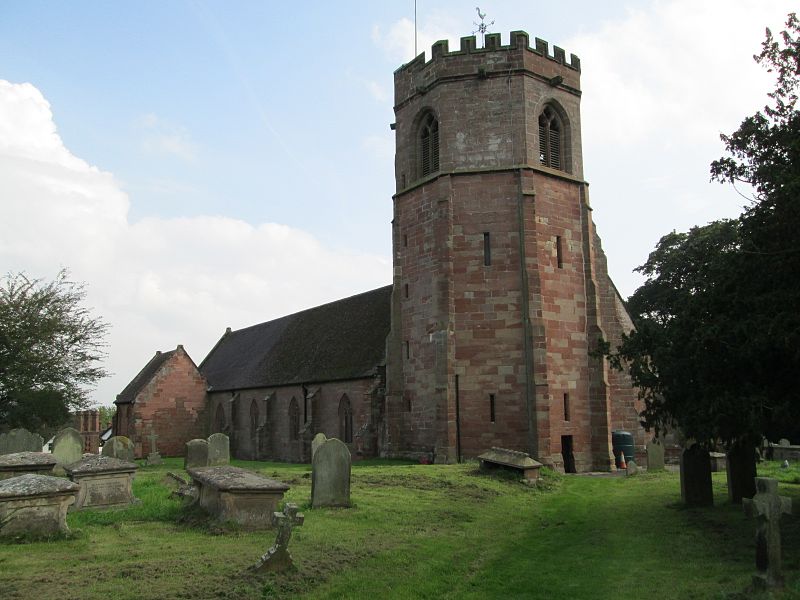
Hodnet Church: The place of baptism of ‘Old’ Sir Rowland Hill – also linked to Juliet in Romeo and Juliet
His forebear, Sir Thomas Hill, was Lord Mayor of London in 1484, an exceptional year of public health emergency.

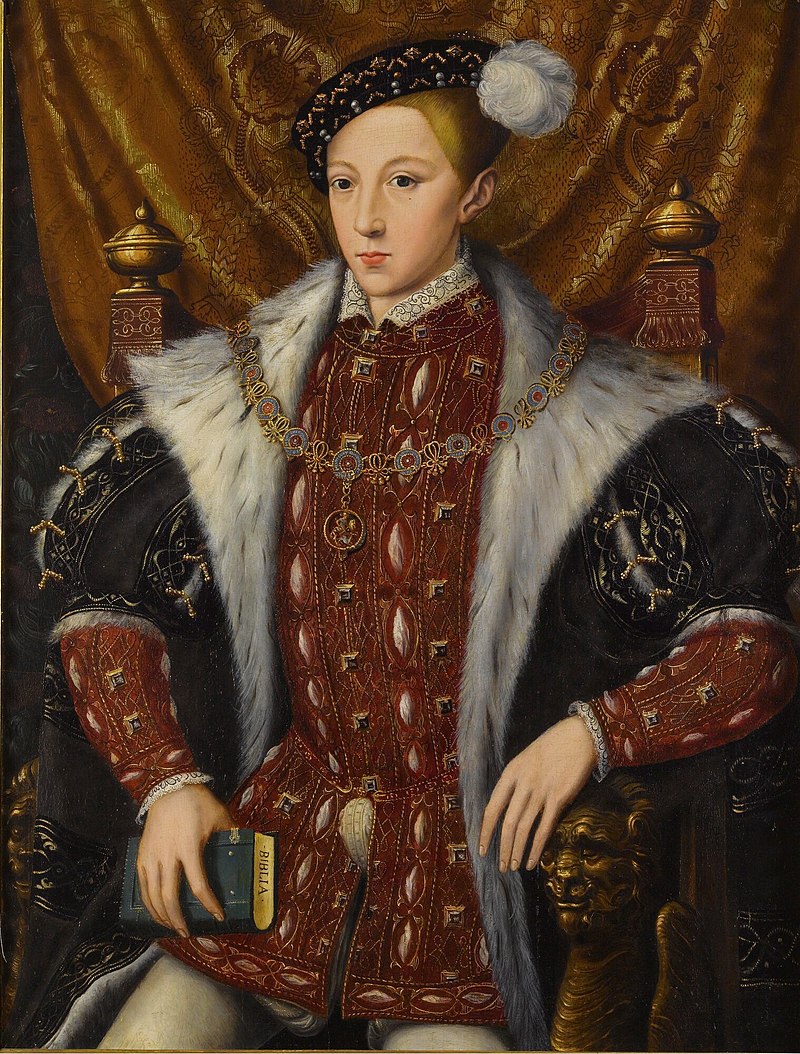
Portrait of Henry VIII: ‘Old’ Sir Rowland served on his Privy Council; state papers show he was ‘content to forebare’ on his huge loans to the king…
His own rise to prominence occurred during the reign of Henry VIII (1509-1547). Hill established himself as a successful merchant, accumulating vast wealth (as well as surviving a pirate attack) and growing influence at court.
This period witnessed significant religious upheaval, and Hill navigated these turbulent waters with a characteristic pragmatism that would become a recurring theme throughout his career.
Navigating Religious Currents
Though not a firebrand reformer, Hill gravitated towards Protestant theological currents.
He cultivated close relationships with prominent Protestant figures who were architects of the English Reformation.
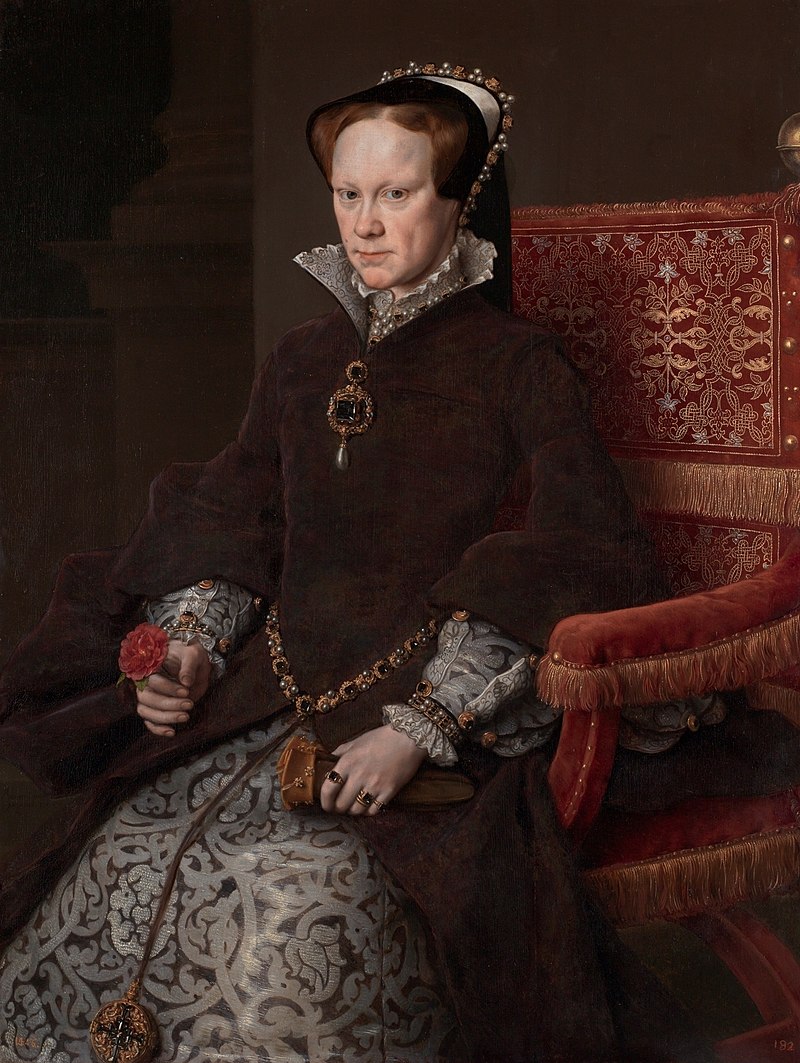
‘Old’ Sir Rowland recovered from a period of disfavor enough to sit as a judge in treason proceedings… but all the while, he was working on publishing that would have horrified Mary I.
During the reign of the staunchly Catholic Queen Mary I (1553-1558), Hill exhibited a discreet support for persecuted Protestants, offering safe harbor to some within his own household. This period of religious turbulence undoubtedly shaped his outlook, though he was careful to recover from a spell of disfavour to have enough of the regime’s confidence be a judge on judicial proceedings for treason against the Catholic Queen…
…all the while attending (in Shropshire and on the continent) to a project Mary’s regime would have Found Totaly Unacceptable.
The Geneva Bible: A Landmark Publication
Hill’s most significant contributions undoubtedly surfaced under the reign of Queen Elizabeth I (1558-1603), a circumstance he appears to have anticipated and prepared for extensively.

Geneva Bible 1560 edition
In 1560, he played a pivotal role as a major patron of the Geneva Bible, a landmark translation of scripture completed by English Protestant exiles in Geneva, Switzerland. This translation left an indelible mark on countless readers, including literary giants like William Shakespeare and John Donne (and others). This was the Bible taken to America on the Mayflower.
Beyond the Geneva Bible
The press which printed the Geneva Bible did work that extended beyond the realm of religious publishing.
It published a curious rage of esoteric texts, between 1559 and 1562 (a couple of texts were ‘in the print queue’ on his death, arriving while his business was in probate).
These covered a variety of topics, including:
- the game Rithmomachia (also known as The Philosopher’s Game), for which a board was built into the Prayer Room at Soulton;
- politics (statecraft), including the Laws of Geneva;
- religion (theology and psalms);
- the classics
- exploration (the New World), and
- medicine
Interestingly, some of his publications are histories of the limited number of alies England had in Europe following the break with Rome, indicating a diplomatic focus along with the others he can see.

The Rithmomachia Pavement in the Prayer Room of Soulton Hall – 2022, awaiting conservation.
Curiously, The Laws of Geneva he published used a symbol ‘a half eagle and a key’ this same symbol tantilisingly appears in the second quatro edition of Shakespeare’s A Midsummer Night’s Dream, raising an intriguing but (as yet) not fully unexplained connection…
A Bridge Between Reigns: Sir Rowland Hill and the Policing of “Heretical Opinions”
Shockingly, for a man traditionally held a firm protestant Hill was, in 1557, was appointed by Mary I a Commissioner Against Heretics; in that office he had:
full power to search out and take into your hands and possessions, all manner of heretical and seditious books, letters, and writings, wheresoever they or any of them shall be found, as well in printers’ houses and shops, as elsewhere, willing you and every of you to search for the same in all places, according to your discretions.
– Commission Given to the Commission Against Heretics by King Philip and Queen Mary
Fascinatingly, he was promptly appointed a Commissioner for Ecclesiastical Cases in 1559, alongside Matthew Parker, Elizabeth I’s newly appointed Archbishop of Canterbury (whom it is possible he hid during the Protestant persecutions by Mary I).
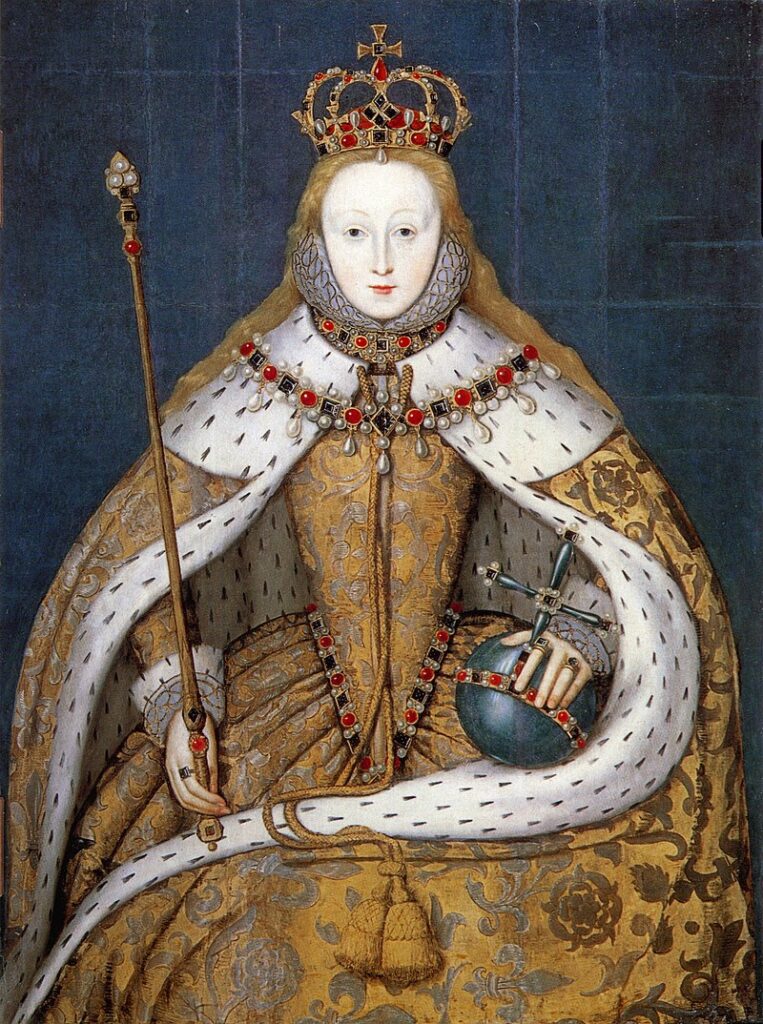
Elizabeth I’s ‘godfather’ Matthew Parker (who had been chaplain to her mother Anne Boleyn) appears to have been kept safe by “Old” Sir Rowland, at Soulton. Hill also would have been able to keep a close eye on Elizabeth I’s safety in the troubling household of Sir Thomas Seymour (a man of whom it was said Hill ‘knew much of the intent and purpose’).
And, once again, most intriguingly, he is found in an office with control of prohibited books:
have authorized, assigned, and appointed you to be our commissioners; and by these presents do give our full power… to inquire,… for all singular heretical opinions, seditious books
– Commission Given to the Commission for Ecclesiastical Cases by Queen Elizabeth I
Hill is potentially unique in having this power to seize prohibited books under both Mary and Elizabeth. Knowing this…
…we might ask:
- why?
- how? and
- what does this imply…?
Patron and Muse
Hill was a recognized patron of the arts, and scholars link him and the recovery and development of Tudor drama.

Opening of Shakeaspeare’s play AS YOU LIKE IT as seen in the First Folio
During his Lord Mayoralty, the court of aldermen, on 7 November they ordered
the two secondaries of the counters, Mr. Atkyns and Mr. Burnell, should:
‘pervse all suche enterludes as hereafter shalbe pleyed by eny comen pleyr of the same within the Citie or the liberties therof ’.
The foundations what came in London drama in the second half of the sixtenth century laid in the 1540s when commercial plays exploded onto the London scene, and both players and authorities started negotiating the ultimate paradigm for this new business of commercial playing, per David Kathman The Rise of Commercial Playing in 1540s London.
It is understood that Shakespeare (to whom he was related by cousinhood via Mary Arden) took him as the inspiration for ‘Old’ Sir Rowland in As You Like It (a play which in any event has its source in Thomas Lodge’s 1590 book Rosalynde, which is definitively ties to Soulton Hall via the boyhood of Lodge and the Lodge family’s ownership of Soulton.)

Published in 1590 Rosalynde is a pastoral romance writen by Thomas Lodge in 1590 – his family owned Soulton before Old Sir Rowland Hill
Offices held
Master of the Mercers
‘Old’ Sir Rowland Hill played a significant role within the Mercers’ Company, the preeminent London guild.
He served multiple terms as Warden, the company’s highest elected official, holding the position:
- 1535-1536,
- 1543-1544,
- 1550-1551, and
- 1555-1556.
Interestingly, his tenure overlapped with that of Francis Wren, the grandfather of the renowned architect Christopher Wren.
Shreiff sent to the Tower (mistakenly)
Sir Rowland Hill served as Sheriff of London in 1541-42. He quickly found himself in an impossible situation caught between the privileges of the House of Commons and the Royal Courts. This resulted in his brief imprisonment in the Tower of London.
Interestingly, King Henry VIII sided with Parliament in this case, yet still knighted Hill a few months later, suggesting royal favour despite the embarrassing incident.
Taking the Helm in Tumultuous Times: Sir Rowland Hill and the London Mayoralty in 1549
In 1549, at the height of a political crisis in which Protector Somerset was being overthrown, Sir Rowland Hill became Lord Mayor of London. Indeed Somerset’s last act is to beg Hill for soldiers for a last stand (which Hill does not send).
This period was marked by intense and controversial religious change as England shifted towards the sternest Protestantism.
Hill was obliged to oversee some critical changes aligned with the Protestant movement, such as the removal of altars. A sense of the atmosphere of those times can be found in this contemporary account:
Item on sente Barnabes day was kepte [no holi]day (through) alle Londone at the commandment of the mayer, and at nyght was the aulter in Powlles pullyd downe, and as that day the vayelle was hongyd [up] benethe the steppes and the tabulle sett up there; and a sennet after there the comunion was mynysterd.
Item the xiiij. day of June was sattorday, and before evy[ning] was a mane slayne in Powlles church, and ij. frayes with-in the church that [same] tyme afterward.
Item also this yere Corpus Christi was not kepte holy day. And the Assumpcion of our Lady was soche devision thorrow alle London that some kept holy day and some none. Almyghty God helpe it whan hys wylle ys! for this was the second yere, and also the same devision
– The Chronicle of the Grey Friars: Edward VI
Hill’s actions seem to reveal some potential complexities.
Some on Edward VI’s council would have been outraged by Hill’s likely involvement in saving the statue known as The Mercer’s Christ (only rediscovered in 1954).
In the same year (1549), at the height of that Protestant iconoclasm (destruction of religious images), he had to adjust the route of his Lord Mayor’s Day procession through St Paul’s Cathedral because it had been ransacked for building materials and treasure by Somerset.
Hill is publicly upset about this despoliation and offered a prayer of anguish, the de profundis, at the tomb of the Norman Bishop William, embracing the traditions of St Erkenwald, London’s most revered saint.
This act has been interpreted as showing respect for culture and traditional practices even during times of religious reform and state-sponsored destruction, which is congruent with is almost certain knowlege of, and involvlement in, the saving of the Statue of Dead Christ in the Mercer’s Chapel….
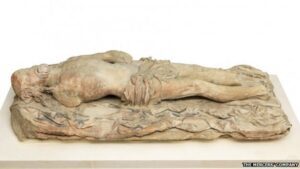
The Statue of the Dead Christ was discovered in 1954 (c) The Mercers Company
…had Edward VI known of this act it would have been Taken Most Seriously.
A Man of Public Service and Private Philanthropy
Sir Rowland Hill’s life transcended the sphere of public office and political intrigue. He was a man deeply committed to philanthropy, leaving a mark on his community and country through numerous acts of generosity.
Hill’s religious convictions were further manifested in the construction of churches, this dedication extended beyond his immediate locality, as evidenced by his documented contributions to a number of religious institutions.
Hill’s civic-mindedness is evident in his role as a patron of infrastructure projects. He spearheaded the construction of Tern and Atcham bridges, substantial structures built from stone. These permanent bridges, along with his contributions to large timber bridges, undoubtedly improved transportation within the region.
Hill recognized the importance of education and actively fostered its advancement. He was instrumental in the establishment and financial support of free schools, most notably the one in Drayton and at Shrewsbury.
Furthermore, his generosity extended to students pursuing higher education at universities and legal training at the Inns of Court.
A recurring theme in Hill’s philanthropic endeavors was his concern for the less fortunate. He established himself as a tireless advocate for widows and orphans, providing essential resources such as annual clothing for 300 impoverished individuals. His substantial donations to St. Bartholomew’s Hospital in London (which he also refounded and led, along with other London hospitals) stands as a testament to his commitment to healthcare.
Beyond the realm of politics, Hill emerges as a man driven by a strong sense of social responsibility. His extensive philanthropic activities stand as a lasting testament to his commitment to the betterment of his community and the well-being of those in need.
‘Old’ Sir Rowland Hill
A curious account survives of a rent payment ritual in London for the Merchant Taylors School in which Hill presided shortly before he died:
The xxx day of September my lord mayre and the althermen and the new shreyffes took ther barges… to Westmynster, and so into the Cheker… and ser Rowland Hyll whent up, and master Hoggys toke ser Rowland Hyll a choppyng kneyf, and one dyd hold a whyt rod, and he with the kneyf cute the rod in sunder a-for all the pepull; and after to London to ther plases to dener
– The Tudor diarist, Henry Machyn
To avoid confusion with ‘Old’ Sir Rowland’s namesakes
- the Victorian social reformer who championed the Penny Black postage stamp;
- the Waterloo hero;
- the preacher and vaccine pioneer
our Sir Rowland Hill is often referred to as Old Sir Rowland Hill.
Sir Rowland Hill’s life, identity and accomplishments serve a one of the most important inflection points of the complex religious and political tapestry of Tudor England.
He was a man of incredible talents and strategic pragmatism, how has left a lasting impact through his kindness at a time of danger and suffering and his pivotal role in ushering in the English Renaissance.
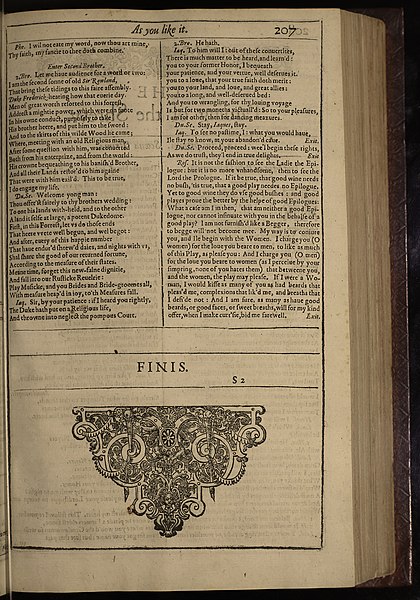
Last page of Shakeaspeare’s play AS YOU LIKE IT as seen in the First Folio. The closing book plate has a curious 8 fold circle, a device seen at Soulton.
