


Intriguing Carvings in the Hall Hall
The Hall Hall (the Hall-in-the-Hall) boasts fascinating carvings on its stone mullions, readily visible to curious visitors.
There are three carvings at first look, they might be graffiti, they are very old:
Ear of Barley: This symbol is concerned with beer
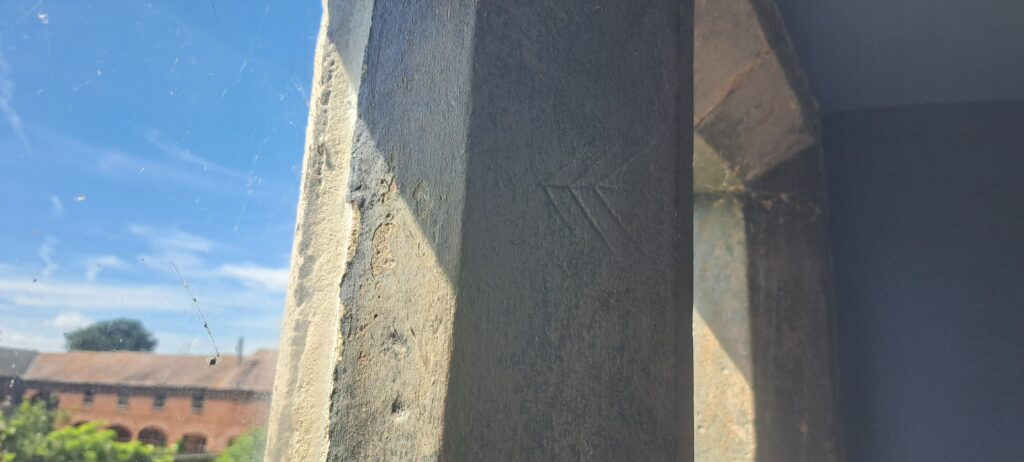
Barney Chevrons carved into the west window of the Hall Hall in Soulton Hall
Interlocking Triangles: This geometric shape resembles the meeting point of two triangles at their point; of the type you get if you draw and x on a square (which you need to do on the non-corder outside square of a 9 gird for the geometric code in Souton Hall)
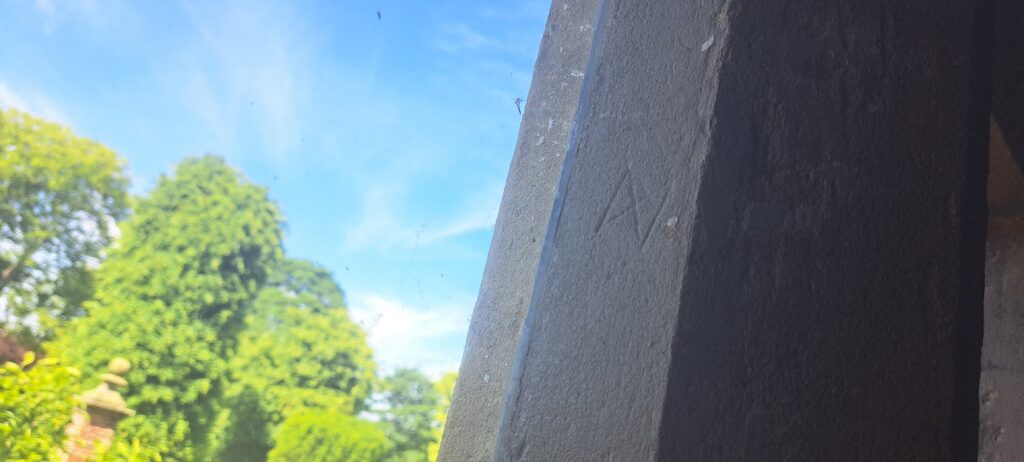
Triangles meeting at a point drawn within a square, a carving in the north window of the Hall Hall in Soulton Hall
Circle: This simple shape could be linked to the traditional circle dance performed at Soulton Hall.
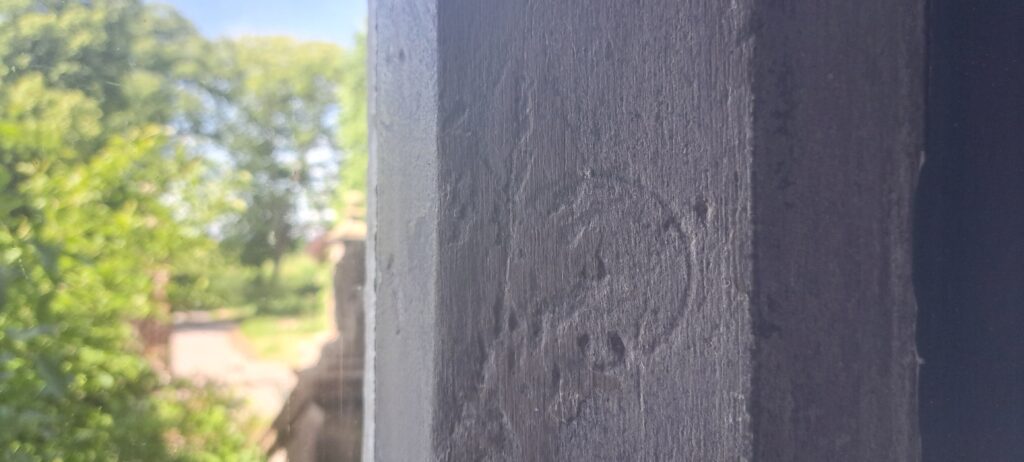
Slightly warn circle carved in the north Hall Hall Windows in Soulton Hall: possibly a representation of The Dance
Sir Rowland Hill’s Chair: Reflecting the Hall’s Legacy?
Sir Rowland Hill’s chair of estate, often displayed in the Hall, features patterns that seem to echo these carvings:

Old Sir Rowland Hill’s Chair of Estate.
Chevrons: The chair’s carvings depict chevrons, which is a way of showing barley in art history.
Dance Symbol: Notably, the chair prominently displays the circle dance symbol, further strengthening the link to the Hall’s traditions.
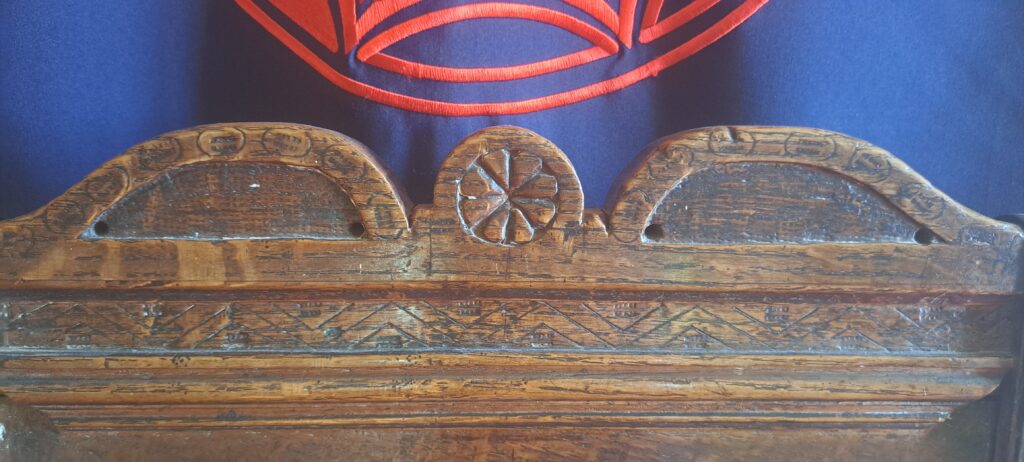
The dance and barley chevrons seen on the top of the Sir Rowland Hill chair.
Eleusinian Canisters: The presence of Elysian canisters on the chair’s risers adds another layer of intrigue. It has been theorized that these canisters might have been used for garnets.
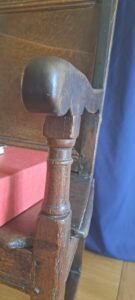
A cannister riser on the Chair of Estate of Sir Rowland Hill
Garnets and the Geometric Connection:
The theory suggests a possible geometric connection between the garnets and the interlocking triangles. When placed on a 9×9 grid (like the Soulton precinct plan), the garnets might occupy specific edge squares, not corners, somehow aligning with the triangular symbol’s geometry.
********
The above contains scholarly work by James D. Wenn of BYRGA GENIHT. You will find this lecture helpful in explaining more.
