

The Medici Effect: How a Renaissance Household Shaped England
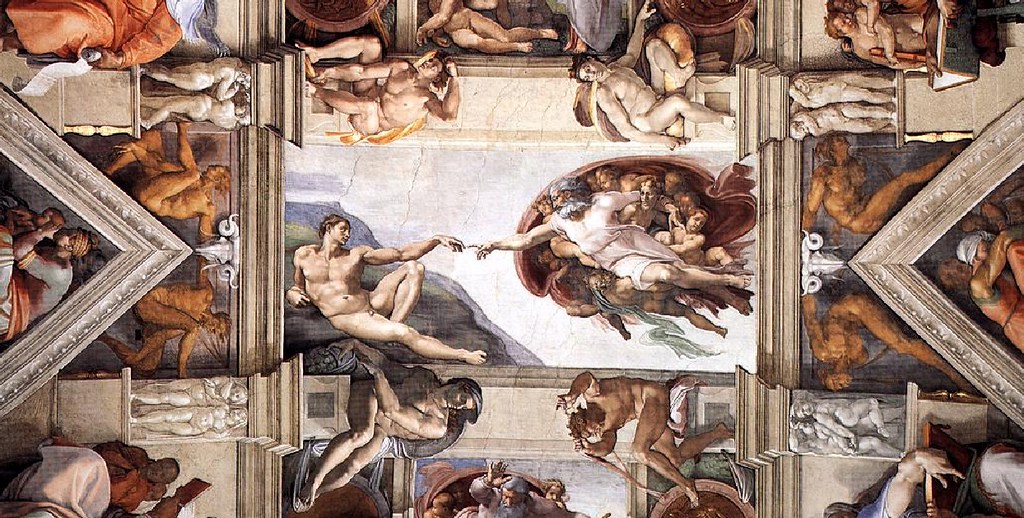
The BBC’s “Renaissance: The Blood and the Beauty” masterfully depicts the vibrant and tumultuous world of 16th-century Italy, where artistic genius clashed with political intrigue. ecommend these programs and believe viewers of the BBC series ‘Renaissance: The Blood and the Beauty’ will gain a deeper appreciation for the intellectual and cultural milieu from which Sir Rowland Hill and Soulton Hall sprung. While the series focuses on the lives and rivalries of:
- Michelangelo,
- Leonardo da Vinci, and
- Raphael,
it’s crucial to remember that the impact of this era extended far beyond the Italian peninsula.
At the heart of this Renaissance explosion lay the Medici family, particularly Lorenzo de’ Medici.
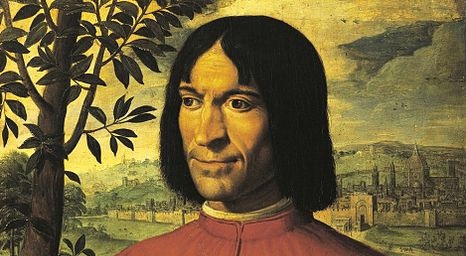
Girolamo Macchietti: Portrait of Lorenzo de’ Medici (1449-1492)
His household became a crucible of creativity, where art, scholarship, and politics converged.
Renowned figures like the humanist scholar Angelo Poliziano and the young artist Michelangelo thrived within this stimulating environment. Poliziano enriched the household’s intellectual discourse, while Michelangelo honed his artistic genius under Lorenzo’s patronage. Michelangelo himself, between 1490 and 1492, immersed himself in the intellectual ferment of the Platonic Academy, a renowned humanist center founded by the Medici family. There, he encountered the profound ideas of leading thinkers like Marsilio Ficino, Pico della Mirandola, and Poliziano, contemporaries who, along with Desiderius Erasmus, would shape the course of Renaissance thought.
This fusion of disciplines extended beyond the walls of the Medici palace. Lorenzo’s political acumen forged alliances with English monarchs, facilitating cultural exchange and trade. The Medici’s patronage of the arts inspired English intellectuals, merchants, and artists, who brought Renaissance ideas and artistic styles back to England.
Figures like Sir Rowland Hill, the English polymath and statesman, were influenced by this “Medici Effect.”
As a merchant, Hill would have been well aware of the economic ties between England and Florence, facilitated by the Medici banking network. He would have encountered English merchants who had witnessed first-hand the vibrant artistic and intellectual atmosphere (alongside the reforms in finance) cultivated by the Medici.
Furthermore, Hill’s publishing endeavours benefited from advancements in printing technology, partly driven by the Medici’s support for the arts and sciences. This created a fertile ground for innovation, influencing the development of printing and publishing in England.
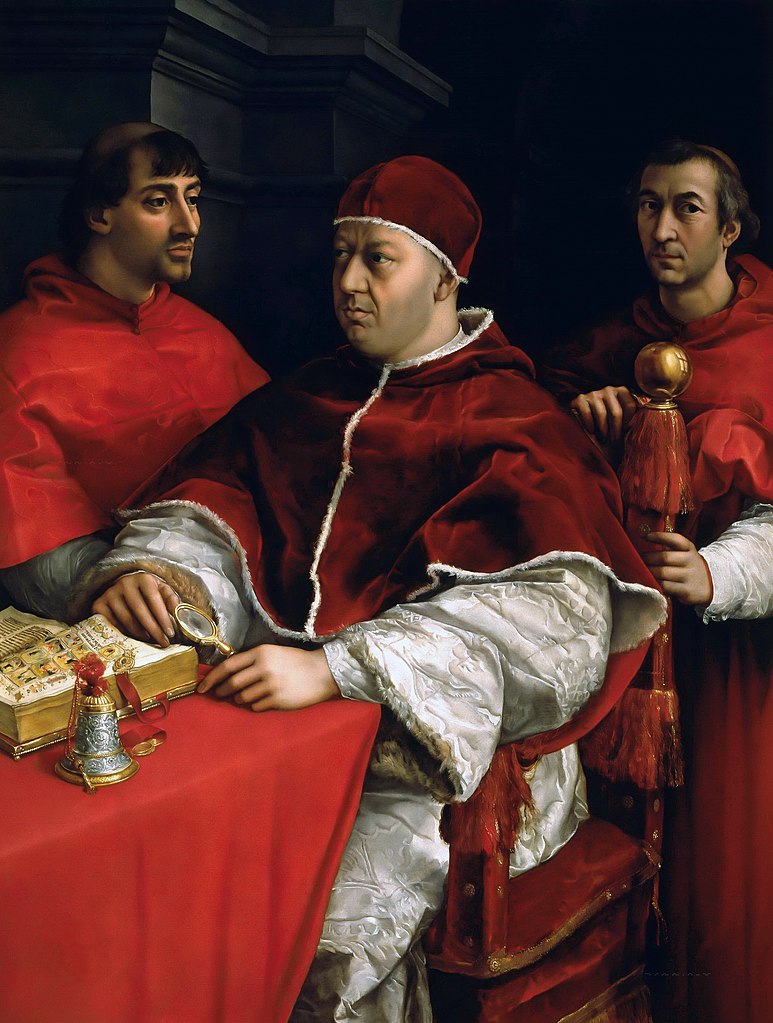
Raphael’s Portrait of Leo X with cardinals Giulio de’ Medici (later Pope Clement VII, whose papacy lasted from 1523 to 1534) and Luigi de’ Rossi, his first cousins, (Uffizi gallery, Florence)
The Medici family’s influence transcended Florence, culminating in the papacies of:
- Leo X (1513-1521) and
- Clement VII (1523-1534).
As Pope Leo X, significantly enhanced the family’s stature on the European stage through his patronage of the arts.
This broader Medici influence undoubtedly resonated with figures like Sir Rowland Hill, connecting him to the vibrant currents of Renaissance thought and shaping the course of English history. Additionally, Leo X initially enjoyed a cordial relationship with King Henry VIII, even bestowing upon him the title “Defender of the Faith.” However, this cordiality was short-lived. Leo X’s successor, Pope Clement VII (1523-1534), also a Medici, faced mounting challenges, including the Protestant Reformation and the rise of powerful secular rulers like Charles V. Clement’s refusal to grant Henry VIII an annulment from Catherine of Aragon, driven by political pressure from Charles V, ultimately led to the English Reformation.
During this period, maintaining discreet channels of communication with Medici banking networks would have been highly valuable for English merchants with European standing, particularly those serving as Privy Councillors, such as figures who may have resembled Sir Rowland Hill. These individuals, operating at the intersection of commerce and government, could have leveraged their business connections to gather intelligence on papal intentions, particularly regarding Henry VIII’s annulment. Such information could have provided crucial insights into Vatican politics, the influence of Charles V, and potential avenues for resolving the impasse with Rome.
The Diet of Augsburg (1530), held during Clement VII’s papacy, further underscored the complexities of the situation. The failure of this Diet to reconcile religious divisions within the Holy Roman Empire exacerbated the challenges faced by the papacy and highlighted the interconnectedness of these events in shaping the political and religious landscape of Europe.
********
Catherine de’ Medici’s marriage to King Henry II of France in 1533 forged a powerful link between the Medici family and the French monarchy.
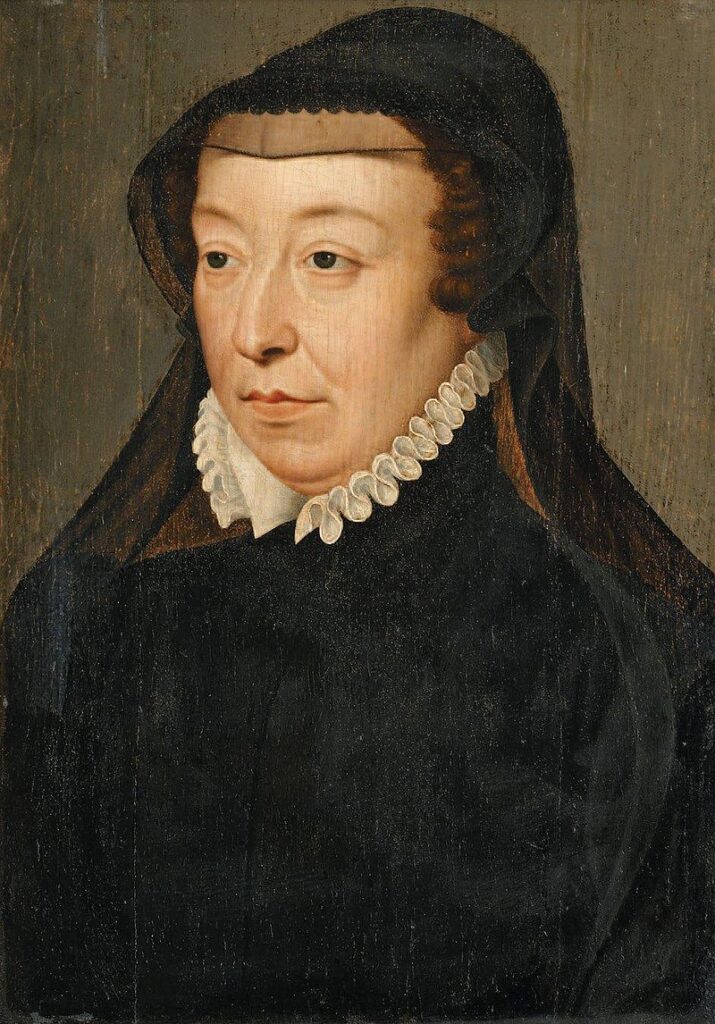
Portrait of Catherine de’ Medici (1519-1589), widow of Henry II of France (1519-1559).
As Queen Consort, Catherine navigated the complex political landscape of the French court, her actions having indirect yet significant repercussions for England. For instance, the growing tension between France and the Holy Roman Empire, fuelled by religious and political rivalries, had a direct impact on English foreign policy. England, seeking to maintain a balance of power in Europe, had to carefully consider the shifting alliances between France and its rivals, influenced by Catherine’s political manoeuvring.
Moreover, the flourishing of the arts and culture in the French court, fostered by Catherine’s Italian heritage and the Medici legacy of patronage, undoubtedly influenced English artistic and intellectual circles.
********

Portrait of Sir Rowland Hill, Mercer’s Copy
Sir Rowland Hill, as a prominent merchant and statesman during the Tudor era, likely possessed a unique vantage point within the evolving political and religious landscape of Europe. His role as publisher of the Geneva Bible placed him at the intersection of religious thought, cultural dissemination, and political manoeuvring.
However, it’s crucial to emphasize that this is a speculative interpretation. Direct evidence of Hill acting as a direct intermediary for the Crown in its dealings with the Medici or the Vatican remains elusive – for the moment.
Whatever else may be said, Hill was undoubtedly close to these people as tastemakers in ways that courtiers who never left England were not. His extensive mercantile networks, encompassing connections to the Medici banking system, provided him with a unique window into the vibrant cultural and intellectual currents of Renaissance Italy.
This exposure, coupled with his own intellectual curiosity and patronage of the arts, likely explains the extraordinary Renaissance cleverness evident in his building project at Soulton Hall, a testament to his refined taste and cosmopolitan outlook.

The East front of Soulton Hall, the senior and only symmetrical, face of the hall
