


Unearthing Medieval Secrets
The recent archaeological dig season at Soulton Hall, led by Dig Ventures, has concluded, uncovering even more of a captivating narrative of the estate’s transformation over millennia. The recent archaeological dig season (the sixth at Soulton Hall, with a total of 17 trenches dug).
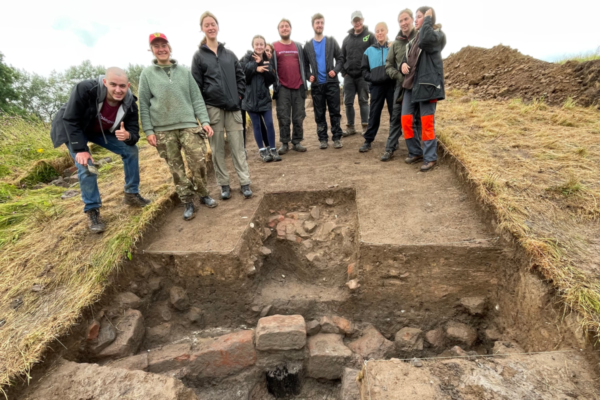
Soulton Hall has been the setting of a number of digs with Dig Ventures
The study began in 2918, focusing on Soulton Mound, once a prestigious medieval manor, the home of an early MP for Shropshire. Excavations unearthed a 12th-century “tiny castle” complete with a moat and a rare, well-preserved timber bridge. Intriguing finds within the moat included an ampulla and a cross. The dig also revealed the structure’s walls, suggesting stone removal for later construction phases, potentially at the current Soulton Hall site.
A site of 16th centuary industrial activity was also explored, possibly liked to the construction of what we now call Soulton Hall.
A Lost Avenue Aligned with the Rising Sun
Next, the dig shifted its focus to the lost avenue connecting Soulton Bridge to the eastern face of the hall. Excavations confirmed this avenue was deliberately aligned with the rising sun on Easter morning, leading to the most important feature for Sir Rowland Hill’s remarkable building – the hidden chapel. Evidence confirms its creation in the 16th century, with a defining ditch and historical records confirming elm trees lined the path.
From Castle to Garden: A View Fit for a Shakespearian Character
With the secrets of the medieval castle revealed, the dig then moved on into the evolution of the land around it. Interestingly, the team discovered the mound’s height was reduced in the 1550s, transforming it into a garden feature. This provided a clear view of the newly built “corps de logis” constructed by Sir Rowland Hill, a prominent figure who published the Geneva Bible and is believed to have inspired Shakespeare’s “As You Like It.”

Portrait of Sir Rowland Hill, Mercer’s Copy
Speculation suggests the modified mound might have served a public purpose for performances or held symbolic meaning for Sir Rowland, considering the architectural references to him within Soulton Hall.
Unearthing a Shift: From Medieval Castle to Modern Estate
Most recently, the dig ventured into the orchard area, uncovering a vast collection of early post-medieval ceramics. This confirms a shift in focus from the “castle” site to the current Soulton Hall location in the 1400s, coinciding with the establishment of the Base Court. Further extensive transformations occurred in this area during the 18th century.
Unveiling a High-Resolution Picture
The 2024 season also incorporated non-invasive studies with the Earth Rover program, resulting in a very detailed picture of the site’s evolution.
The Ashton family expresses immense gratitude to all who supported the project, including the dedicated diggers and the remarkable Dig Ventures team.

This image depicts a scholarly reconstruction of Soulton Hall, highlighting its architectural elements inspired by the ancient theater of Epidaurus. The yellow lines trace these features, revealing the Rowland Hill’s homage to the renowned Greek structure.
********
