

Exploring London’s Legal and Religious Landmarks
Recent commitments in London, including attending the Quit Rents and events in Westminster, provided some unexpected opportunities to explore some of the city’s architectural treasures.
We took the opportunity to revisit the UK Supreme Court building, which we last visited in autumn 2019.
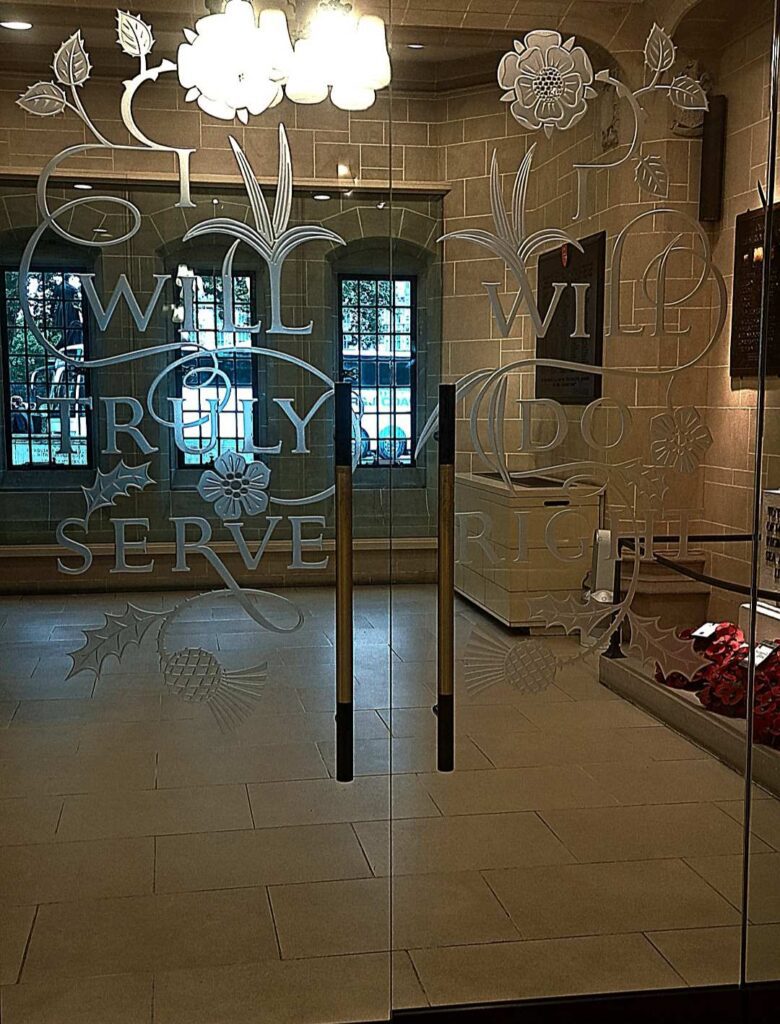
“I WILL TRULY SERVE; I WILL DO RIGHT” parts of the judicial oath in the UK Supreme Court
The UK Supreme Court is housed in Middlesex Guildhall, which it shares with the Judicial Committee of the Privy Council. The building features phrases from the Judicial Oath etched onto the glass, a vibrant pop-art carpet designed by Sir Peter Blake, known for his work on “Sergeant Pepper’s Lonely Hearts Club Band,” brightens up the interior with symbols representing the four nations of the United Kingdom.

Among the displayed gifts to the court: a dodecahedron, representing the 12 Justices.
An interesting detail among the displayed gifts to the court was a dodecahedron, though not a rhombic dodecahedron, representing the Justices.
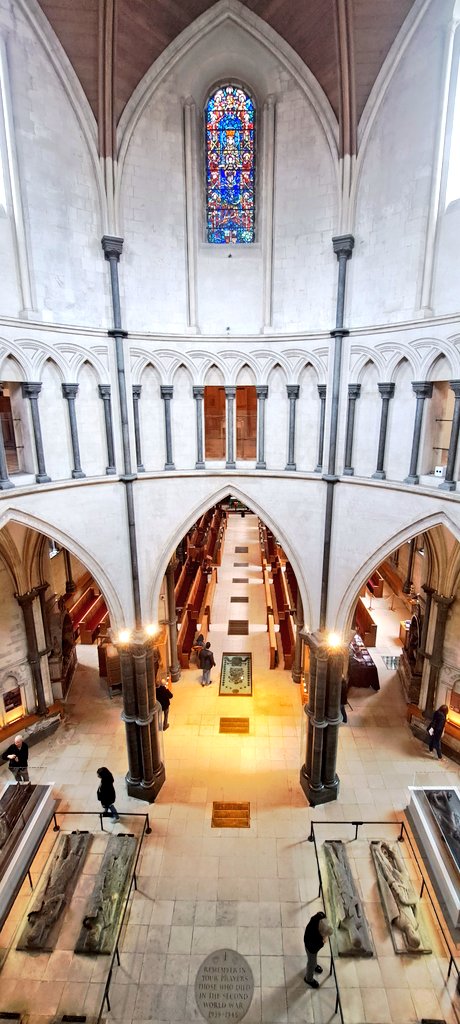
The Gallery of the Temple Church
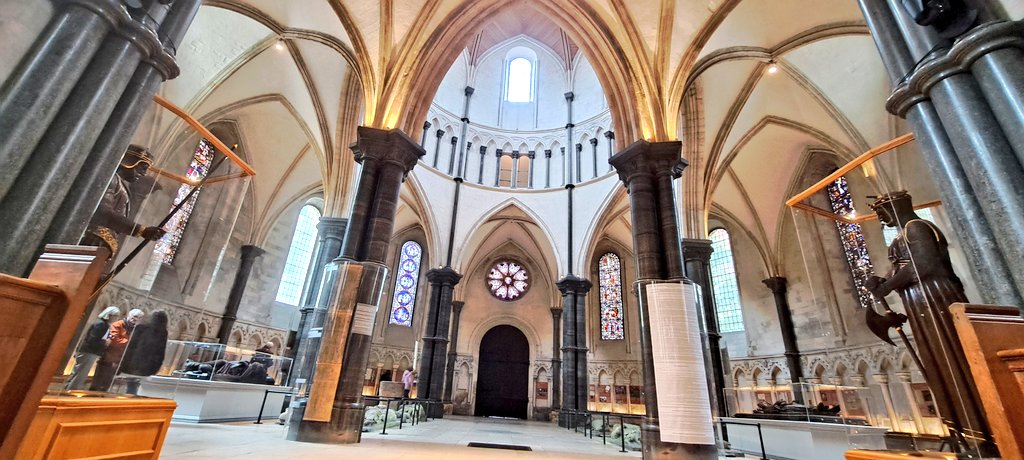
One of the meetings was with a professional whose office is in the Temple area of London, near the famous Temple Church, where Henry III expected to be buried and which has famous connections with Magna Carta.
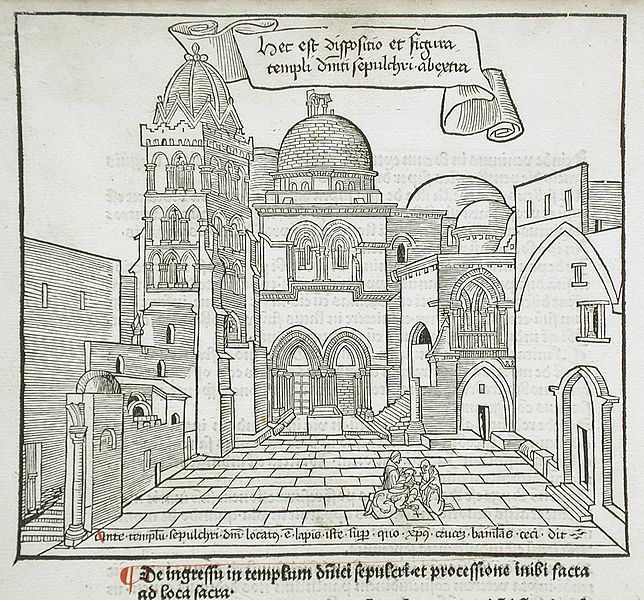
Church of the Holy Sepulchre.
Shoen in Sanctae Peregrinationes by Breydenbach (Mainz, Germany 1486)
The church’s circular nave, known as the Round, is a remarkable architectural feature modeled on the Church of the Holy Sepulchre in Jerusalem, and houses the effigies of Knights Templar. The Temple area itself has a rich history, having served as the home of the Knights Templar and later the Inner and Middle Temples, legal societies that have played a significant role in English law.
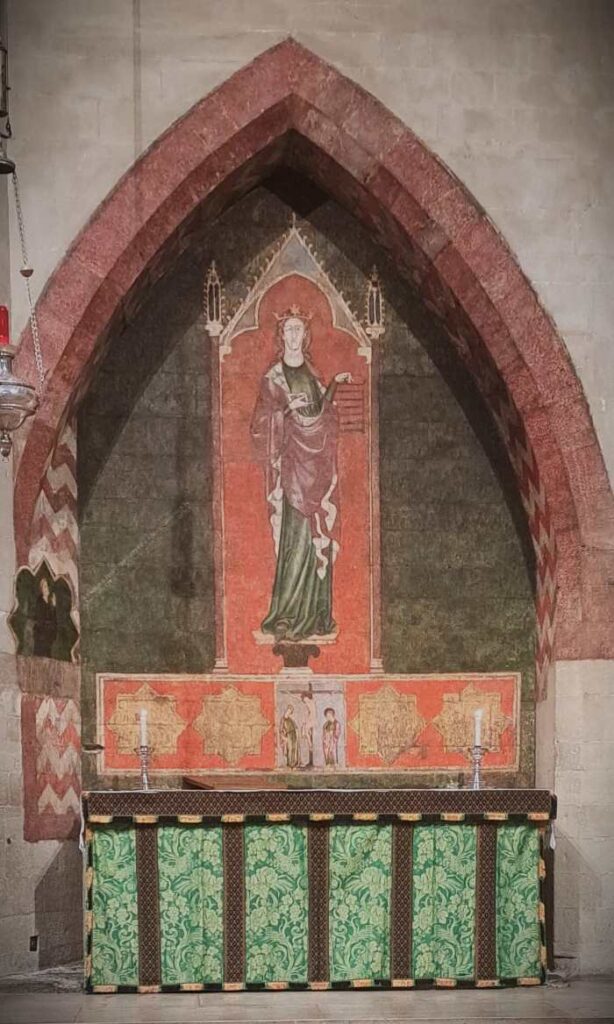
St Faith chapel in Westminster Abbey
A highlight was attending an 0730 service at Westminster Abbey. This historic Gothic abbey, the coronation church of English monarchs, is a must-see for any visitor to London. The interior is filled with intricate carvings, stained glass windows, and the tombs of famous historical figures.
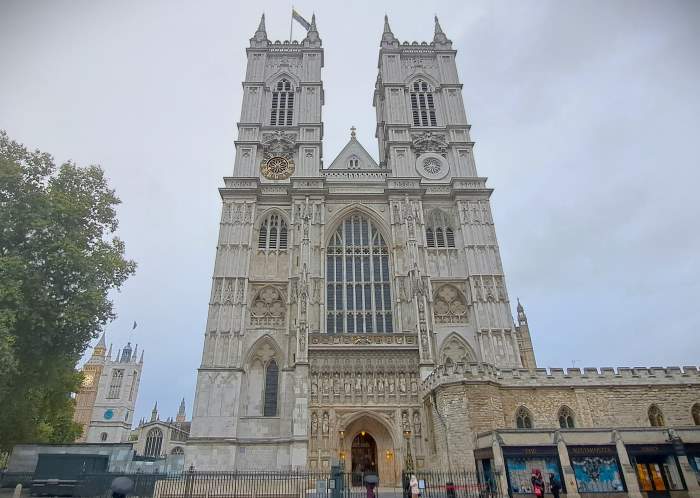
The Hawksmore work and great door of Westminster Abbey
While waiting for meetings, I took the chance to revisit the Royal College of Justice (RCJ). This magnificent Victorian Gothic building, completed in 1882, is a testament to the city’s rich architectural heritage. We were was particularly interested in observing an interesting and important hearing in International Entertainment Holdings Ltd v Allianz Insurance Plc where we meet other people who had been involved with NFU Mutual and some interesting journalists.
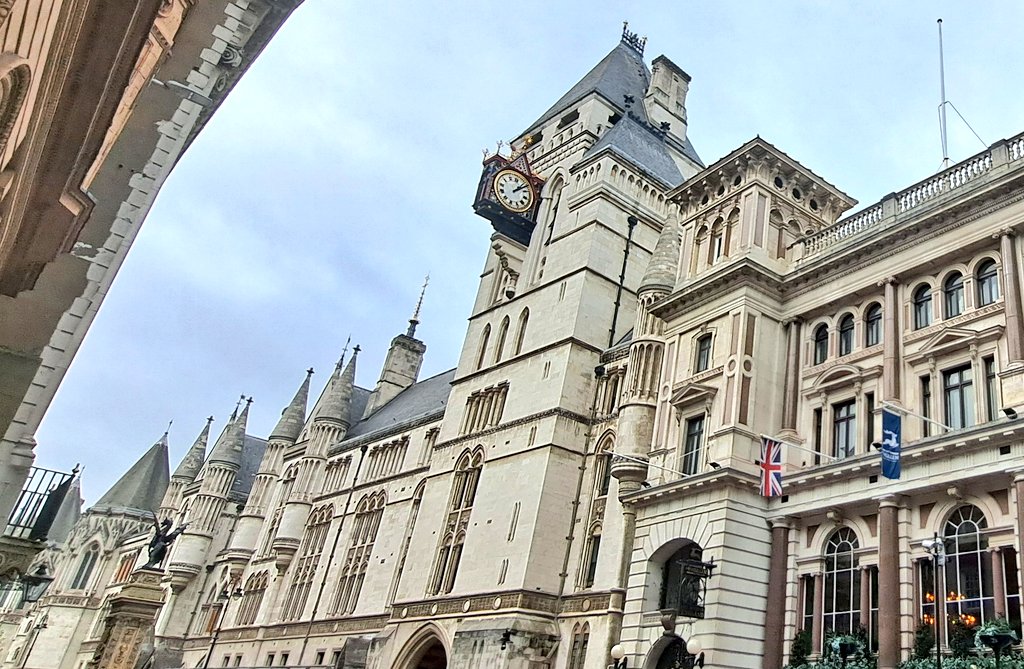
Royal courts of Justice
.
