

A cursory glance at the 1668 doorcase might lead you to believe there are a couple of errors. However, upon closer inspection and reflection, you will realize these ‘”errors’ are intentional.

Conspicuously off-center, the 1668 doorcase embellishes the original 1550s Tudor doorway on Soulton Hall’s north facade.
The first “error” is that the doorcase (added to the existing 1550s Rowland Hill portal) is not centered on the otherwise starkly symmetrical north facade of Soulton Hall. This is easily explained: the “mistake” is designed to communicate information. This facade of the house is not quite symmetrical (though another one is, if you look closely). So, if you’re searching for the most important face, you need to look elsewhere.
This is more easily seen with this scholarly reconstruction of the east facade in 1560. The doorcase you see is on the right-hand side, leading off a small court. In contrast, the east facade itself is majestically symmetrical.

Scholarly reconstruction of Soulton Hall in accession created by James D. Wenn and James R. Syrett of Byrga Geniht Ltd for Soulton Hall in 2024
The next ‘error’ concern the triglyphs on the tabernacle door case.
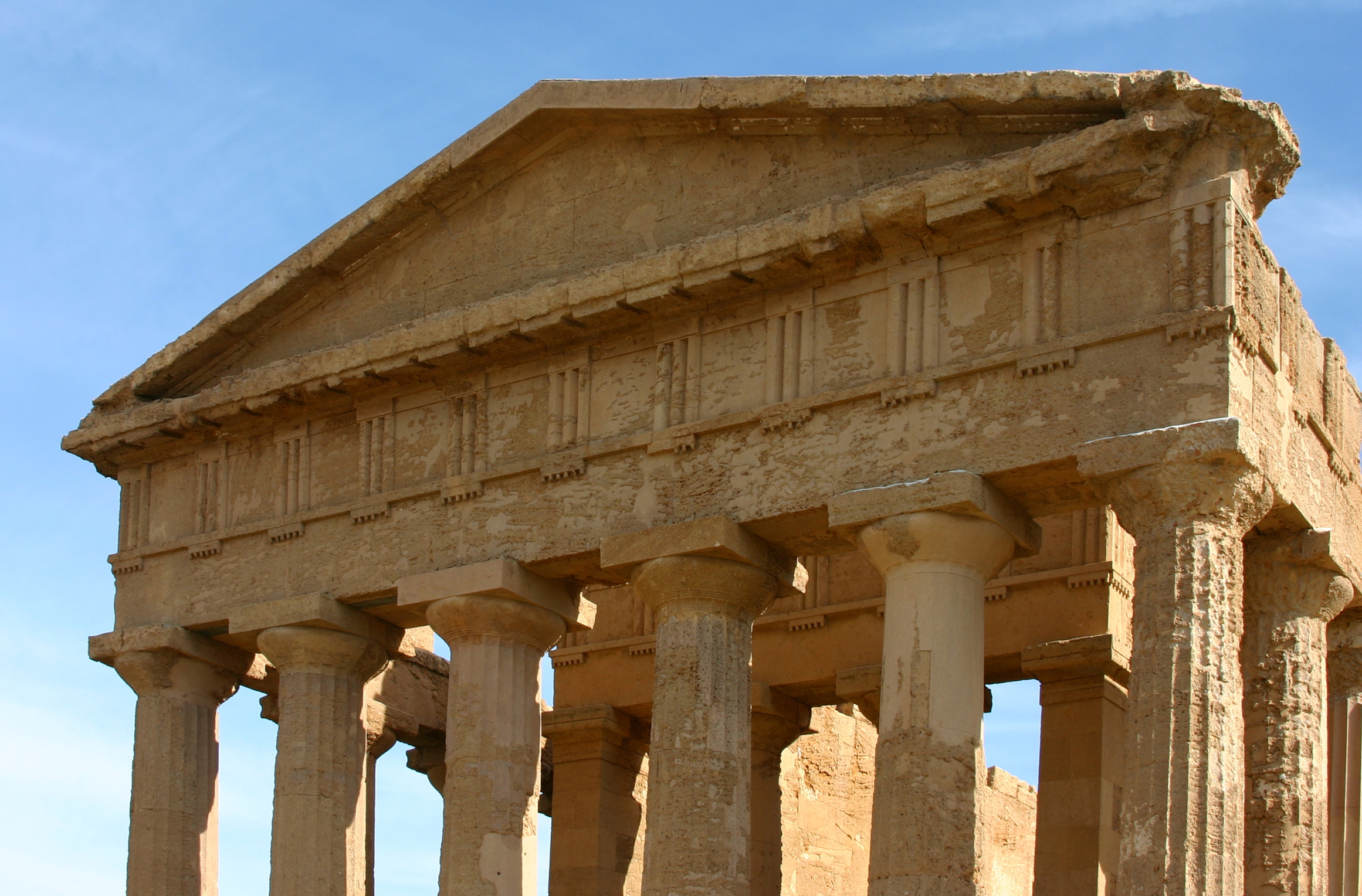
What is a triglyph? In classical architecture, the triglyph adorns the Doric frieze.

Triglyph centered over the last column in the Roman Doric order of the Theater of Marcellus
This distinctive element features vertical channels, earning its name (“three glyphs”). Interestingly, the triglyph is thought to be a symbolic representation. Inspired by the wooden beam ends of early huts, as described by Vitruvius and Renaissance writers, the triglyph evokes the origins of architecture. These wooden beams were likely notched in three places, creating a shadowed effect. Greek (and later Roman) architecture embraced this feature, along with others reminiscent of wooden structures, as a nod to the history and evolution of building design. Some theorize the channels may have even served a practical purpose, such as directing rainwater.
The Soulton Door Case triglyphs are wrong, if you look:

Not a Mistake: The Deliberate Design of the Soulton Doorcase Triglyphs
The are not three of them, but four, when you look quickly. If you look more closely two of the four are half width, so there are, on closer inspection still three in total, but represented in a way that also has four strokes.
What is going on?
This is a highly intentional mistake on a hightly knowing house, and this door case has been stributed to Wren more than once.
We believe the design of the triglyphs might be an attempt to connect a pagan symbol with Christianity. The number three in the triglyph directly references the Holy Trinity. The additional element, possibly signifying four, could allude to several Christian concepts:
- The Four Evangelists: Matthew, Mark, Luke, and John.
- The Four Living Creatures: Described in the Book of Ezekiel and Revelation, each with the faces of a man, an ox, a lion, and an eagle.
- The Four Foundations of Christian Life: Grace, prayer, worship, and servanthood.
What do you think?
********
With thanks to James D. Wenn for scholarly support.
