

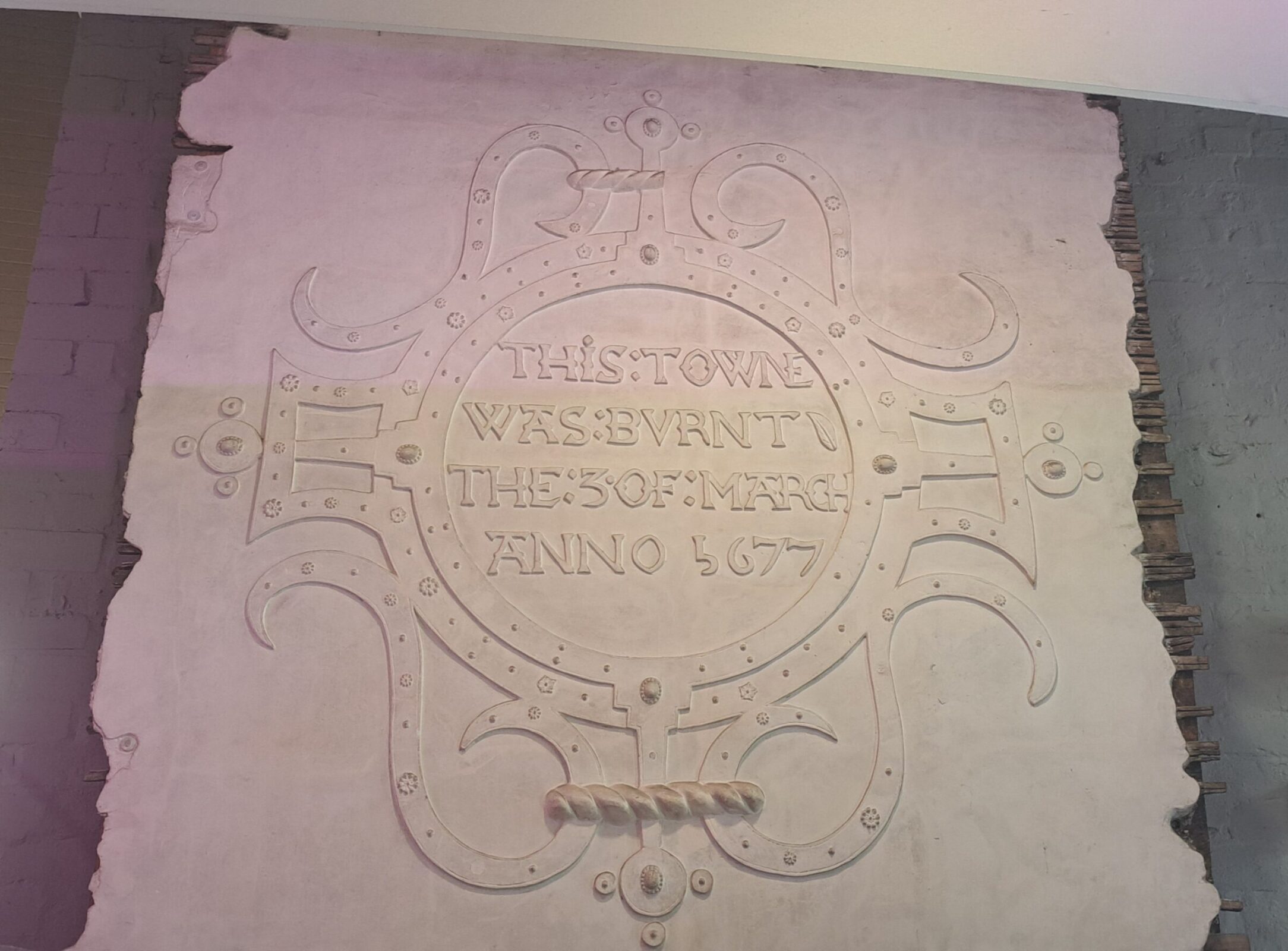

C17th plaque for the Great Fire of Wem
On March 3rd, 1677, a seemingly ordinary day took a devastating turn. A young girl named Jane Churn, likely around 14 years old, was fetching fuel for her family’s fire. A careless moment with a candle resulted in disaster. The flame ignited the thatched roof of their home, the fire spread rapidly.
The Great Fire quickly consumed Wem, a town predominantly built with wooden structures. The intense heat even partially melted the church bells in which important monuments were also consumed. Homes, businesses, and the market house all fell victim to the flames.

Wem Church of Ss Peter and Paul
The fire’s impact was catastrophic. Records indicate that roughly 540 buildings were destroyed, leaving many residents homeless. Some of the refugees were billeted in the precints of Soulton Hall, in the base court, and Soulton was made a headquters for the recovery.
While the exact number of casualties remains unclear, historical accounts suggest only one person, a shoemaker named Richard Sherratt, perished in the fire.
The financial losses were staggering, estimated at over £14,760 for buildings alone, with an additional sum for destroyed household goods.

Wem Town in Shropshire: home of the Sweet Pea
The aftermath of the Great Fire was undoubtedly challenging. However, the spirit of the Wem community prevailed. Residents came together to rebuild their town. While some structures were lost forever, the fire also presented an opportunity for a fresh start.
The Great Fire of Wem remains a significant event in the town’s history. It serves as a reminder of the town’s resilience and its ability to overcome adversity. Today, visitors can still see remnants of the fire’s impact in the Town Hall’s plaster 17th century monumet.
