

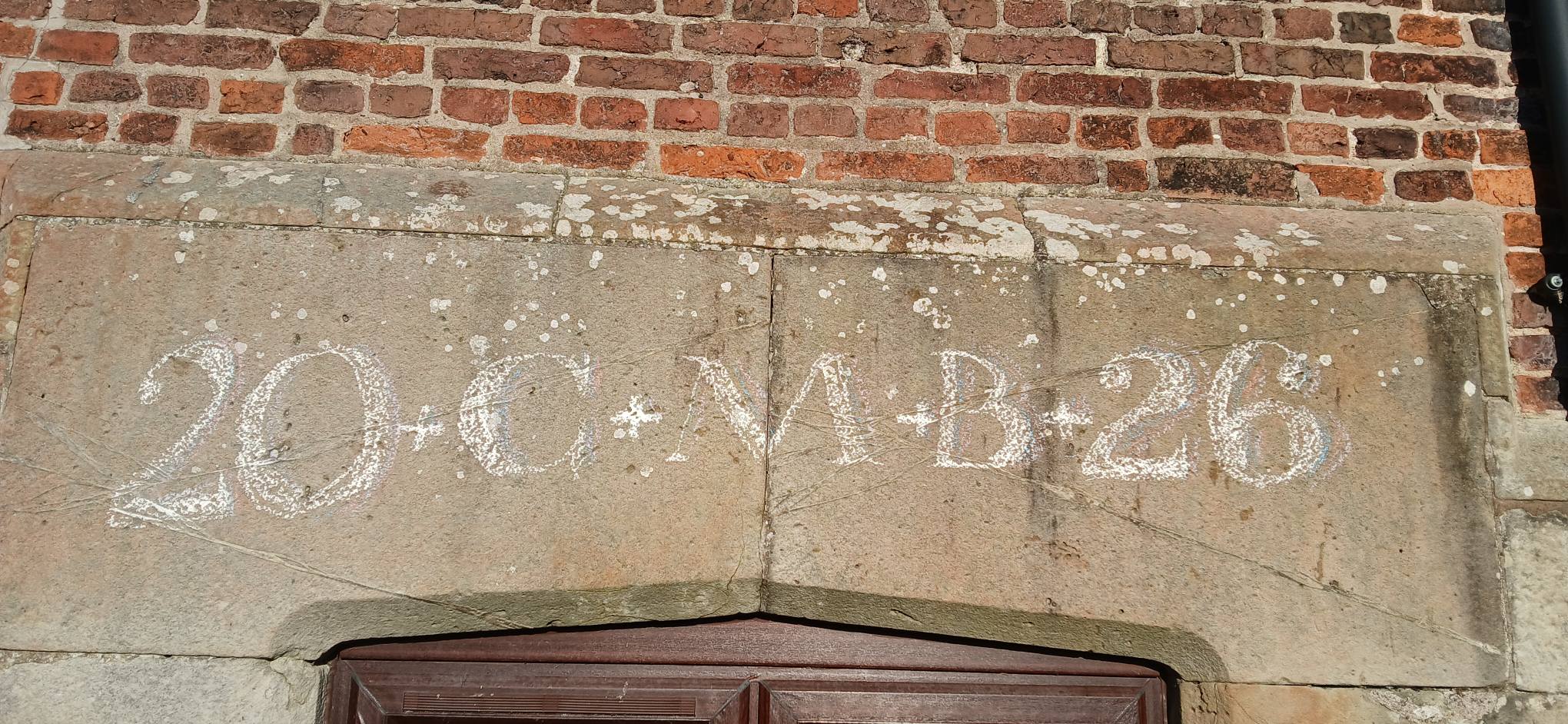
Today, on the Eve of Epiphany, a simple stone doorcase at Soulton Hall received its annual marking.
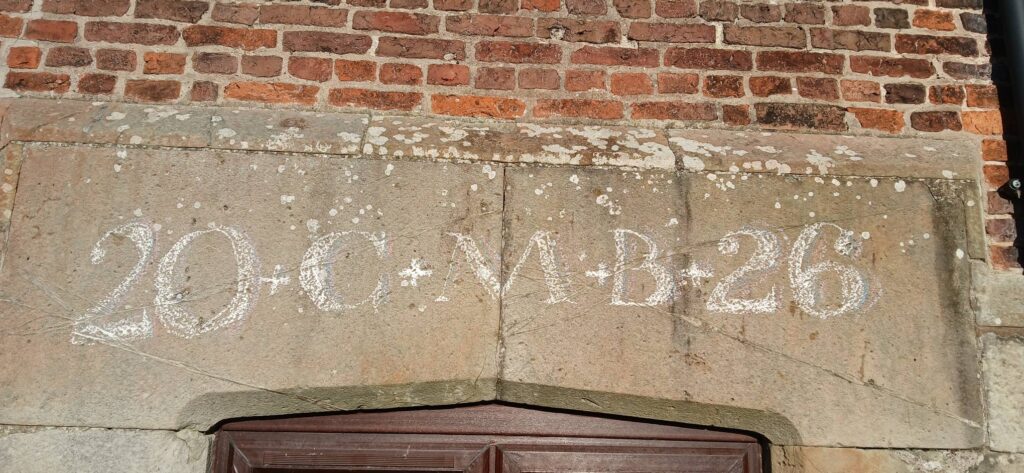
Epiphany maked in chalk over a ‘lost’ door
The 2026 code—20 + C + M + B + 26—was inscribed in white chalk, but its placement is a deliberate act of architectural and historical recovery.
The inscription was not placed over the modern (1668!) main entrance, but over the original Tudor buttery door, which now sits off Dance Court.
In a house with such deep layers of time, failing to understand the original plan can lead to significant historical errors. This “lost” door, which was eventually closed up and turned into the buttery window, was a source of confusion for even the most esteemed scholars. Failing to recognize this threshold caused figures like Nikolaus Pevsner to get the dating of the building’s evolution wrong.
By chalking this specific stone frame, Soulton Hall reaffirms its 16th-century bones and ensures the Tudor configuration is never forgotten.
Theologically, marking a closed door can be problematic—a blessing should signal a welcome, not a dead end. To avoid “bad poetics” and keep the threshold alive, the ceremony involves a physical act: someone steps through the buttery window after the code is inscribed.
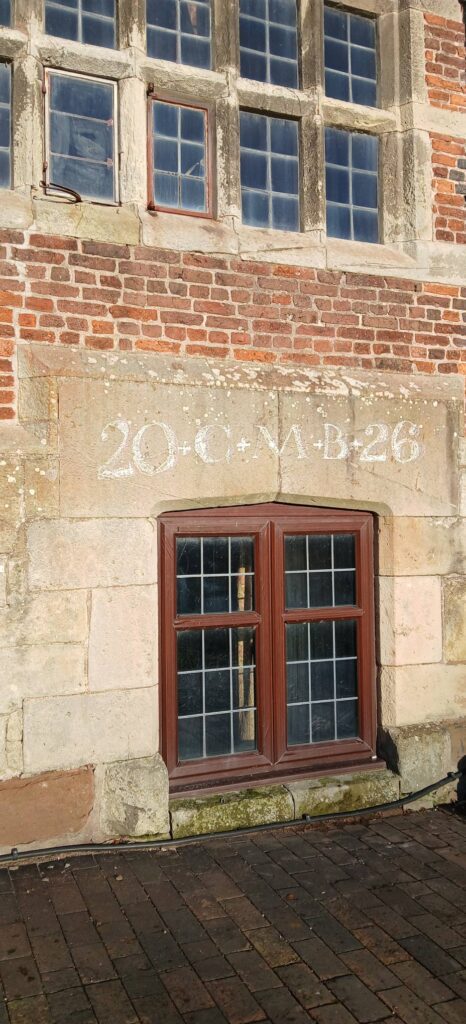
Epiphany maked in chalk over a ‘lost’ door constructed 1550s, turned into a window 1660s(?)
By passing through the window that occupies the old doorcase, the participants prove the path is still open. This movement preserves the “doorness” of the site, transforming the window back into a portal of hospitality, just as it was in the Tudor plan. The act ensures that the house is remembered as it was intended to be read, bridging the gap between the 1500s and 2026.
Through this annual custom, Soulton Hall ensures that its history is correctly understood and its ancient heart remains a place of active welcome.
