

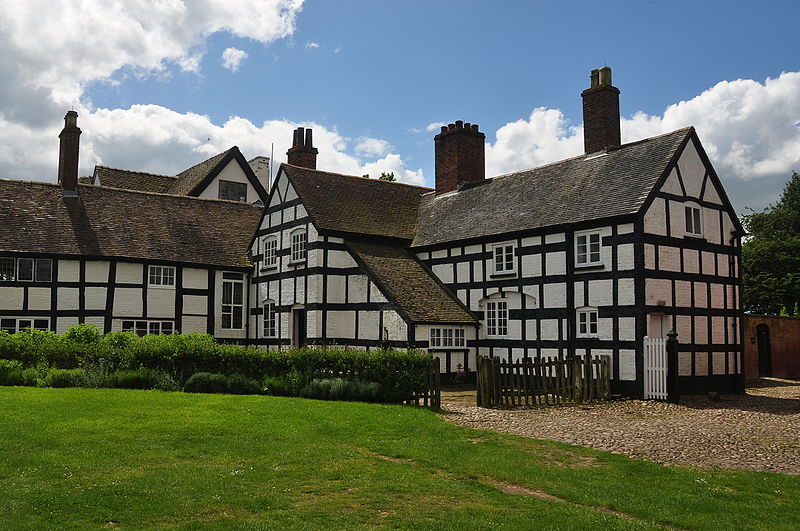
Exploration of Royal Refuge
We recently embarked on a journey to explore the captivating story of Boscobel House. It holds a significant place in the annals of English history, becuase it facilitated the escape of King Charles II following the the last major battle of the 1639-1653 Wars of the Three Kingdoms.
********
Boscobel House was transformation from a modest farmhouse of the C16th to a stylish hunting lodge under the direction of landowner John Giffard in the 1630s.  The Giffard family (who were connected to printing), were devout Catholics, and used Boscobel House as a refuge for persecuted priests, and thus built priest hides (like ‘Old’ Sir Rowland Hill did at Soulton years before).
That clandestine Boscobel at infrastructure would come to play a crucial role in a national drama during The Protectorate of Oliver Cromwell.
In 1651, when Charles II sought refuge after the Battle of Worcester, the house belonged to John Giffard’s daughter, Frances Cotton (interstingly related by marriage to Sir Robert Cotton, 1st Baronet, of Connington and thus the Cotton Library).
Charles II, disguised and weary after the battle, was initially led to the nearby White Ladies Priory by a Giffard cousin. He spent a day concealed within the branches of the “Royal Oak,” a symbol of his escape that endures to this day. As darkness fell, he found further refuge within one of the house’s cleverly concealed priest hides. Following a tense night, Charles was moved to another safe house before ultimately escaping the region altogether.
Our visit to Boscobel House offered a glimpse into this extraordinary episode in English history.
The house, meticulously preserved, stands as a reminder of the bravery and resourcefulness demanded during a tumultuous period and how import Shropshire was in that story.
The experience served as a fascinating counterpart to the rich tapestry woven within the walls of Soulton Hall: while both houses boast unique architectural styles and histories, their connection to the past, particularly their roles in offering refuge, fosters a sense of shared legacy.
View this post on Instagram
