

To suffer such a character to sink into oblivion, would be in the highest degree ungrateful, as well as injurious to posterity, for whose imitation it is held up.
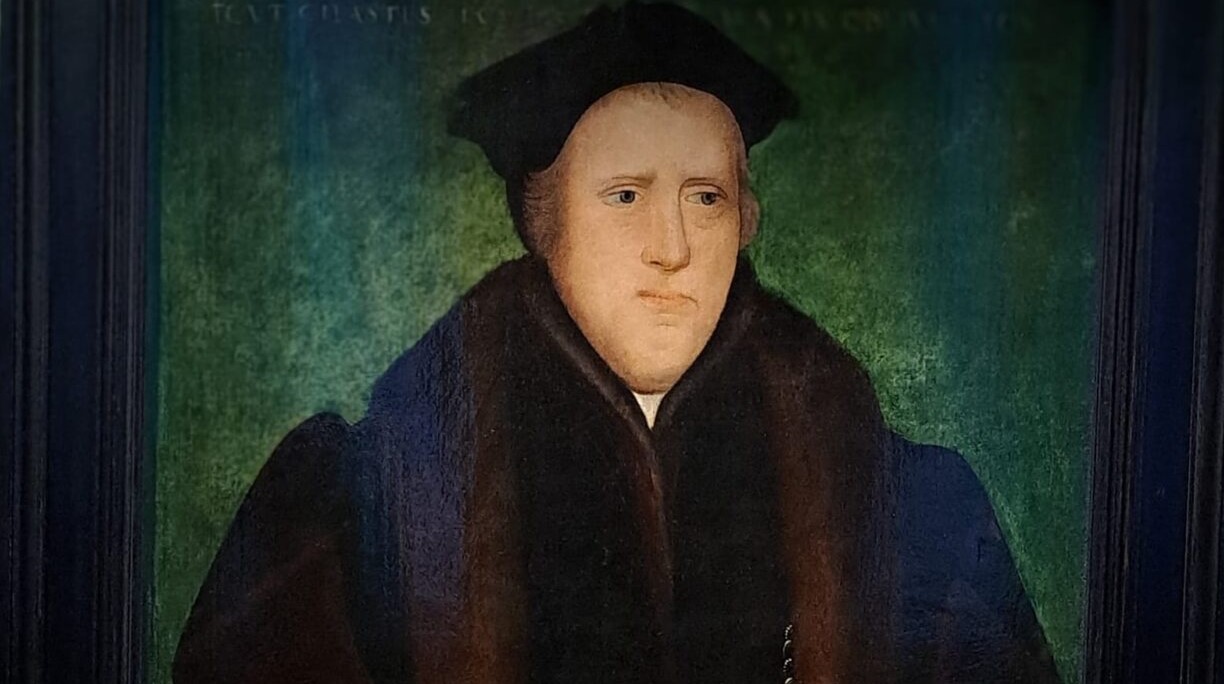
Today, as every year, we mark the anniversary of the passing of a truly remarkable figure, Sir Rowland Hill (c. 1495-1561), a man whose legacy shaped London, Shropshire, and the course of English culture.
Romsmary (“for rememberence,” as Shakespeare reminds us) been left on the communion table in the Tudor Prayer Room at Soutlon Hall.
As a former Lord Mayor of London and a statesman of immense influence, his life embodies the spirit of public service and profound philanthropy.
Sir Rowland Hill was a highly successful Mercer who rose to prominence, becoming Sheriff of London and then Lord Mayor of London in 1549. He is historically significant as the first Protestant Lord Mayor of the city, guiding London through major religious reforms during the reign of Edward VI. His mayoralty was marked by a determined focus on civil order and justice.
Sir Rowland’s influence extended deeply into the cultural and intellectual life of the nation. He is universally linked with the publication of the Geneva Bible (1560), the Bible of the English Reformation that was famously used by William Shakespeare, John Knox, and the Pilgrims on the Mayflower.
His link to the world’s greatest playwright is a matter of family record: Sir Rowland Hill was a cousin to William Shakespeare via Shakespeare’s mother, Mary Arden. Hill is the accepted inspiration for the character “Old Sir Rowland” in Shakespeare’s beloved comedy, As You Like It. The playwright replaced the name of the source text’s hero, “Old Sir John,” with “Old Sir Rowland,” creating a cultural monument to his own brave and celebrated kinsman.
Soulton Hall, built by Sir Rowland between 1556 and 1560, his rural headquarters and a safe haven where texts and people were protected during periods of religious persecution.
Beyond politics and culture, Sir Rowland Hill is best remembered for his enduring charitable works. He played a pivotal role in the reformation of London’s public health system, serving as the first President of both Bridewell and Bethlem (‘Bedlam’) Hospitals. In his native Shropshire, his legacy includes:
- Founding the free school at Market Drayton.
- Financing the building of a stone bridge at Atcham over the River Tern.
- Providing poverty relief and other social provision
On this day, we honor Sir Rowland Hill not only as a distinguished statesman and publisher but as a polymath and philanthropist whose dedication to public welfare and cultural advancement left a foundational mark on the Elizabethan Golden Age.
