

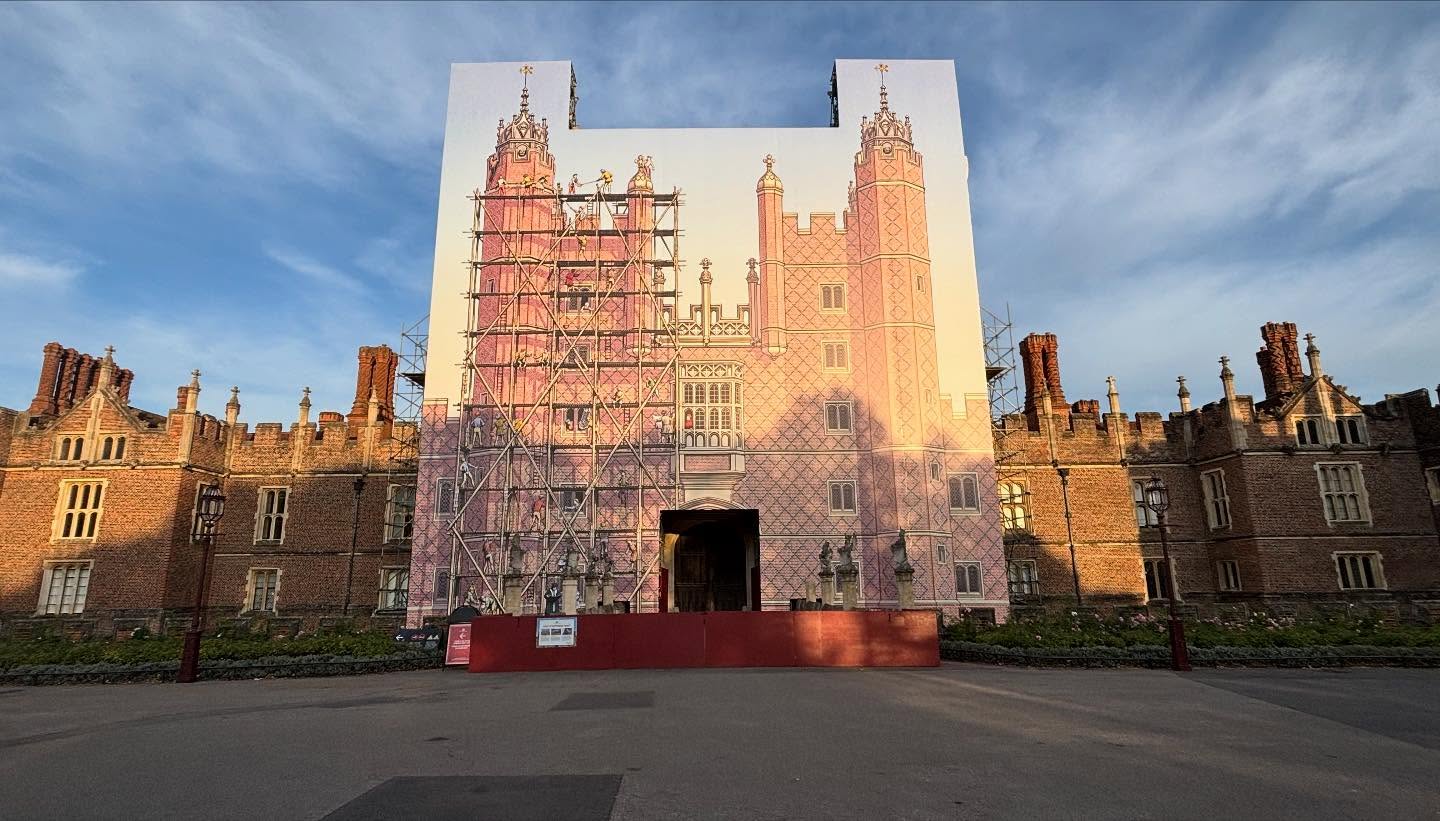
The current conservation work on the Gatehouse at Hampton Court Palace provides a striking visual commentary on Tudor architectural ambition and subsequent structural pragmatism, a theme that resonates directly with the history of Soulton Hall.
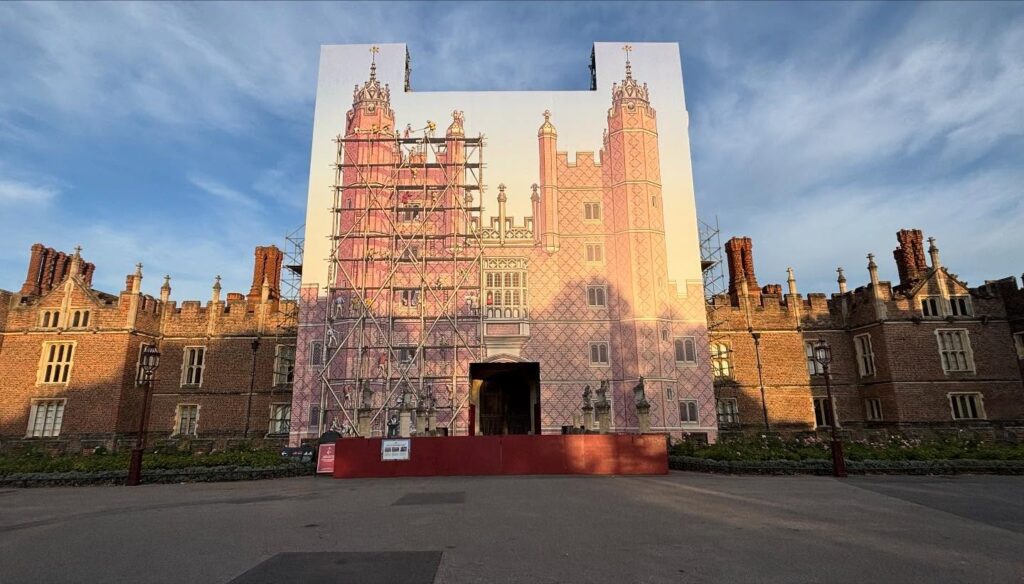
2025 scaffolding on Hampton Court
The scaffolding erected for this maintenance is a deliberate re-creation of the Gatehouse’s original Tudor height. Cardinal Wolsey’s Gatehouse was initially built to five storeys; however, it was reduced to its present three-storey form in the 18th century after structural issues were identified, deeming the original height unstable and overly heavy.
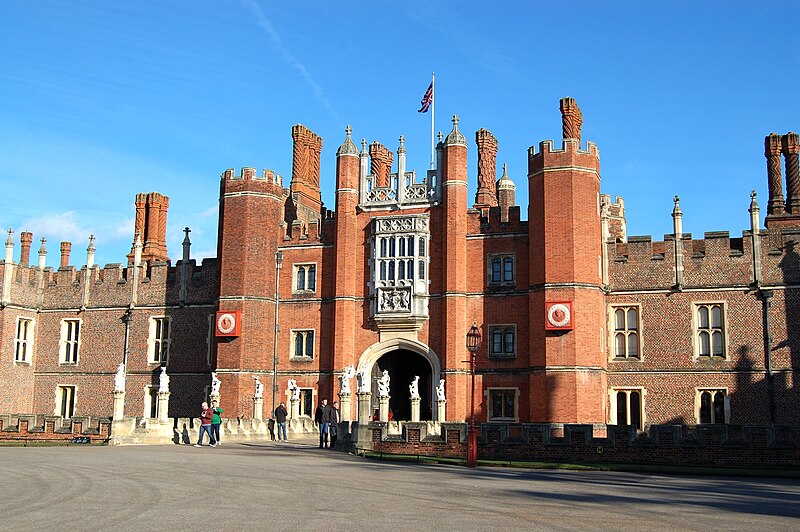
Hampton Court on a recent vist from Soulton Hall
This temporary installation offers visitors a unique, sunset-lit glimpse of the building’s monumental scale as it stood in the 16th century—a height that would have been unprecedented and imposing in its relatively undeveloped surroundings.

Scholarly reconstruction of Soulton Hall in accession created by James D. Wenn and James R. Syrett of Byrga Geniht Ltd for Soulton Hall in 2024.
This process of structural correction mirrors a significant event in the history of Soulton Hall. Sir Rowland Hill’s original 16th-century design for Soulton included an elaborate, lively roof scape—featuring a pyramidal roof, battlements, and a cupola. This design was later removed. Historical accounts indicate that, similar to the issues at Hampton Court, the Hall’s original, heavy roof proved unsustainable and was subsequently lost, altering the building’s silhouette dramatically.

Epidaurus Court, Soulton Hall
The scaffolding at Hampton Court Palace serves as a physical illustration of a historic problem: the engineering limitations of the Tudor era often led to ambitious designs that were structurally unsustainable in the long term. Both palaces, Hampton Court and Soulton Hall, share a common architectural narrative—the necessity of sacrificing initial grandiosity to ensure the long-term stability and preservation of the core structure. The conservation work thus highlights the practical, enduring challenges of managing and preserving Tudor-era heritage.
