

********
Please note this has been postponed to summer 2026
********
Shakespeare’s The Tempest is no mere revenge fantasy; it is the playwright’s majestic final meditation on power, forgiveness, and the ephemeral quality of art, contained in the character of Prospero, the exiled Duke whose “rough magic” commands the elements and controls the fate of his enemies.
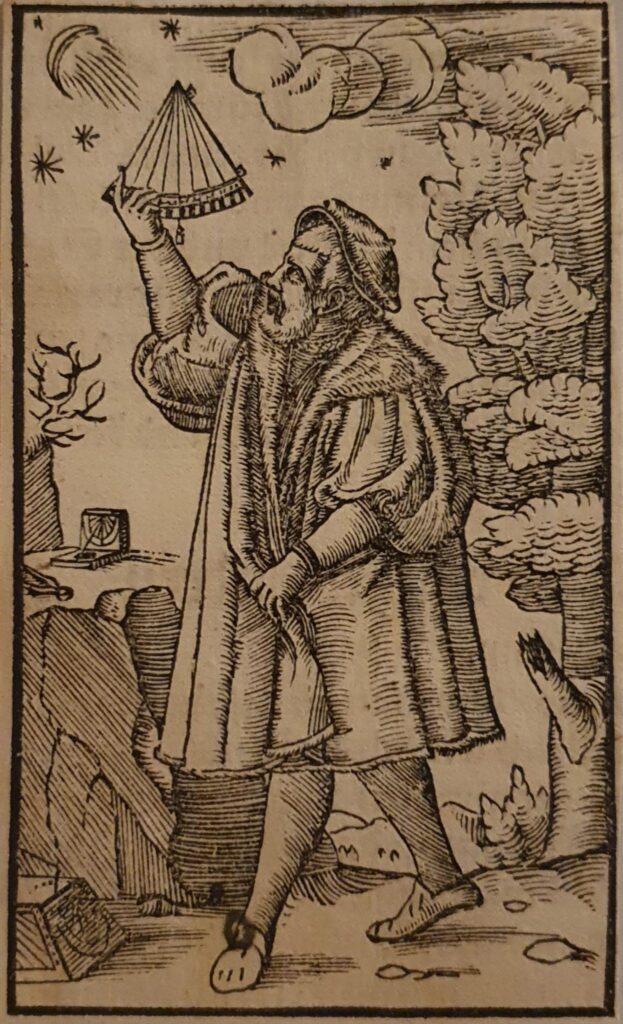
Prospero in an original 1589s wood cut an – image credit via Byrga Geniht
The play is his stunning artistic farewell—a project where the magic is not just a plot device, but a profound metaphor for the power of the arts over abuse of mortal power:
“We are such stuff
As dreams are made on, and our little life
Is rounded with a sleep.”
This winter, we invite you to witness this masterpiece of illusion and philosophy in a setting where art and history converge with extraordinary resonance: Soulton Hall.
The Artist’s Final Bow and the Weight of History
The Tempest culminates in Prospero’s most human and poignant decision: the recasting of his power by the setting aside of previous tools. Having taught hard-won lessons to his enemies, who justly deserved their treachery repaid, Prospero moves his authority beyond the “rough” magic of the island and into a different level: the power of human forgiveness and statecraft.
He chooses mortality and a return to civil society over perpetual control, symbolizing this graduation by breaking the very tools of his trade:
“I’ll break my staff, / Bury it certain fathoms in the earth, / And deeper than did ever plummet sound / I’ll drown my book.”
This dramatic, public farewell to his art—the shattering of the staff, the drowning of the book—is Prospero’s final, powerful performance.
And this is where the history of Soulton Hall, the home of the Tudor statesman and philanthropist Sir Rowland Hill, provides a stunning and compelling parallel.
Sir Rowland, widely believed to be the inspiration for Shakespeare’s ‘Old Sir Rowland,’ performed his own act of public renunciation just before his death, mirroring Prospero’s final gesture:
The xxx day of September my lord mayre and the althermen and the new shreyffes took ther barges at the iij cranes in the Vintre and so to Westmynster, and so into the Cheker, and ther took ther hoythe; and ser Rowland Hyll whent up, and master Hoggys toke ser Rowland Hyll a choppyng kneyf, and one dyd hold a whyt rod, and he with the kneyf cute the rod in sunder a-for all the pepull; and after to London to ther plases to dener, my lord mayre and all the althermen and mony worshiphulle men
– Diary of Henry Machyn 1550–1563
- The Historical Farewell: An account from September 30, 1561, recounts Hill—already an elderly statesman—making a final journey by ceremonial barge up the Thames. The climax of the civic ritual saw Hill take a knife and publicly “cute the rod in sunder a-for all the pepull.”
- The Poetic Echo: The cutting of this white rod—a potent symbol of his civic authority—is the precise historical analogue of Prospero breaking his magical staff. It marks the definitive and public end of the great man’s power.
- The Final Journey: This symbolic breaking was the precursor to a fatal journey; Sir Rowland Hill died less than a month later. His farewell to office became his farewell to life.
By staging The Tempest at the house built by the man who embodied this powerful metaphor—the final, public breaking of power’s symbol—we invite you to experience Shakespeare’s work with a profound, almost connection to the past.
This is more than a play; it is history’s mirror reflecting art’s most moving theme.
