

The Only Pretty Ring Time: Bird Studies on “As You Like It” Land
Here at Soulton Hall, we cherish the vibrant tapestry of wildlife that calls our land home.
From the rustling leaves that might conceal a foraging hedgehog to the flash of a kingfisher along the riverbank, every creature plays a vital role in our local ecosystem.

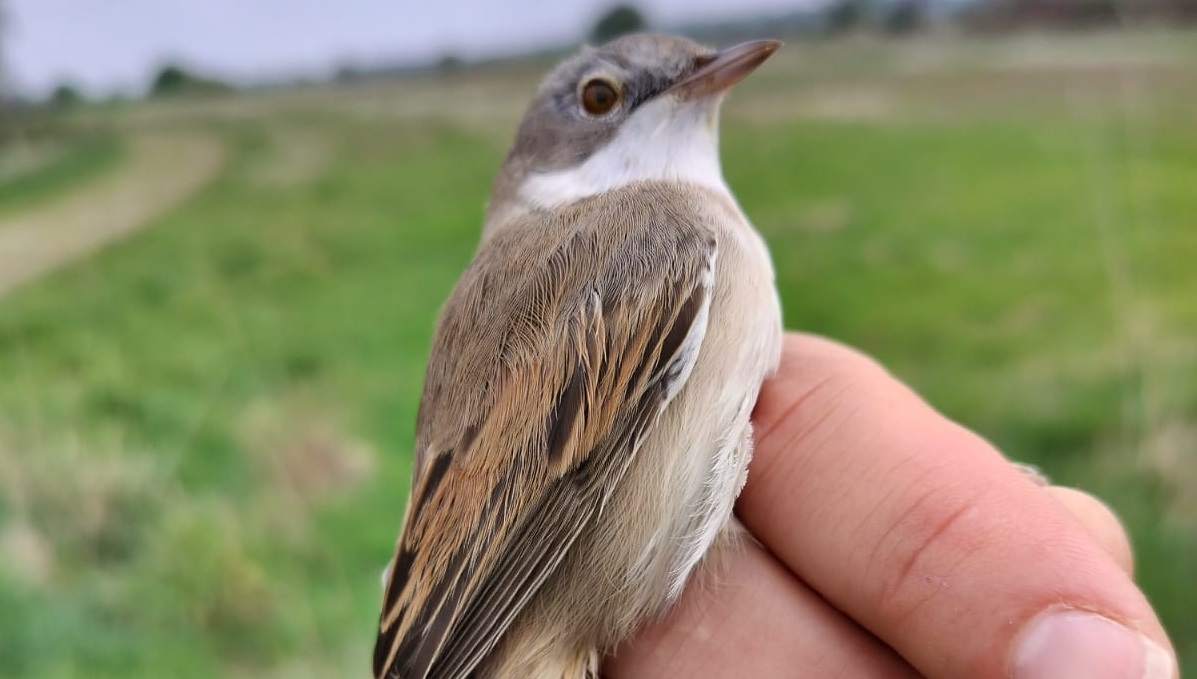
Whitethroat at Soulton, during a bird survey
Among these, our avian visitors and residents hold a special place, their songs filling the air and their presence a constant reminder of the wild beauty surrounding us. That’s why understanding their populations through bird surveys and ringing is not just an interesting activity, but a crucial endeavour for effective wildlife celebration and conservation here.
Bird surveys and ringing at Soulton Hall provide essential data for understanding local avian populations. Regular monitoring reveals species presence, abundance, habitat use, and population trends on the land. Bird ringing offers insights into individual bird movements, survival rates, lifespan, and site fidelity. This information is crucial for informed land management and targeted conservation efforts, ensuring the continued presence of a thriving bird community, a cherished aspect of this place.
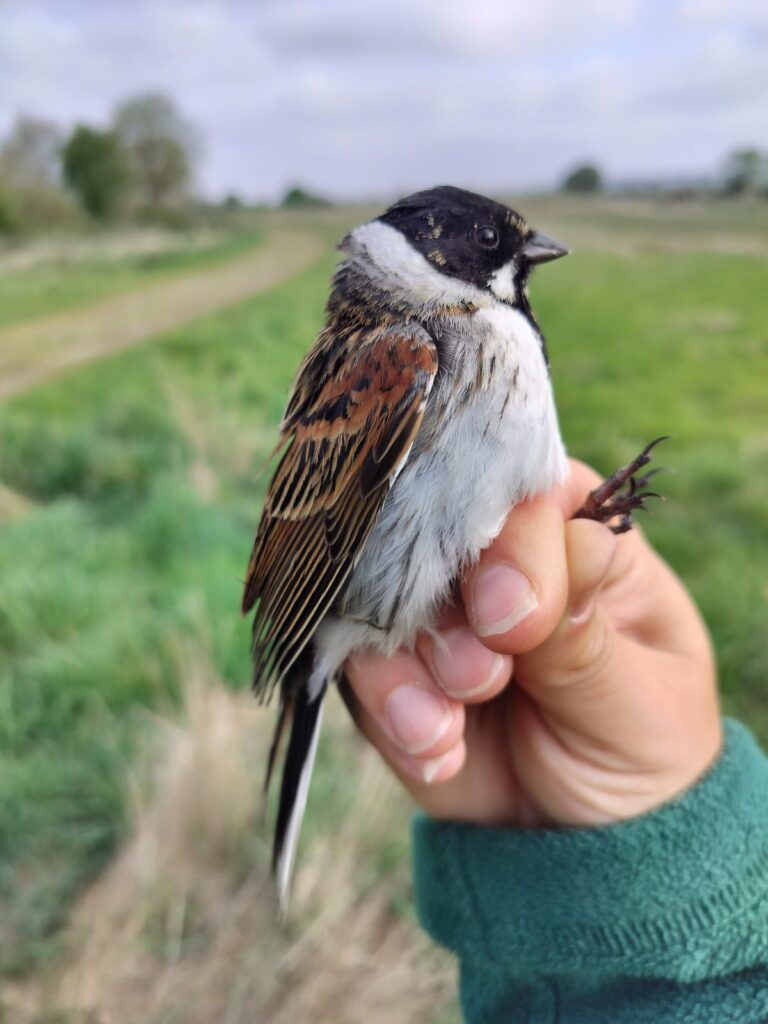
Reed Buntings are sparrow-sized but slim, with a deeply notched tail. A male during a bird survey at Soulton Hall
Considering the association of this land with the spirit of As You Like It, the lines:
Under the greenwood tree
Who loves to lie with me,
And turn his merry note
Unto the sweet bird’s throat,
Come hither, come hither, come hither:
Here shall he see No enemy
But winter and rough weather.
and:
With a hey, and a ho, and a hey nonino,
That o’er the green corn-field did pass
In the spring time, the only pretty ring time,
When birds do sing, hey ding a ding, ding:
Sweet lovers love the spring.
resonate deeply here.
They underscore the intrinsic value of the birdsong and the springtime vitality that our surveys and ringing efforts strive to understand and protect.
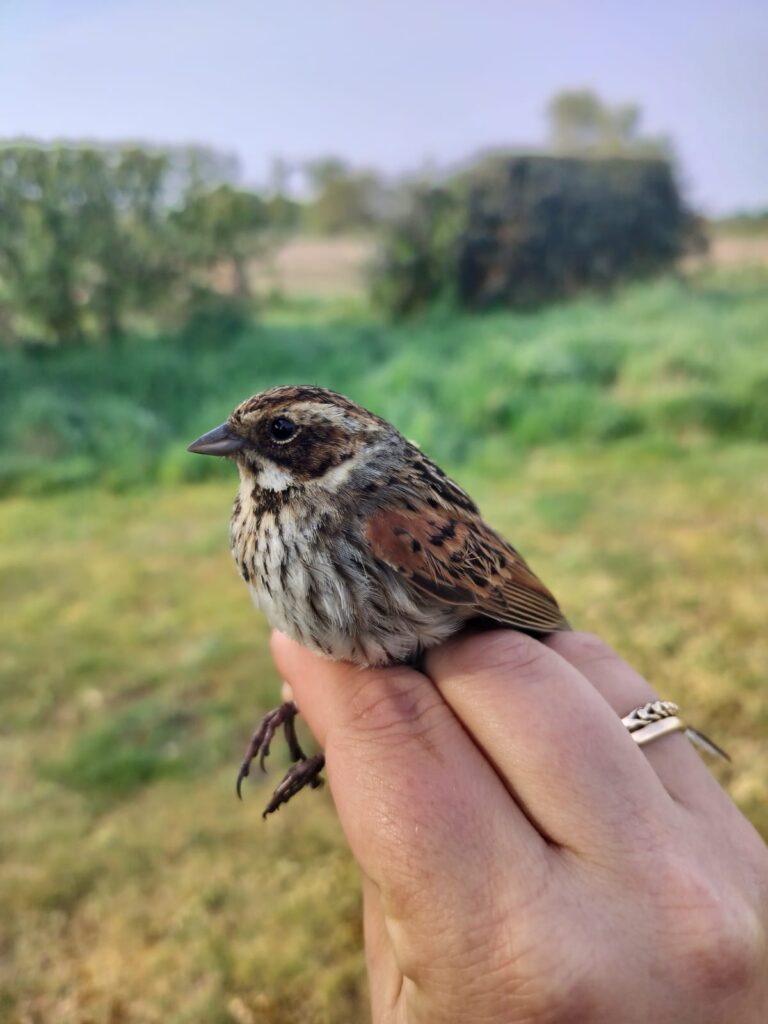
Female Reed Bunting, during bird survey at Soulton Hall
