

Haddon Hall is a famous and remarkable example of a medieval and Tudor house of state, largely untouched by later architectural trends.
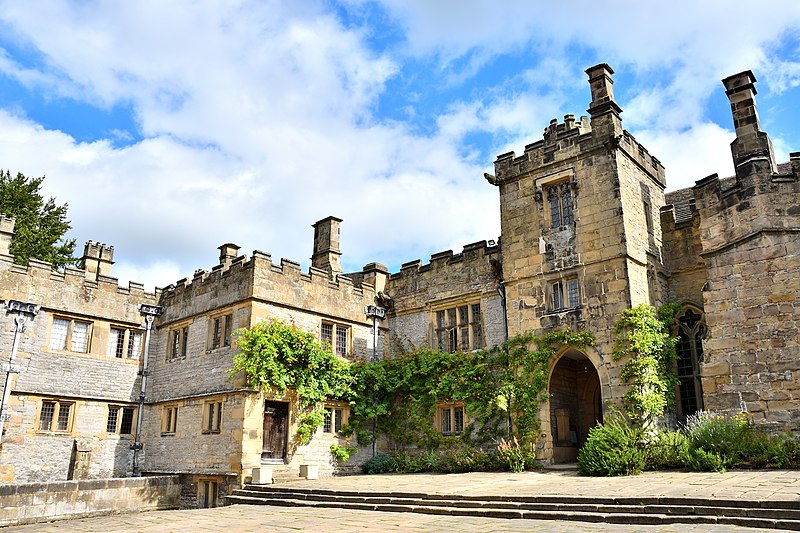
A Court a Haddon Hall
Its structure unfolds organically, built around a central courtyard over several centuries, beginning in the 11th century. The hall boasts impressive features such as the Banqueting Hall with its original screen, the Long Gallery adorned with intricate plasterwork dating back to the late 16th century, and the beautiful terraced gardens that offer stunning views of the River Wye. Haddon passed down through the Vernon family for centuries before eventually passing to the Manners family through marriage. This continuity of ownership has contributed significantly to the preservation of its historical character.
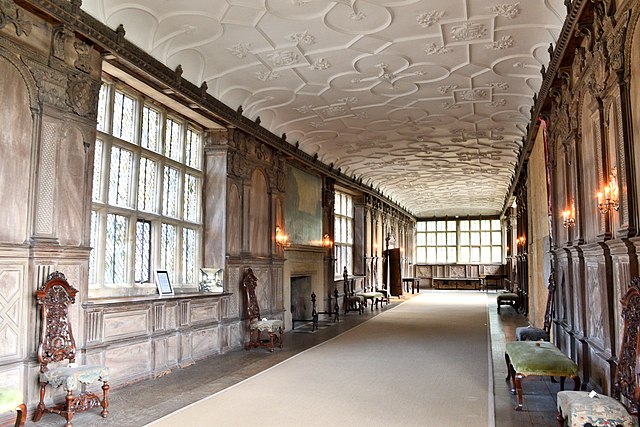
The Gallery in Haddon Hall
The Vernon family’s influence is palpable throughout the estate. Their coats of arms are visible in stained glass and carvings, and the very layout of the house reflects their evolving needs and status over time. From the medieval kitchens to the more elaborate state rooms of the Tudor era, each space tells a story of the family who resided here.
Among the many members of this influential family, Elizabeth Vernon (c. 1572 – 1655) holds a particular interest for us in Shropshire.
Born into the Vernon lineage at Hodnet, Shropshire, a manor that had been in the family’s possession since the 15th century, Elizabeth’s life connected two significant Vernon strongholds. While Haddon Hall represented the family’s ancestral seat in Derbyshire, Hodnet served as an important regional base, and Elizabeth likely spent considerable time there.
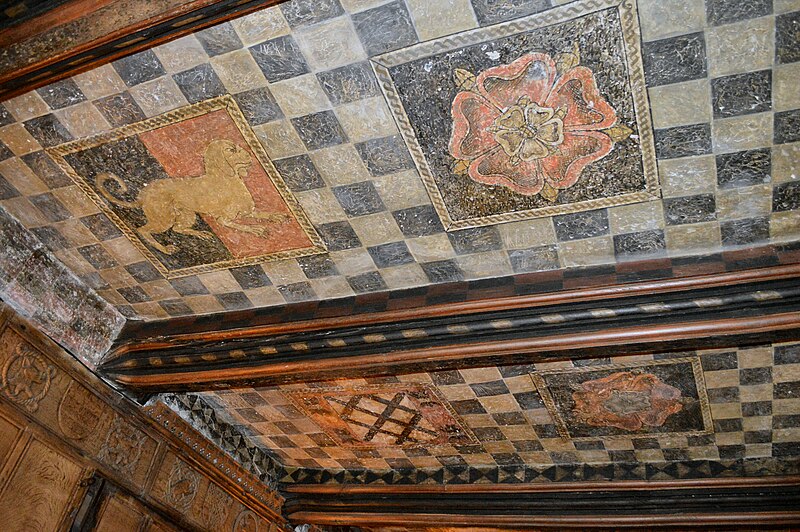
Haddon Hall, The Parlour
Her marriage to Henry Wriothesley, 3rd Earl of Southampton (1573–1624), was a significant event in her life. The couple married secretly on August 30, 1598. This clandestine union was prompted by Elizabeth’s pregnancy and was met with considerable displeasure by Queen Elizabeth I, leading to the imprisonment of both Elizabeth and Southampton in the Fleet Prison. Southampton, a prominent figure at court and a known patron of the arts, particularly of William Shakespeare, had previously fallen out of favor with the Queen due to his association with the Earl of Essex.

Elizabeth Vernon, Countess of Southampton attributed to Marcus Gheeraerts the Younger. Her family were from Shropshire, and some link her to Shakespeare’s works as a muse.
Despite the initial royal disapproval, their marriage endured, and they had several children, including Lady Penelope Wriothesley and Thomas Wriothesley, who later became the 3rd Earl of Southampton. Southampton’s patronage of Shakespeare is well-documented, with the playwright dedicating Venus and Adonis and The Rape of Lucrece to him. This connection places Elizabeth Vernon within the social and cultural sphere of one of England’s most celebrated writers.

The Haddon Hall gatehouse
It has been suggested that the themes of their relationship – a passionate connection formed against potential opposition and navigating societal constraints – bear a resemblance to the central conflict in Shakespeare’s tragedy, Romeo and Juliet. While there is no direct historical evidence linking Elizabeth Vernon and Henry Wriothesley’s personal experiences to the direct inspiration for Shakespeare’s play, the prevalence of such themes in the societal context of the time is notable. The clandestine nature of their marriage and the subsequent repercussions highlight the challenges individuals faced when their personal desires intersected with the expectations and authority of the Elizabethan court.

Intersting Geometric Windows at Haddon Hall (Creative Commons)
Visiting Haddon Hall offers a tangible link to this fascinating period of English history. As you explore the rooms that Elizabeth Vernon would have known, considering her connections to both this grand estate and the manor at Hodnet, and reflecting on her marriage to the influential Earl of Southampton, a richer understanding of the lives and relationships that shaped this remarkable place emerges.
