


Winifred’s Well: The well basin
From Royal Courts to Healing Waters: The Story of St. Winefride’s Well
St Winefride’s Well, a revered holy well and national shrine nestled in the Welsh town of Holywell, has captivated pilgrims and visitors for centuries. Centered around the miraculous legend of St Winefride, a 7th-century martyr brought back to life, the well has been a site of pilgrimage and healing since at least the 12th century.
St Winefride’s Well has long been a focal point for pilgrimage, earning Holywell the epithet ‘the Lourdes of Wales’.
The well’s association with healing has drawn devotees for centuries, who partake in traditional rituals such as bathing in the sacred waters. This involves immersing oneself three times in the well’s pool while reciting a decade of the Rosary, followed by kneeling on the submerged St Beuno’s Stone to complete the prayer.
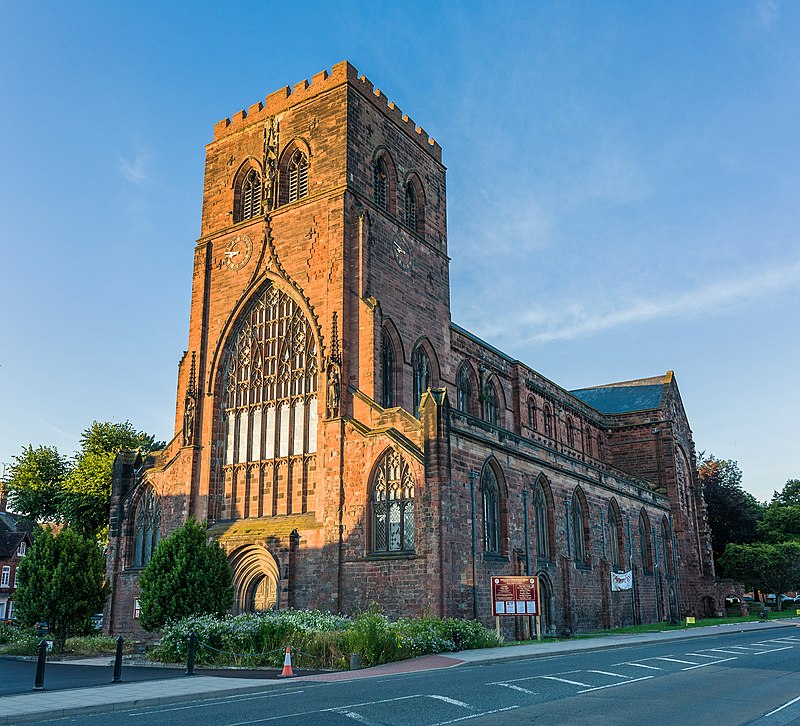
Shrewsbury Abbey
A notable chapter in the well’s history involves the transfer of St Winefride’s relics to Shrewsbury Abbey , further solidifying its status as a place of veneration.
The veneration of St. Winefride evolved significantly from local devotion to a matter of national importance. Initially revered in Wales, her cult gained traction through the relocation of her relics to Shrewsbury Abbey in the twelfth century. This strategic move, orchestrated by Robert of Shrewsbury, transformed her into a figure of national significance. The subsequent building of an elaborate shrine elevated her status further.

St. Winifred’s Well, Woolston. 14th-century former well chapel, now a cottage maintained and let by the Landmark Trust.
Tradition holds that St Winifred’s body rested overnight at the hamlet of Woolston near Oswestry during her journey to Shrewsbury Abbey, and it was then that and a spring sprang up out of the ground. The well is believed to possess curative properties for various ailments, including bruises, wounds, and broken bones. Housed within a 15th-century half-timbered cottage, the water flows through a system of stone troughs before cascading into a larger pond and eventually feeding a nearby stream.
Tradition also links a spring at Holywell Farm in Cheshire to the life of St Winifred. Located between Tattenhall and Clutton, this spring continues to provide water for the local community.
Soulton was on this important pilgrimage route, and has its own well of catharsis.

The Lost Avenue for Soulton Hall: part of the Sir Rowland Hill concept it adressed the rising Easter sun, began at a well of
catharsis and came to and end at a gate into the Soulton presinct closed up in the 1780s.
Richard II was the first recorded royal pilgrim, establishing a tradition of monarchical visits and financial support for the site.
Henry IV’s pilgrimage following his victory at Shrewsbury is particularly noteworthy, as it may have been a combination of religious devotion and political strategy.

Battle of Shrewsbury 1403. Henry IV and Prince Hal (later Henry V) were both involved
While the extent of Henry V’s involvement is uncertain, the Welsh poet Tudur Aled suggests a broader royal interest in the well. The construction of the first chapel is attributed to Henry IV, though its exact lifespan remains unclear. The current chapel,is traditionally linked to Margaret Beaufort.

Lady Margaret Beaufort at the National Portrait Gallery.
Despite the challenges posed by the English Reformation, which sought to suppress Catholic practices, St Winefride’s Well maintained its appeal. The well’s resilience is a testament to the enduring power of faith and tradition. While secularization gradually influenced perceptions of the well, its reputation as a place of healing and spiritual significance persisted.
The extraordinary volume of water flowing from St Winefride’s Well has been a subject of fascination for centuries. In 1731, visitors were astounded to calculate that the well produced over one hundred tons of water per minute. This astonishing figure was corroborated by Samuel Johnson during his visit in 1774, who noted the well’s immense power as it drove a mill just yards downstream.
Today, the well remains a popular destination, drawing both pilgrims and tourists. The surrounding complex, including the historic chapel, offers visitors a glimpse into centuries of devotion and the well’s enduring impact on the local community.
